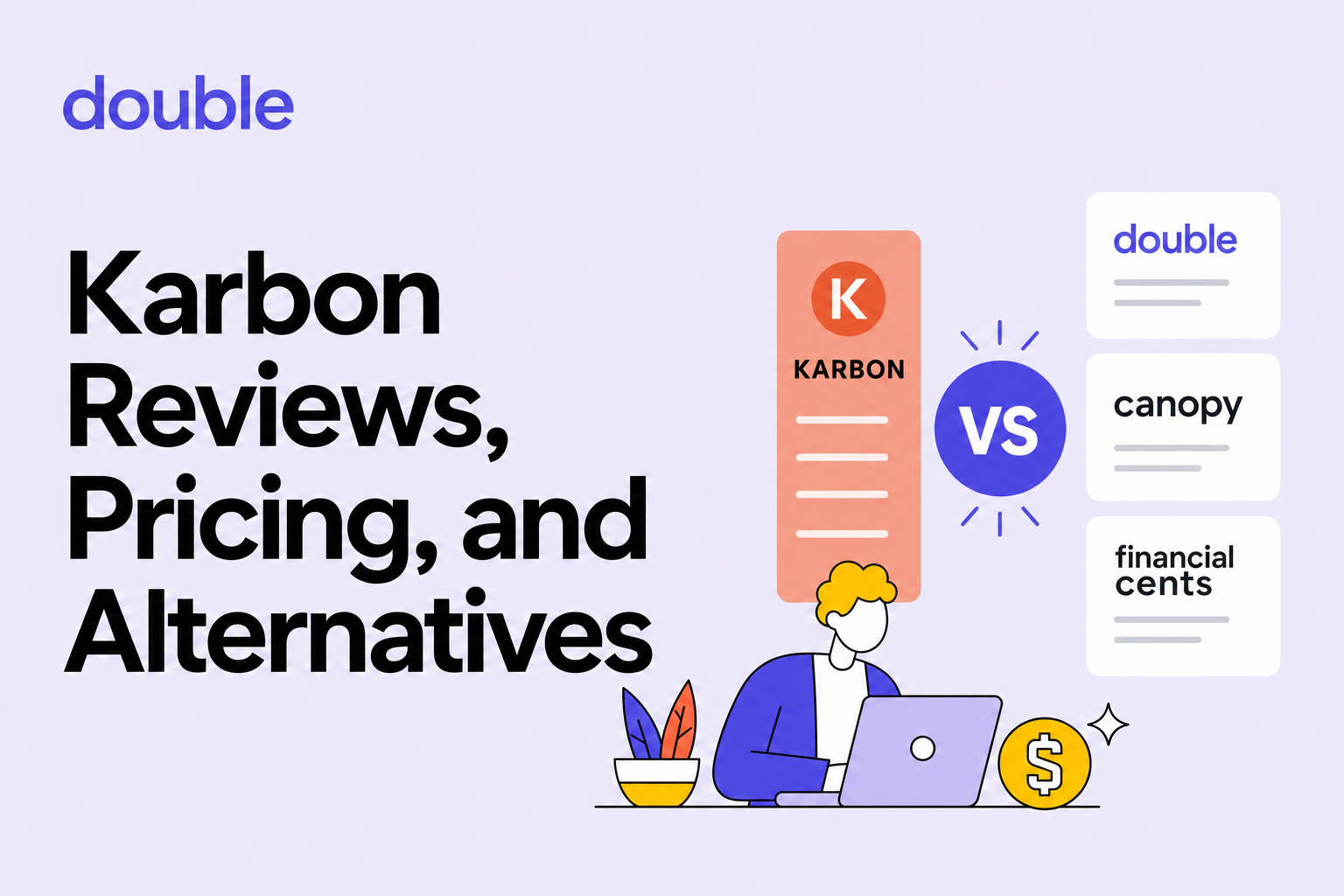

You've been reading Karbon pricing breakdowns and the numbers look manageable until you multiply them across your team. Sixty dollars per user works differently than ten dollars per client, especially when one scales with headcount and the other scales with revenue. For bookkeeping firms where the close is the product, paying per seat for a tool that tracks work without executing it creates a mismatch. We're laying out the pricing, the feature gaps for month-end close-focused practices, and the tools that connect directly to your ledger so the work actually gets done.
TLDR:
- Karbon charges $59-$99 per user monthly, which scales with headcount instead of revenue growth.
- Most practice management tools track close tasks but can't execute them in your ledger.
- Per-client pricing ($10-$50/month) aligns with how bookkeeping firms bill clients.
- Double executes the close with AI bank feeds and real-time QuickBooks sync, beyond task tracking.
- Double is month-end close software with two-way accounting integration starting at $10 per client.
What is Karbon and How Does It Work?
Karbon is a practice management tool built for accounting firms that need to coordinate work across multiple service lines. Tax, audit, advisory, bookkeeping - it tries to handle the execution side of all of them under one roof.
At its core, Karbon connects email, task management, and team collaboration into a single interface. The email integration is one of its more distinctive features: instead of managing client communication across separate inboxes, team members can view and act on emails from within Karbon itself. Work items can be assigned, tracked, and updated without leaving the app. Software Advice reviews cover these workflow capabilities alongside user feedback on implementation complexity.
Karbon is clearly aimed at large firms with complex org structures and multiple service offerings. Its workflow automation lets firms build templates for recurring work, set due dates, and route tasks through defined approval chains. The dashboard gives managers a birds-eye view of who's working on what and where things stand.
Pricing sits at three tiers:
- Team: $59/user/month
- Business: $99/user/month
- Enterprise: Custom pricing
Those per-user fees add up quickly as a firm grows. And while Karbon covers a wide surface area of firm operations, some users find the breadth comes at the cost of depth, particularly for firms where month-end close is the primary service.
Why Consider Karbon Alternatives?
Karbon earns its reputation with larger firms running tax, audit, and advisory alongside bookkeeping. The centralized email management and workflow automation genuinely solve coordination problems at that scale.
That said, firms start shopping around for a few consistent reasons:
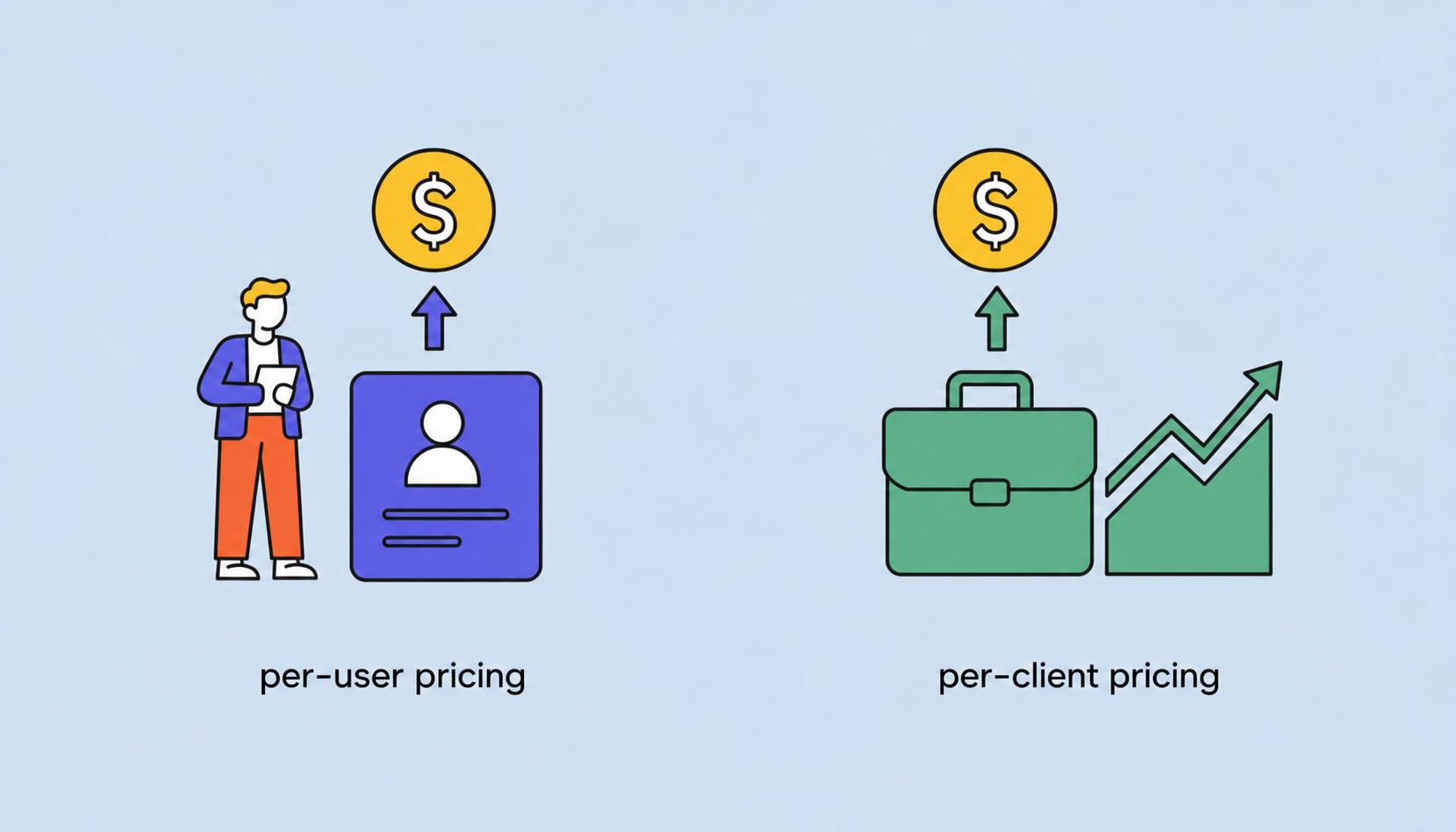
- Per-user pricing ($59 - $99/month per person) becomes expensive fast, especially compared to per-client models that align with how bookkeeping firms actually bill.
- Karbon is built wide, not deep. Firms where month-end close is the primary service often find themselves paying for features they never use while missing the transaction-level QuickBooks integration they actually need.
- Implementation is a real commitment. Getting a team fully up to speed requires working through layered menus, understanding feature dependencies, and configuring settings that aren't intuitive out of the box. Users consistently report a steep learning curve before the tool clicks.
- High-level task tracking does not execute the work. Karbon shows you what's happening, but the actual close still lives elsewhere.
For bookkeeping-focused firms, that last point matters most. Tracking that a reconciliation task is "in progress" is different from having a system that connects directly to your ledger and helps you finish it. If your core service is month-end close, a tool built for that workflow will outperform a general practice manager every time.
Best Karbon Alternatives in April 2026
Here's a quick look at the top alternatives, ranked by how well they serve bookkeeping-focused practices.
Double (Best Overall)
Double is built for bookkeeping practices and CAS teams that need to execute the close. With two-way QuickBooks and Xero sync, AI-powered bank feeds with composable rules, automated accruals, and a white-labeled client portal, it covers the entire close workflow in one place. Completing your task list means the close is already done in QuickBooks. Pricing starts at $10 per client monthly with no user fees, which aligns with how bookkeeping firms actually bill. Best for firms managing 5 to 500 monthly clients who want to reclaim 30 to 50% of close time and grow without adding headcount.
Canopy
A broad practice management tool covering client intake, workflow automation, document management, and billing. Strong for tax-focused firms, particularly those needing IRS transcript integration. Less suited for bookkeeping-first practices that need deep accounting system integration.
Liscio
A communication and file-sharing tool built for accounting firms. Solid for secure client messaging and document exchange, but it does not execute the close or connect directly to your ledger at the transaction level.
Financial Cents
User-friendly workflow and task management for small to mid-sized firms. Good QuickBooks Online integration for close support, but no native Xero support. Better at tracking work than executing it.
TaxDome
A solution with strong document management and tax-specific automation. The tradeoff is a steep implementation curve and an annual subscription commitment that can feel heavy for bookkeeping practices that just need close management.
Feature Comparison: Karbon vs Top Alternatives
The differences between these tools become clearest when you line them up across the features that actually matter for bookkeeping and accounting practices.
Feature | Double | Karbon | Canopy | Liscio | Financial Cents | TaxDome |
|---|---|---|---|---|---|---|
QuickBooks/Xero Integration | Transaction-level execution with real-time sync | Integration available, not transaction-level | Basic | Limited | QuickBooks only | Basic |
Close Execution Tools | AI bank feeds, accruals, reconciliation diagnostics | Workflow tracking only | Limited | No | Basic | Basic |
Pricing Model | Per-client $10 - $50/month | Per-user $59 - $99+/month | Modular per-user | Per-user | Per-user | Per-user annual |
Client Portal | White-labeled, secure bookkeeping-focused | CRM-based | Included | Communication-focused | No password required | Award-winning |
Implementation Speed | Quick setup, 3-month support for 10+ clients | Complex firm-wide rollout | Moderate | Quick | Moderate | Steep learning curve |
Primary Focus | Month-end close execution and practice management | Full practice management | Tax and advisory | Client communication | Workflow management | Tax practice management |
A few things stand out here. The pricing model gap is real: per-user fees penalize growth, while per-client pricing scales the same way your revenue does.
The close execution row tells the sharpest story. Most tools in this category track work. Double actually does it, with direct ledger access and AI built into the transaction layer.
If your firm runs tax, audit, and advisory across a large team, Karbon's breadth has genuine value. For bookkeeping/CAS-focused practices, paying per seat for a tool that still cannot touch your QuickBooks data at the transaction level is a hard position to defend.
Why Double is the Best Karbon Alternative
Karbon fits larger firms running tax, audit, and advisory across big teams. For bookkeeping practices and CAS teams where month-end close is the core service, it asks you to pay per seat for workflow tracking that still cannot touch your QuickBooks data at the transaction level.
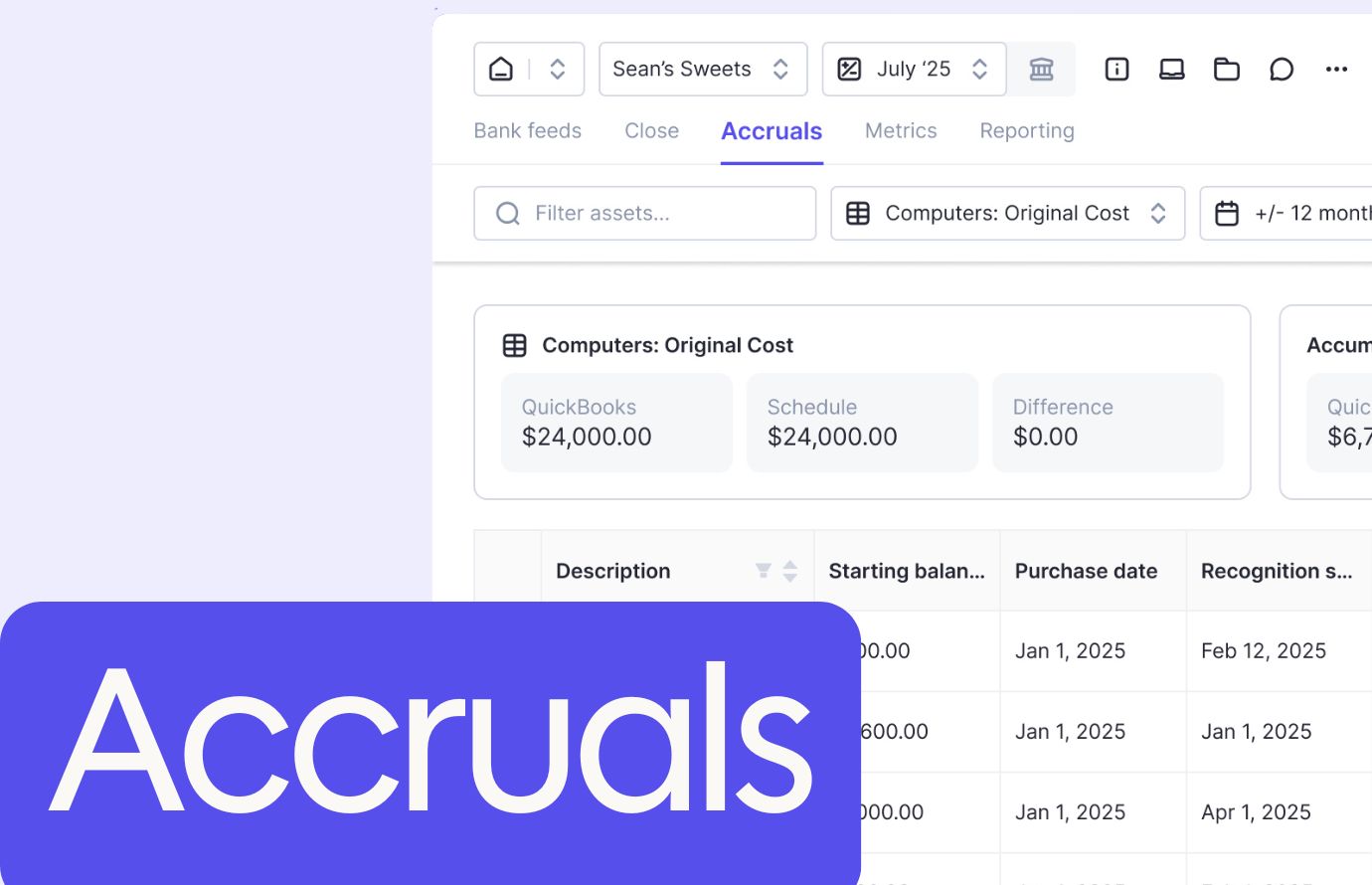
Double closes that gap. Where Karbon shows you a task called "close accounts," Double connects directly to your ledger and helps you finish it, with AI bank feeds, accrual automation, and reconciliation diagnostics built into the same workflow.
The close does not live somewhere else. It happens here. 95% of accounting professionals report technology is helping reduce compliance time while creating capacity for advisory services, with AI delivering average time savings of 5.4 hours per week.
The pricing difference compounds over time. Per-user fees scale with headcount. Per-client pricing scales with revenue, which is how bookkeeping firms actually grow. At $10 to $50 per client monthly with no user fees and no additional fees, Double aligns with the economics of the business you are running.
Setup takes weeks, not months. For contracts over ten clients, we provide hands-on three-month implementation included in the price. From there, client-specific rules run automatically each month without reconfiguring anything.
"I've been in bookkeeping for over a decade, and I have yet to see a product like this." - Heather Lansink, Accounting Specialist Manager, Dental Accounting Group
If you are comparing Karbon and your firm's primary service is bookkeeping, the better question is whether you need broad firm management or a tool built to execute the close. Those are different products solving different problems.
Final Thoughts on Practice Management for Bookkeeping Firms
Most Karbon reviews show what it does well for multi-service firms, but they also reveal where it falls short for bookkeeping practices that live in QuickBooks every day. You can track reconciliation tasks in any system, but finishing them at the transaction level requires something built for that specific workflow. If that sounds like your firm, book a demo and we'll walk through how close-first tools handle your monthly volume differently. The right fit depends on whether you need to manage the firm or execute the close.