
Summary
- Accountants must familiarize themselves with the distinctions between and purposes of forms 1099-NEC, 1099-MISC, and W-9, in addition to other rotational players like the 1099-K, 1099-DIV, 1099-INT, 1099-R, and 1099-B.
- Instead of stressing every tax season, learn how to make 1099s part of your year-round workflows in 2024 with Double.
The Fundamentals of 1099 and W-9 Forms
First up, let’s get on the same page with 1099 forms. 1099s act as a signal flare to the IRS. It’s an information return — aka, a method for reporting payments made for almost any non-employee income. There are 1099s for contractors and freelancers, rent and royalties, interest and dividends, stock sales and patronage, and even credit card settlements. The components of 1099s consist of:- Company name
- Company address
- Payer’s taxpayer identification number (TIN)
- Recipient’s TIN
- Employee’s compensation
Form 1099-NEC
Back in 2020, the IRS reintroduced Form 1099-NEC: Nonemployee Compensation. The form was created to separate out, as the name reveals, non-employee compensation (how considerate of them). A 1099-NEC is needed if:- Services (not goods) were provided by a non-employee, including independent contractors, freelancers, and attorneys
- Payment of $600 or more was made in a calendar year
- Entity is an LLC, partnership, or sole proprietorship (non-corporation)
Form 1099-MISC
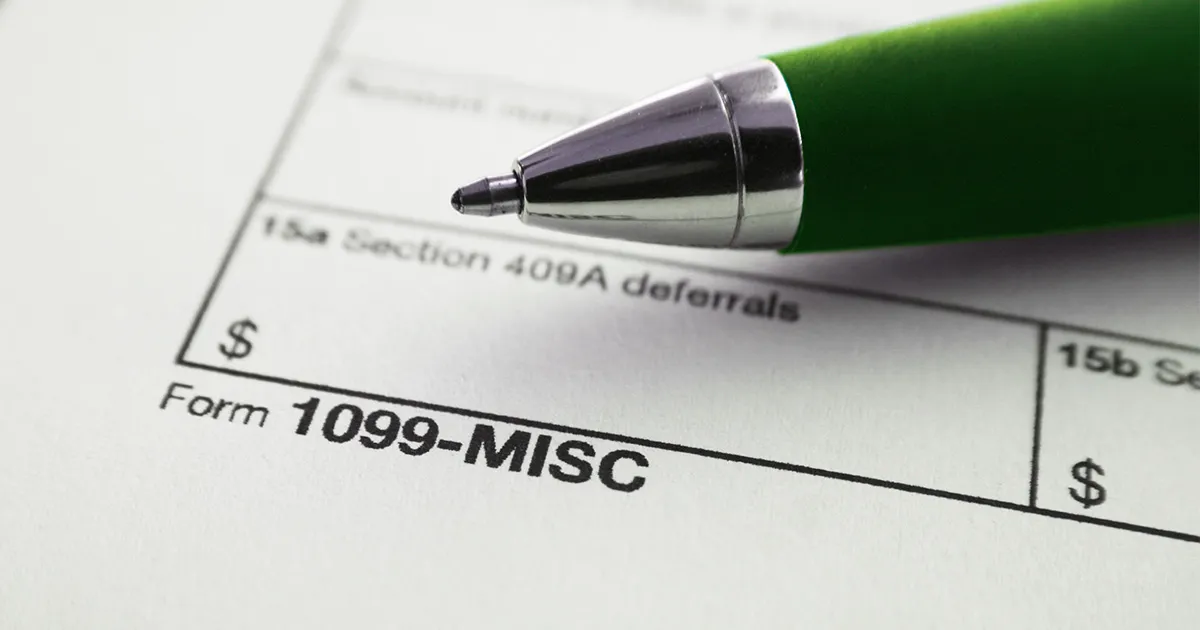
While Form 1099-NEC is used to report independent contractor income, Form 1099-MISC: Miscellaneous Income is used to report other income, such as: rent, royalties, awards and prizes, attorney settlements, etc. As a general rule, a 1099-MISC should be issued for payments of at least $600 made in the course of trade or business. You do not need to issue a 1099 for payments made for personal purposes. In addition, Form 1099-MISC is used for payments of $5,000 or more for direct sales of consumer goods (box 7), although receiving these payments can also be reported as a checkmark in box 2 of Form 1099-NEC. For a full breakdown on how to use these forms in 2024, check out the IRS’ instructions. Recognizing the correct form to use in each financial scenario is a testament to a bookkeeper's or accountant's expertise. By ensuring the proper documentation of income through the appropriate 1099 forms, you’re not only maintaining compliance but also providing an invaluable service to your clients, positioning you as an indispensable asset in their financial management.Form W-9: Collecting Information for 1099s
After verifying who needs a 1099, it’s important that each vendor or independent contractor fill out a W-9. It’s always best practice to request a completed W-9 form before payment is exchanged. IRS Form W-9 is used to request the correct TIN (reminder, that’s taxpayer identification number) and verify the entity type from a vendor, company, or individual when non-employee income was or will be paid during the calendar year. Double's Prepare 1099s report will help verify which of your vendors or independent contractors already have a W-9 on file, and which still need one. Intrigued? Book a demo now or keep reading for more information on how Double can empower you to streamline the most annoying, repetitive steps of the 1099 process. To stay abreast on any updates to Form W-9, check out the IRS’ informational page here.Who Sends and Receives 1099s?
It's the payer's responsibility to issue 1099 forms, and the recipient's to use them for their tax filings. As a bookkeeper or accountant, you may find yourself on either end of this transaction, orchestrating the smooth execution of these forms — whether you're preparing them for a client's contractors or recording them for an individual's tax return.Filing Due Dates and Deadlines for 1099-NEC & MISC
When a form 1099-NEC or MISC is required, there are five different copies that must be included:- Submit Copy A to the IRS. This copy along with Form 1096 reports all 1099 forms issued to contractors, along with the total dollar amount of payments.
- Send Copy 1 to your state tax department
- Send Copy B to the recipient (the person paid)
- Send Copy 2 to the recipient
- Keep Copy C for recordkeeping
| Form | Due Dates to Deliver to Recipients | Due Dates if Filing by Mail | Due Dates if Filing Online |
| 1099-NEC | January 31, 2024 | January 31, 2024 | January 31, 2024 |
| 1099-MISC (no data in boxes 8 or 10) | January 31 2024 | February 28, 2024 | March 31, 2024 |
| 1099-MISC (data in boxes 8 or 10) | February 15, 2024 | February 28, 2024 | March 31, 2024 |
| 1099-B & 1099-S | February 15, 2024 | February 28, 2024 | March 31, 2024 |
| 1099-INT, 1099-DIV, 1099-C, 1099-R, 1098, 1098-T | January 31, 2024 | February 28, 2024 | March 31, 2024 |
How to File 1099s Online
File quickly using online portals like Track1099 or Tax1099. The IRS also has a newer e-file program called Information Returns Intake System (IRIS). You will need a Transmitter Control Code (TCC) to use IRIS, which can take up to 45 days to receive.Manage 1099s Year-Round and Stop the Crunch with Double
In the intricate world of 1099 forms, Double emerges as a powerful ally for bookkeepers and accountants. Double is a month-end close manager that syncs directly to QuickBooks and Xero. Thousands of bookkeepers and accountants use Double to manage multiple clients, automate client communication, catch and correct coding errors, track KPIs, generate stunning reports, and handle their teams’ tasks — all in one centralized tool. With Double's Prepare 1099s report, you can get everything ready for filing in a timely and efficient manner. See it in action here. Instead of waiting until the last minute, with Double you can build 1099s directly into your monthly workflows to help with:- Finding out which of your clients’ vendors need 1099s, every month instead of once a year
- Tracking vendors with missing W-9s
- Requesting W-9s from your client or their vendor through our whitelabel-ready Client Portal
- Exporting the report as a CSV file to use in your 1099 filing tool of choice, or straight to Track1099 or Tax1099