
You close the books for 30 clients every month, and each one takes hours of manual categorization, reconciliation, and cleanup before you can even think about delivering insights. AI-powered bookkeeping tools change that equation by automating the entire month-end process inside one ledger-connected workflow. The result is simple: less time fixing transactions, more time having the cash flow and strategy conversations that let you bill $200 per hour instead of $50.
TLDR:
- Advisory service tools automate bank feeds, journal entries, and reconciliations so you spend less time on compliance and more time delivering strategic guidance clients pay $150-300/hour for.
- Double integrates directly with QuickBooks and Xero to execute close work in real time, saving firms like YetiBooks 50+ hours weekly and helping TeKoda grow from 15 to 100+ clients.
- Per-client pricing ($10-50/month) scales with your revenue, unlike user-based models that penalize growth.
- AI-powered bank feeds, automated accruals, and white-labeled client portals turn month-end close into a workflow you complete in one system instead of juggling spreadsheets and multiple tools.
- Double combines close execution, client communication, and practice management in a single solution built for bookkeeping firms serving 5-500+ monthly clients.
What Are Advisory Service Tools for Bookkeepers?
Bookkeeping used to be a transaction-by-transaction affair: categorize, match transactions, repeat. But clients increasingly want more than clean books, and the firms that grow are the ones finding time to deliver that strategic layer.
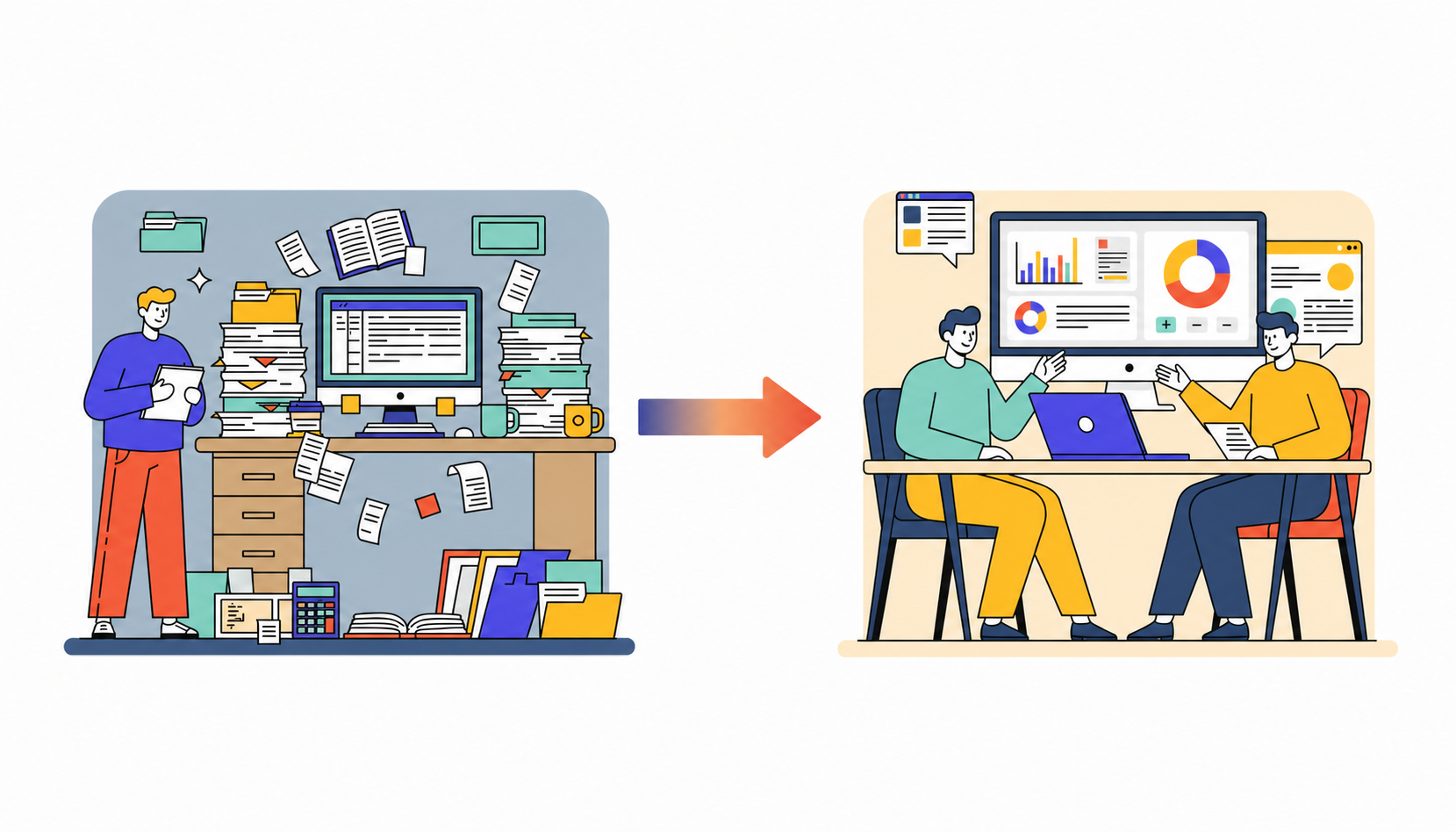
Advisory service tools are the software that makes this shift possible. By automating repetitive close work like bank feed categorization, journal entries, and reconciliations, these tools free up bookkeepers to spend time on variance analysis, cash flow conversations, and forward-looking guidance. Less data entry, more actual advice.
What separates a strong bookkeeping advisory tool from generic project management software is direct ledger integration. The best ones connect to QuickBooks, Xero, or an ERP so your insights are grounded in live data, not exports pulled three days ago.
How These Solutions Were Reviewed
Each tool below was reviewed using publicly available information, focusing on the criteria that actually matter for bookkeeping advisory work:
- AI-powered automation for bank feeds, journal entries, and reconciliations, covering auto-categorization rules, accrual schedules, and AI-generated journal entries from source documents
- Direct, bidirectional integration with QuickBooks Online, Xero, or an ERP that syncs in real time, not via periodic exports
- Client communication built into the close workflow, including document requests, approval flows, and passwordless client portals
- Month-end close management with per-client task checklists and close status visibility across your full portfolio
- Financial reporting with live ledger data, including P&L drill-down by vendor or customer and variance explanations
- Per-client pricing that scales with revenue growth, not user-based models that add cost every time you hire
No hands-on trials were conducted. This comparison is based on published features, pricing, and positioning. Results will vary depending on firm size and the complexity of your closes.
Best Overall Advisory Service Solution for Bookkeepers: Double
Double is an AI-powered, ledger-integrated close management solution built for bookkeeping practices and CAS teams. The work happens inside Double itself, syncing bidirectionally with QuickBooks Online and Xero in real time.
Here's what you get:
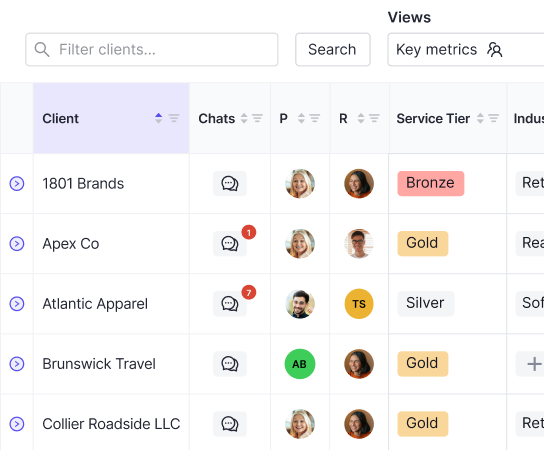
- AI bank feeds with composable rules and auto-categorization that QuickBooks doesn't offer natively
- Automated accruals with schedules and AI journal entries generated from complex source documents
- White-labeled client portal with magic links requiring no passwords
- Interactive P&L with AI-assisted variance explanations and drill-down by vendor or customer
- 1099 management with threshold tracking and one-click W-9 requests; and much, much more
Pricing runs $10-50 per client monthly with no user fees, which scales the way accounting firms actually bill. YetiBooks saved 50+ hours per week. TeKoda grew from 15 to 100+ clients. Advisory services can command $150-300 per hour versus $35-50 for compliance work, and automating close tasks creates real capacity to offer that higher-value layer.
Good for: Bookkeeping practices managing 5-500+ monthly clients who want to reclaim close time without adding headcount.
Dext
Dext is an AI-powered pre-accounting tool focused on automating data capture from receipts, invoices, and supplier documents.
- OCR extraction with 99.9% accuracy, plus smart suggestions for categories and payment methods
- Integration with Xero, QuickBooks, Sage, and 30+ other accounting systems
- Mobile receipt capture with bulk upload and mileage tracking
- Line-item extraction on higher-tier plans
Good for firms needing dedicated receipt capture who already have separate tools handling everything else. That said, Dext covers pre-accounting only. Close management, client communication, reconciliations, accruals, and reporting all require other solutions. User-based pricing with document volume limits adds up fast as your client base grows.
Canopy
Canopy is an all-in-one accounting practice management tool built for tax, bookkeeping, advisory, and CPA firms handling clients, staff, projects, documents, and billing in one place.
What they offer
- IRS transcript access, forms, and resolution tools directly within the system
- Time and billing with integrated payment options
- Document storage, task management, and a client portal with progress roadmaps
- Workflow automation using templates for letters, client requests, and recurring projects
Good for: US tax resolution firms and tax preparation practices needing compliance features.
Canopy's standout features lean heavily on IRS integration, which loses its edge fast for firms not doing tax resolution work. The QuickBooks and Xero sync is shallow compared to what bookkeeping advisory work actually requires. No AI bank feeds, no automated accruals, no month-end close automation. Users also report forced module purchases and ongoing price increases. For practices where advisory and close management are the core service, Canopy's tax-first design leaves real gaps.
Financial Cents
Financial Cents is an easy-to-use practice management solution built for accountants and bookkeepers to track client work, communicate with teams, store client information, and manage financial performance.
- Over 100 pre-built workflow templates covering monthly bookkeeping, payroll, and tax preparation
- A no-password client portal that removes friction for client adoption
- Project management with tags, team collaboration, and month-end close tracking
- Time tracking that integrates with billing tools
Good for: Small to mid-sized firms and solo practitioners moving beyond spreadsheets who value quick implementation.
Financial Cents lacks full financial statement connectivity to QuickBooks for balance sheet reconciliations or general financial review. The QuickBooks integration pulls data but won't let you fix errors inside the workflow. There is no AI bank feeds, automated accruals, AI journal entries, or reconciliation troubleshooting. At $49 to $69 per user monthly, costs compound quickly as your team grows.
The core limitation is structural: Financial Cents treats bookkeeping work as separate from managing it. You're still toggling to QuickBooks to execute actual close tasks instead of working in one place where the data lives.
Ramp Stack
Ramp Stack is an AI operating system for accounting firms, launched in June 2026. Built on Ramp's spend management, AP, and banking platform, it adds AI-powered close capabilities including flux analysis, accrual roll-forwards, and a Skills system for reusable AI workflows. For firms whose clients already run on Ramp for corporate cards and AP, the native data access can eliminate CSV imports and connector delays.
- Fine-tuned accounting AI model with flux analysis and accrual roll-forward generation
- Skills system for building and saving reusable AI workflows across clients
- Native access to Ramp spend, AP, and banking data for firms with Ramp-using clients
- Positioning around speed and strategic advisory for VC-backed startup clients
Good for: Accounting firms serving VC-backed startups and growth companies whose clients are already on the Ramp platform for spend management and AP.
The core limitation worth noting is structural: Ramp Stack's native data advantage only applies to clients who use Ramp. For any client on a different bank, card program, or AP system, firms are back to CSV imports and connector delays. AI outputs route through spreadsheets, so journal entries, reconciliations, and accrual postings still require execution in separate systems. There is no client portal, no portfolio-wide close status dashboard, and no practice management layer. Pricing is not publicly disclosed and is expected to sit above Double's per-client tiers based on enterprise positioning.
Pricing and Best Use Case Comparison
Solution | Pricing Model | Implementation Cost | Best For | Key Limitation |
|---|---|---|---|---|
Double | $10-50 per client monthly, no user fees | Minimal, quick onboarding included | Bookkeeping practices managing 5-500+ monthly clients who want to automate close work and scale advisory services without adding headcount | Focused on bookkeeping firms instead of internal corporate finance teams |
Dext | User-based with document volume limits | Low, self-serve setup available | Firms needing dedicated receipt capture with OCR who already have separate tools for close management and client communication | Pre-accounting only; requires additional tools for reconciliations, accruals, reporting, and month-end close |
Canopy | Module-based with forced purchases, frequent price increases | Moderate, training required for IRS features | US tax resolution firms and tax preparation practices needing IRS transcript access and compliance features | Tax-first design; shallow QuickBooks/Xero sync with no AI automation for bookkeeping close work |
Financial Cents | $49-69 per user monthly | Low, quick setup with pre-built templates | Small to mid-sized firms and solo practitioners moving beyond spreadsheets who value quick implementation | No ledger integration for executing work; still requires toggling to QuickBooks for actual close tasks |
Ramp Stack | Not publicly disclosed; expected above Double's per-client tiers | Not disclosed; enterprise positioning suggests significant onboarding | Accounting firms serving VC-backed startups and growth companies whose clients already use Ramp for spend management and AP | Native data advantage limited to Ramp clients only; no client portal, no close status dashboard, no practice management layer |

Why Double Is the Best Advisory Service Solution for Bookkeepers
93% of firms now offer advisory services, up from 83% last year, with nearly half planning to expand those offerings in the next 12 months and 70% of professionals using AI weekly. That shift only works if compliance tasks stop eating the clock.
Double is built for exactly this. Where other tools either track work or solve one piece of the puzzle, Double executes the full month-end close inside a single AI-powered workflow connected live to QuickBooks and Xero. Per-client pricing means your costs scale the same way your revenue does. The result: less time in the books, more time doing the advisory work clients will actually pay a premium for.
Final Thoughts on Selecting Advisory Software for Your Bookkeeping Practice
The gap between offering advisory work and actually doing it comes down to capacity. Most accounting advisory software either tracks your work or solves one narrow problem, leaving you to stitch everything together. Double closes books inside the same system where you analyze variances, post accruals, and communicate with clients. Book a demo and bring your messiest month-end close. You'll charge more for advisory, but only if compliance tasks stop blocking your calendar.