
Month-end close is three days away. You're copying last period's rollforward template, pasting new GL data, updating formulas, and hoping nothing breaks. One cell reference moves and suddenly your debt schedule is off by $200,000. There's a better way to build rollforward schedules that doesn't rely on fragile spreadsheets and manual updates. Here's what finance teams are switching to.
TLDR:
- A rollforward tracks account movement from opening to closing balance using Beginning Balance + Additions - Subtractions = Ending Balance
- Rollforwards explain change over time while reconciliations confirm accuracy at a single point
- Common types include fixed asset, AR, debt, deferred revenue, equity, and ARR schedules
- Auditors use roll forward procedures to extend interim testing through the financial statement date
- Double connects rollforward schedules to accounting systems with drill-down access to source transactions
What Is a Rollforward in Accounting?
A rollforward in accounting is a schedule that tracks how an account balance moves from one period to the next. Start with the opening balance, document every transaction and adjustment that occurred during the period, and arrive at the closing balance.
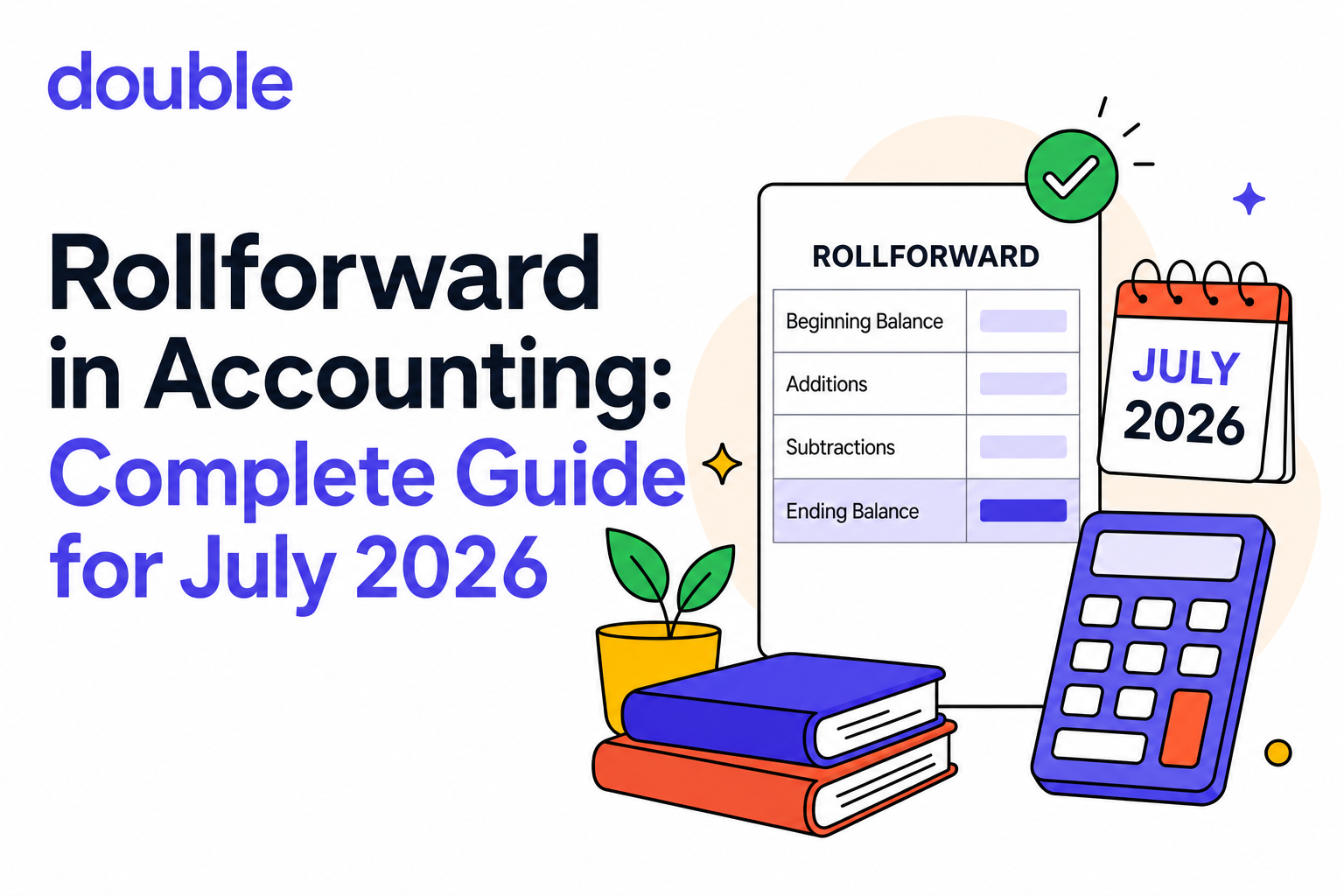
The formula is: Beginning Balance + Additions - Subtractions = Ending Balance.
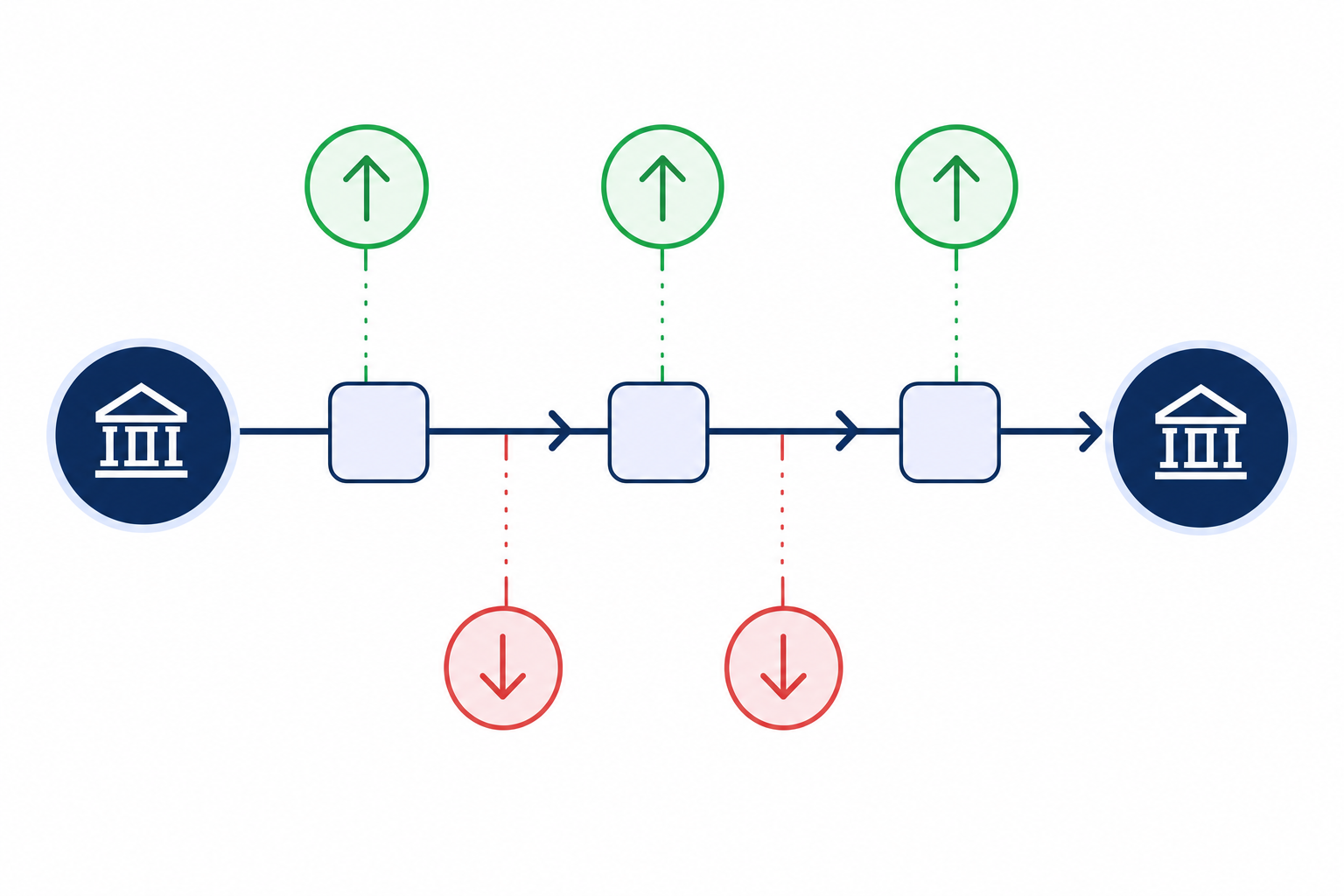
That simple structure creates something valuable: an audit trail. Instead of comparing two numbers and wondering what happened between them, a rollforward shows exactly what moved an account from its starting point to its close.
How Rollforward Accounting Works
The process is sequential by design:
- Pull the prior period's closing balance as your opening figure
- Record each addition (purchases, period-end accruals, new debt issued)
- Record each subtraction (disposals, payments, amortization)
- Sum the activity to arrive at a closing balance
- Verify that closing balance matches your general ledger
Every line in the schedule should tie back to a source document. That traceability is what makes the rollforward useful beyond basic record-keeping. When the closing balance agrees with your ledger, you have a clean, documented account history. When it doesn't, the schedule itself tells you exactly where to look for variance analysis.
Rollforward vs. Reconciliation: Understanding the Difference
Both terms come up constantly in accounting workflows, so the confusion is understandable. A rollforward tracks movement: it shows how a balance got from Point A to Point B over a period. A reconciliation confirms accuracy: it verifies that two independent records agree at a single point in time.
The simplest way to think about it is that rollforwards explain change, while reconciliations confirm correctness. You often run both together, using the rollforward to build the ending balance and then tying that balance to an external source to catch any discrepancies.
Common Rollforward Schedule Examples
Rollforward schedules appear across nearly every area of accounting, each tracking a different account from opening to closing balance. Here are the most common types you'll encounter.
Rollforward Type | Opening Balance | Common Additions | Common Subtractions | Primary Use Case |
|---|---|---|---|---|
Fixed Asset (PP&E) | Prior period gross asset cost and accumulated depreciation of property, plant, and equipment | Capital expenditures, asset acquisitions, construction in progress completions | Asset disposals, depreciation expense, impairment charges | Verify asset additions and retirements match capital expenditure authorizations and disposal proceeds |
Accounts Receivable | Prior period ending AR balance from the balance sheet | New customer invoices issued, accrued revenue recorded | Cash collections received, bad debt write-offs, customer credits issued | Track collectability and aging of outstanding customer balances |
Debt | Prior period outstanding principal balance | New borrowings, debt issuances, additional draws on credit facilities | Principal repayments, debt extinguishments, amortization of issuance costs | Monitor covenant compliance and verify principal movements tie to cash flow statement |
Deferred Revenue | Prior period unearned revenue balance | New customer prepayments collected, contract liabilities from new agreements | Revenue recognized as performance obligations are satisfied | Confirm revenue recognition timing aligns with contract terms and delivery milestones |
Equity | Prior period stockholders equity from balance sheet | Net income, stock issuances, additional paid-in capital from options exercised | Dividends paid, share repurchases, treasury stock transactions | Track all equity movements from the statement of stockholders equity |
ARR (SaaS) | Prior period annual recurring revenue | New bookings, customer expansions, upsells to existing accounts | Customer churn, downgrades, contractions in subscription value | Track predictable revenue streams and measure growth in subscription business models |
Fixed Asset (PP&E) Rollforward
Starts with the opening net book value, adds capital expenditures, subtracts disposals, and deducts depreciation to arrive at the closing balance. Auditors rely on this to verify asset additions and retirements.
Accounts Receivable Rollforward
Tracks beginning AR, adds new invoices, subtracts cash collections and write-offs, and confirms the ending balance ties to the balance sheet.
Debt Rollforward Schedule
Opens with outstanding principal, adds new borrowings, removes repayments, and accounts for any amortization of debt issuance costs.
Deferred Revenue Rollforward
Begins with the prior period deferred balance, adds newly collected but unearned revenue, and subtracts amounts recognized as earned during the period. Building accurate deferred revenue schedules requires careful tracking of contract terms and performance obligation timing.
Equity Rollforward Schedule
Tracks opening stockholders equity through net income, dividends, share issuances, and repurchases to reach the closing equity balance.
ARR Rollforward
Common in SaaS finance, this tracks annual recurring revenue from the opening balance through new bookings, expansions, contractions, and churn to show net ARR movement.
Fixed Asset Rollforward Schedules
A fixed asset rollforward schedule tracks the movement of long-term assets across a reporting period. It starts with the opening balance of property, plant, and equipment, then layers in additions, disposals, depreciation, and impairments to arrive at the closing balance.
Auditors rely on these schedules heavily. They verify that every addition ties to a capital expenditure authorization, disposals match proceeds recorded in cash, and accumulated depreciation is calculated correctly.
Key Line Items in a PP&E Rollforward
- Opening gross asset balance per prior period financials
- Capital additions during the period, tied to invoices or capex approvals
- Disposals at cost, with corresponding removal of accumulated depreciation
- Depreciation expense for the period, verified against the income statement
- Closing net book value, which should agree to the balance sheet
Rollforward Procedures in Audit
Roll forward procedures are audit techniques used to extend the coverage of audit evidence from an interim testing date to the financial statement date. When auditors complete substantive testing before year-end, they need assurance that the account balances remain fairly stated through the reporting date. PCAOB Standards require these procedures for public companies to update interim testing results through year-end.
There are several scenarios where roll forward procedures become necessary.
When Auditors Use Roll Forward Procedures
- When interim audit work was performed months before the balance sheet date and conditions may have changed
- When testing manual controls, auditors perform roll forward procedures to confirm those controls remained effective through year-end
- When account balances tested at an interim date need validation through the final reporting period
What Roll Forward Procedures Typically Involve
- Reviewing transactions that occurred between the interim testing date and year-end for unusual items or unexpected fluctuations
- Tying the interim tested balance to the year-end balance using a rollforward schedule
- Obtaining and testing additional samples from the roll forward period when risk warrants it
- Confirming that no major changes in internal controls occurred after interim testing was completed
The roll forward period refers to the gap between the interim audit date and the financial statement date. The longer this gap, the more substantive the roll forward procedures typically need to be.
Why Rollforward Reports Matter for Financial Reporting
Rollforward reports give finance teams and auditors a structured way to verify that account balances move correctly from one period to the next. Without them, it becomes nearly impossible to spot where a discrepancy originated or whether a closing balance was accurately carried forward.
For auditors, rollforward schedules are a core part of year-end testing. They confirm that interim audit work still holds by the time financial statements are issued. For controllers and CFOs, they serve as a real-time check on whether the numbers tell a consistent story across periods with close management tools.
Best Practices for Creating Rollforward Schedules
A well-structured rollforward schedule does more than track numbers. It creates a clear audit trail and keeps your financial reporting defensible under scrutiny.
Here are the practices that separate reliable schedules from ones that create problems later:
- Start with a verified opening balance that ties directly to the prior period's closing balance, confirmed and signed off by the appropriate reviewer using close management systems.
- Use a consistent format across all schedules so that anyone reviewing the file can follow the logic without needing a walkthrough.
- Document every line item with a source reference, whether that's a journal entry number, invoice, or supporting sub-schedule.
- Verify the closing balance against the general ledger before the schedule is considered complete, not after review comments come in.
- Date-stamp all updates and track who made changes, especially in shared files where multiple team members contribute.
- Flag unusual movements, such as large unexplained decreases or activity that falls outside normal patterns, with a brief explanatory note directly in the schedule.
Common Rollforward Mistakes and How to Avoid Them
A few mistakes show up repeatedly across rollforward schedules, and each one undermines what the schedule is supposed to accomplish.
- Removing only net book value on disposals instead of eliminating both gross asset cost and accumulated depreciation separately. This inflates both balance sheet line items and creates ghost balances that compound over time.
- Missing the reversal of a prior period accrual, which double-counts the expense and distorts the opening balance before a single new transaction is added.
- Timing differences where activity posts in the wrong period, so the schedule closes clean but against an incorrect number.
- Copying GL output line-for-line without a validation step. A rollforward that simply mirrors the ledger doesn't verify anything, which is why validation steps are required before finalizing any schedule.
That last issue points to something worth stating plainly: a rollforward without supporting documentation is not a true reconciliation. It records what happened. It doesn't confirm that what happened was correct.
Automating Rollforward Accounting for Month-End Close
Manual rollforward preparation is repetitive by nature. You pull data from one system, paste it into a spreadsheet, apply formulas, and hope nothing breaks when you update the next period. When source systems change, every formula becomes suspect.
Connecting rollforward schedules directly to accounting systems removes that problem through automated month-end close management. Additions and subtractions post automatically as transactions hit the ledger, balances update in real time, and the risk of a copy-paste error quietly corrupting your schedule disappears with it.
The bigger gain shows up during review. Instead of flipping between schedules and source documents, you can drill from a summary balance down to the individual transaction behind it in seconds. Auditors asking about a specific line item? The answer is one click away, not a 30-minute reconstruction.
Building Better Rollforwards with Double's Month-End Close Management
Rollforward schedules sit at the intersection of accuracy and speed, and getting them right under close deadlines is genuinely hard. Double's month-end close management is built around exactly this kind of work, helping finance teams move through their rollforward schedules without losing track of supporting detail or version history.
Instead of chasing down numbers across spreadsheets, teams can work through rollforwards in one place, with clear audit trails that hold up to scrutiny during review.
Final Thoughts on Rollforward Documentation
Rollforwards prove how balances moved, which matters more than most people realize until an auditor asks for backup on a three-month-old transaction. Tools that connect rollforward accounting schedules directly to your ledger eliminate the version control issues and formula errors that slow down close cycles. You don't need perfect schedules on day one, but you do need a system that gets better each period. Build the habits now, and your close process will get faster without cutting corners.