
When your company hits $20M in revenue, the scrappy close process that worked at $5M starts breaking down: you're juggling reconciliations in shared drives, hunting down approvals in email threads, and losing track of what's actually done versus what someone said they'd do. Most finance teams aim to close within 5 to 10 days, but without the right tools, that timeline stretches into weeks. What you need is a solid, AI-driven close management tool that connects to your ERP and lets you do the work in one place instead of coordinating it across five different apps. We tested seven tools built for finance teams where the controller is still in the weeds doing journal entries, not handing them off for review.
TLDR:
- Close management tools connect to your ERP to execute accounting work and track it from the same place.
- Double automates categorization and matching while maintaining audit trails for compliance.
- Most tools range from a few thousand to six figures annually based on team size and features.
- Small finance teams need fast setup and straightforward pricing, not enterprise complexity.
- Double offers close management for internal finance teams with ERP integration and AI automation.
What are Close Management Tools for Internal Finance Teams?
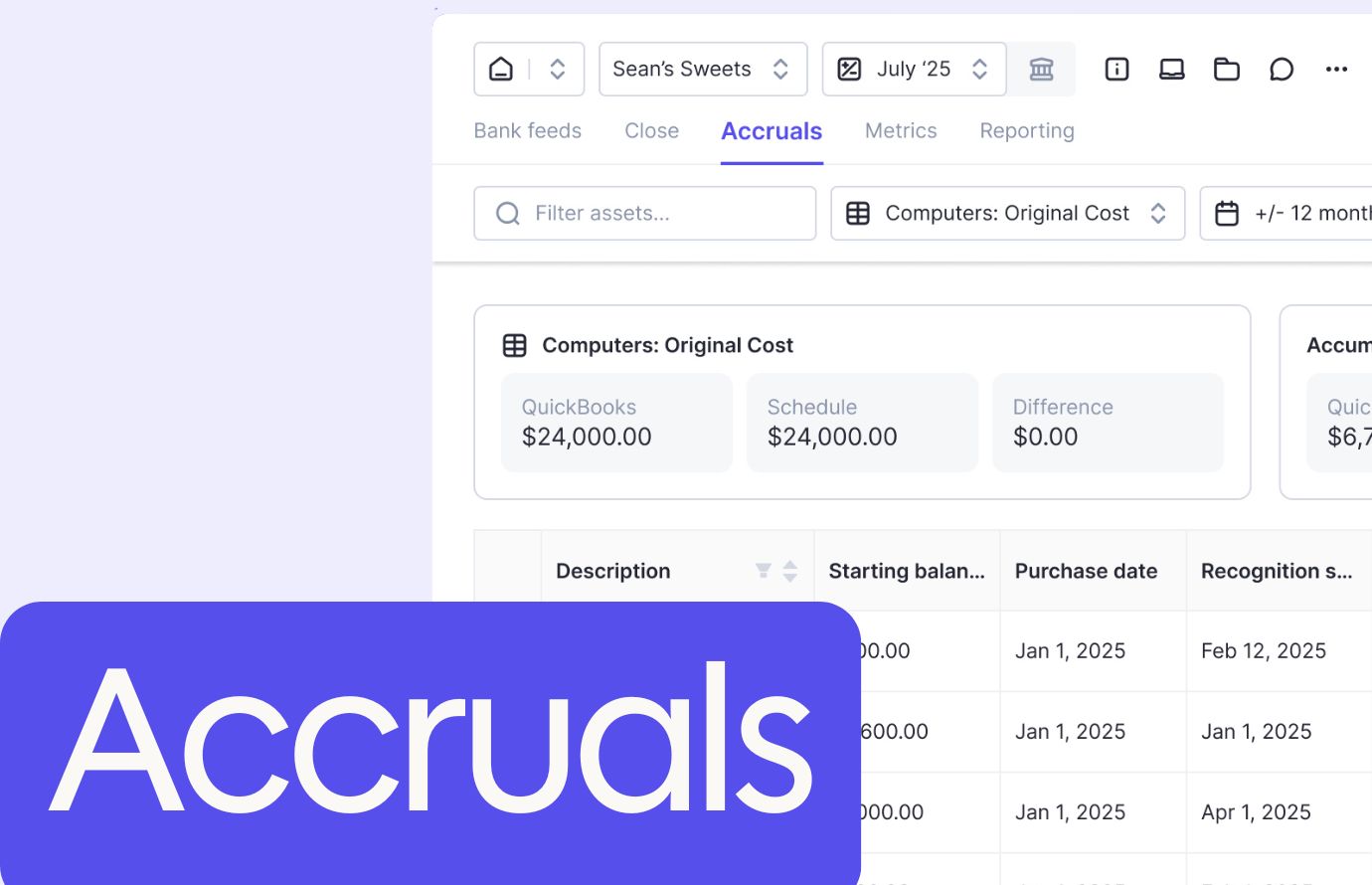
Close management tools are software solutions that help finance departments coordinate, execute, and track the month-end close process from one centralized system. They connect directly to ERPs and accounting systems to do the actual accounting work. ERP integration reduces close cycle time by eliminating manual data uploads and automatically flagging discrepancies. Reconciliations, journal entries, accrual schedules, and multi-level sign-offs all happen inside the tool, not scattered across spreadsheets, email chains, and disconnected apps.
For internal finance teams at companies with $10M to $200M in revenue, that distinction hits differently. The close tends to depend on individual memory and effort, which works fine at first. Once transaction volume grows or reporting complexity increases, that approach breaks down. structured workflows and real-time close visibility

How We Ranked the Best Close Management Tools for Internal Finance Teams
Every tool on this list was assessed through the lens of a small, senior finance team where the controller is still doing the work and managing it.
Here's what we weighted most:
- Direct ERP integration with Sage Intacct, NetSuite, or QuickBooks Online
- Automation that cuts manual transaction work for senior accountants
- Real-time visibility into what's done, in progress, and blocked
- Multi-user sign-off workflows that meet corporate governance requirements
- Audit trail capabilities for external audits and internal compliance
- Transparent pricing that works for varying team sizes
- Fast implementation without dedicated IT support
Tools that required months of setup, opaque enterprise pricing, or offered no meaningful ERP integration ranked lower, regardless of brand recognition.
Best Overall Close Management Tool for Internal Finance Teams: Double
Double is our top pick for internal finance teams that want a close management experience built around how accountants actually work.
Most close tools were designed for controllers who need to oversee hundreds of entities. Double takes a different approach, focusing on the day-to-day experience of the people doing the work.
What Makes Double Stand Out
A few things put Double in a category of its own:
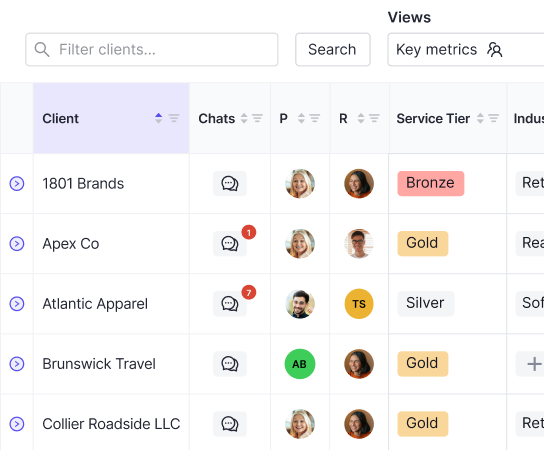
- Task management ties directly to the close calendar, so nothing slips through the cracks at month-end — ownership, due dates, and sign-offs are all in one place.
- AI Transactions — you have a conversation with the AI, it learns the repetitive patterns your team deals with every month, and it handles the tedium so your accountants can focus on the work that actually requires judgment.
- AI Flux Analysis goes well beyond surfacing variance numbers. It drafts the explanations, flags what changed and why, and gives your team a head start on every management reporting conversation.
- The interface is built for people doing real accounting work, so adoption happens without a training overhaul or a months-long rollout.
Numeric
Numeric provides close checklists, reconciliation templates, and AI-assisted variance analysis for finance teams looking to bring more structure to their month-end process.
Here is a look at what they offer:
- Close checklists with task assignment and progress tracking
- Reconciliation templates connected to ERP data
- Real-time dashboards showing close status across entities
Good for mid-market teams transitioning off spreadsheets who want reporting visibility and AI-generated commentary without committing to heavy automation infrastructure.
The limitation worth noting: Numeric surfaces insights but does not act on them. Complex multi-entity structures are not well supported out of the box, and ERP integration lacks real-time depth. If your team needs a tool that actually executes close work instead of organizing it, that gap matters.
FloQast
FloQast organizes close management around checklist-driven task management and integrates with Excel workbooks where most finance teams already operate.
Here is a quick look at what the tool covers:
- Checklists and tie-outs linked to Excel workbooks and ERP systems
- Task assignment with file attachments and sign-offs
- Variance and flux analysis that flags unusual fluctuations during close
- Real-time visibility into reconciliation status and team progress
Good for teams in fast-moving industries where financial controls, approvals, and audit timelines matter.
The Key Limitation
FloQast was built to organize and simplify the close for teams still relying heavily on Excel. It tracks work but does not execute it. Your team still needs to switch to the ERP to complete actions, keeping the checklist and the actual accounting work in separate places.
BlackLine
BlackLine automates the financial close process for mid-market and enterprise organizations managing complex, multi-entity structures across geographies.
Here is a quick look at what the tool offers:
- Configurable task lists with automated assignments and workflows across thousands of close items
- Auto-reconciliation rules and standardized templates that reduce manual matching work
- High-volume transaction ingestion from ERPs, banks, and payroll providers with rule-based automation
- AI tools (Verity Summarize, Verity Draft) for accelerating variance analysis
BlackLine is the standard for global enterprises managing hundreds of entities. But implementation typically requires substantial IT support, and pricing targets enterprise budgets. For small, senior finance teams at $10M to $200M in revenue, the complexity and cost rarely match the need.
Trintech Cadency
Cadency integrates account reconciliation, journal entry management, and compliance activities into a unified Record to Report process built for enterprise finance operations.
Here is what the tool offers:
- Dashboard-driven close management with real-time visibility into missed deadlines and financial statement accuracy
- End-to-end journal entry workflows with configurable routing, controls, and status tracking
- Intercompany reconciliation workflows for comparing and matching transactions between entities
- Pre-built connectors for Oracle and NetSuite ERPs
Good for large enterprises like Sanofi, Best Buy, and Woolworths Group managing complex multi-entity structures and high transaction volumes.
The limitation is scope. Cadency targets organizations with 225 or more entities and routes implementation through Trintech's professional services team. For a 5-person finance team at a $50M company, that overhead is hard to square with the actual need.
Nominal
Nominal automates bank reconciliation and transaction categorization for finance teams managing high transaction volumes across multiple bank accounts and payment processors.
Here's what the tool covers:
- AI-powered transaction matching that learns from your historical categorization patterns
- Real-time bank feeds from hundreds of financial institutions and payment platforms
- Multi-entity support for companies managing reconciliations across subsidiaries
- Accrual tracking and automated journal entry suggestions based on matched transactions
Good for finance teams drowning in transaction volume who need AI to handle the matching work instead of rule-based automation that still requires constant maintenance.
The tradeoff is specialization. Nominal focuses on bank reconciliation and transaction workflows instead of broader close management capabilities like task assignment, variance analysis, or audit workflows. If your close pain involves coordinating sign-offs and managing deliverables across the team, you'll need to supplement Nominal with additional tools.

Feature Comparison Table of Close Management Tools for Internal Finance Teams
Here's how the seven tools compare across the features that matter most for internal finance teams.
Feature | Double | Numeric | FloQast | BlackLine | Trintech Cadency | Nominal |
|---|---|---|---|---|---|---|
ERP Integration | Sage Intacct, NetSuite, QuickBooks Online | Sage Intacct, NetSuite | Native ERP connections | SAP, Oracle, NetSuite, Dynamics | Oracle, NetSuite, SAP | Multi-ERP connectivity |
AI Bank Feed Automation | Yes | No | No | Yes | No | Yes |
AI Journal Entry Generation | Yes | No | No | Yes | No | No |
Yes | No | No | No | No | Yes | |
Multi-User Sign-Off Workflows | Yes | Yes | Yes | Yes | Yes | Yes |
Reconciliation Automation | Yes | Yes | Yes | Yes | Yes | Yes |
Variance Analysis with AI | Yes | Yes | Yes | Yes | Yes | Yes |
Pricing Model | Flat annual rate | User-based | User-based | Enterprise | Enterprise | Custom |
Priority Onboarding & Support | Yes | No | No | No | No | No |
Why Double is the Best Close Management Tool for Internal Finance Teams
Double was purpose-built for internal finance teams that need a faster, cleaner close process without the overhead of enterprise software.
Here's what sets it apart:
- The AI handles the repetitive grunt work: matching transactions, flagging anomalies, and organizing your close checklist so your team can focus on review instead of data wrangling.
- It connects directly to your general ledger and source systems, so there's no manual importing or reformatting involved.
- The task and status tracking gives every stakeholder real-time visibility into where the close stands, cutting down on the "where are we?" check-ins that eat up everyone's calendar.
- It's built for small, senior finance teams, so the setup is straightforward and the learning curve won't stall your next close.
Final Thoughts on Close Management Tools for Finance Teams
Choosing the right software comes down to finding something that actually matches how your team works. The best close management tools go beyond organizing tasks. They connect directly to your ERP to handle reconciliations, journal entries, and accruals without the constant context switching. If you're running a lean finance team that's outgrown spreadsheets but doesn't need enterprise complexity, book a demo to see how Double fits. Your close should get faster as your company grows, not slower.