

You already know what goes into a month-end close. Match the bank accounts, post accruals, review AR and AP aging, run depreciation. The tasks themselves aren't the problem. The reason your close still takes a full week is that the work doesn't begin until after the month ends, nobody has firm ownership over each task, and high-risk accounts sit untouched until day three when you're already behind. A well-structured month-end close process pushes preparation into the final week of each period, assigns clear owners and deadlines to every reconciliation, and surfaces variances before the period officially closes so you're not scrambling to fix them mid-close.
TLDR:
- The average close takes 6.4 days, with 40% of finance teams citing manual processes as the reason.
- A formal close process cuts completion time by up to 40% according to BlackLine.
- Start reconciliations before month-end to avoid fire drills and catch errors early.
- Every checklist task needs a named owner and due date to prevent tasks from sitting unclaimed.
- Double executes your month-end close by connecting to QuickBooks Online and Xero to run reconciliations and variance checks automatically.
What Is the Month-End Close Process?
The month-end close is the process of reviewing, verifying, and finalizing every financial transaction from the prior month before those numbers become official. It locks the books on a defined period so the figures you report actually reflect reality.
Finance teams handle the core work, but department heads often need to confirm expense allocations or explain variances. Auditors, lenders, and investors may rely on the finalized output downstream.
Running this monthly waiting until year-end keeps discrepancies small and manageable. A misaligned account caught in February takes minutes to trace. The same issue surfacing in December takes days. Regular closes also compress audit prep and give leadership reliable data for cash flow and forecasting decisions.
Why the Month-End Close Takes Longer Than It Should
Most month-end closes run long for the same reason: the work doesn't start until the month is already over.
Teams spend the first few days just gathering data, chasing down missing receipts, and waiting on approvals that should have happened weeks earlier. According to a survey by Ventana Research, the average close takes 6.4 business days, and nearly 40% of finance teams say manual processes are the biggest reason it runs over schedule. Recent month-end close benchmarks show that only 18% of teams close in three days or less.
A month-end close checklist changes that by moving preparation earlier in the calendar.
The 7 Most Common Month-End Close Mistakes
Mistakes compound fast in the close. A small reconciliation gap on day one can cascade into a restatement by day five. Here are the seven errors that derail most teams.
Skipping Account Reconciliations
Leaving balance sheet accounts until the final hours creates a scramble. Every account should be tied out as transactions clear, not saved for crunch time.
Missing Cut-Off Dates
Revenue and expenses booked in the wrong period distort financial statements and require painful adjustments next month.
No Ownership on Tasks
When checklist items lack assigned owners, they get assumed complete. Assign every task to a specific person with a due date.
Relying on Verbal Status Updates
"I think that's done" is not a close status. Teams that track progress in spreadsheets or email threads miss dependencies and lose visibility across the close.
Ignoring Intercompany Eliminations
Multi-entity businesses that skip intercompany reconciliations inflate both revenue and expenses. These eliminations need dedicated checklist steps.
Inconsistent Accrual Entries
Accruals recorded differently each month make period-over-period comparisons unreliable and flag variance explanations that waste analyst time.
Starting Preparation Too Late
Waiting until the last business day of the month to gather supporting documents, bank statements, and subledger exports turns a manageable process into a fire drill. Preparation should begin in the final week of each period.
Why a Month-End Close Checklist Is Necessary
Without a clear, structured process, month-end close turns into a scramble. Transactions get missed, reconciliations run late, and finance teams end up chasing down errors that could have been caught days earlier.
A month-end close checklist keeps every task visible, sequenced, and assigned. It gives your team a repeatable process so nothing falls through the cracks, whether you're closing the books for a startup or managing multiple client accounts at once. Despite the clear benefits, only 30% of companies with assigned owners and deadlines, yet every business producing monthly financial statements should have one.
The payoff is real. According to BlackLine, companies with a formal close process complete it up to 40% faster than those without one.
Pre-Close Preparation: Setting Yourself Up for Success
The close starts before the month ends. Top performers treat the final week of each period as active prep time.
Build a close calendar with firm cutoffs for expense submissions, AP entries, and payroll, then share those dates with every department that feeds your books. Surprises at close are almost always a communication gap in disguise. Three habits compress the actual close window from there:
- Pre-stage recurring journal entries (depreciation, subscriptions, payroll accruals) before the period closes so they are ready to post immediately on day one.
- Match high-risk accounts like cash and credit cards on a rolling weekly basis instead of saving all that work for the final crunch.
- Review AP and AR aging reports continuously throughout the month so outstanding items surface early, not mid-close.
The Complete Month-End Close Checklist (Step-by-Step)
A reliable month-end close follows a sequence, more than a list of tasks. The order matters because each phase builds on the one before it. Here is a step-by-step walkthrough you can adapt to your next close.
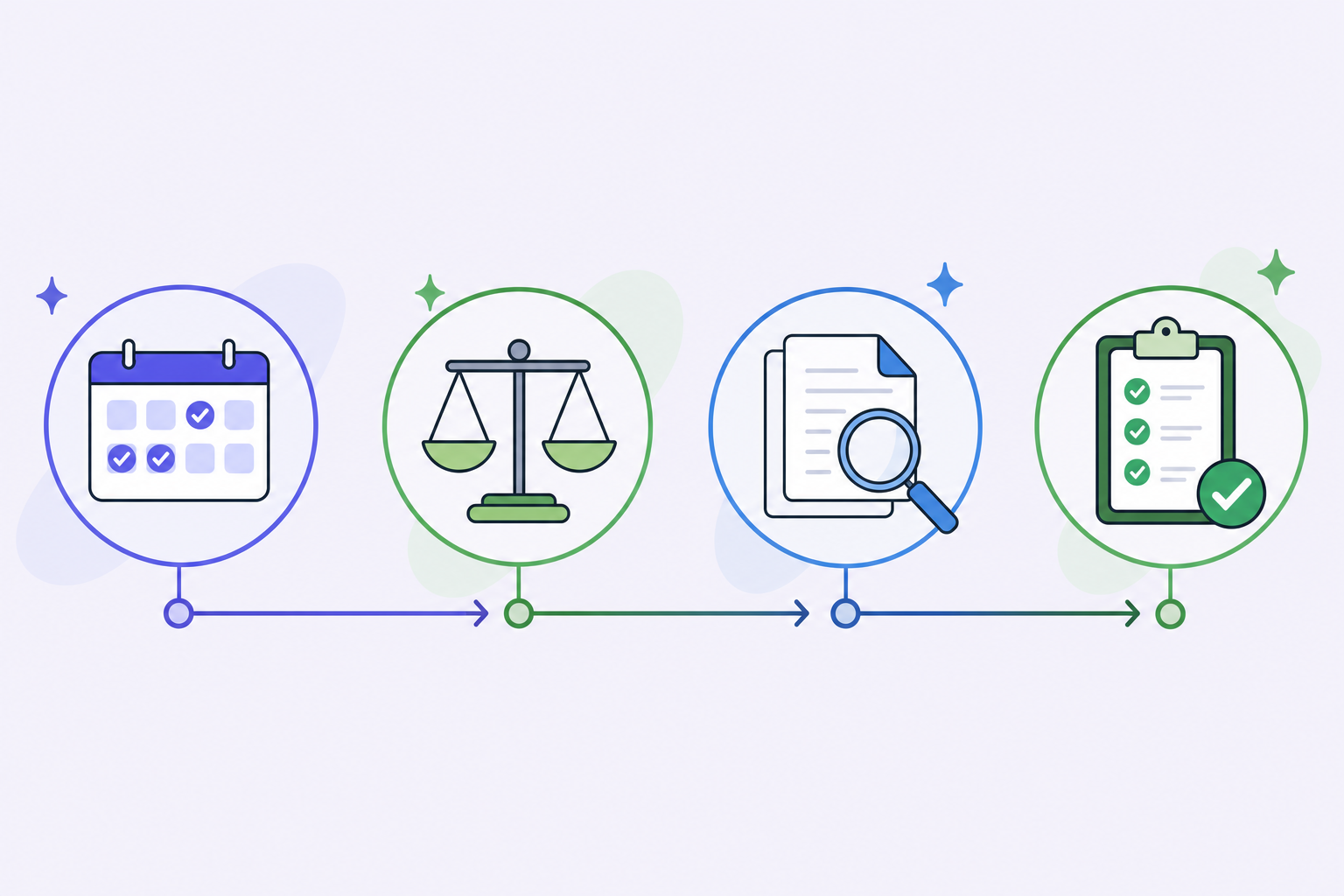
Close Phase | Timing | Key Activities |
|---|---|---|
Transaction Cutoff and Data Collection | Week 1 after period close | Post all journal entries, confirm payroll and AP/AR entries are complete, lock the period, pull bank and credit card statements, record accruals for unbilled expenses |
Reconciliations | Week 2 after period close | Match every transaction to source documents, match bank accounts and credit cards, flag unexplained variances, document reconciliations with clear sign-offs |
Review and Adjustments | Week 3 after period close | Review income statement line items against prior months and budget, post remaining adjusting entries, confirm depreciation and amortization schedules, review prepaid and deferred revenue |
Reporting and Sign-Off | Week 4 after period close | Generate final financial statements, distribute to stakeholders, get formal approval from reviewers, archive all supporting documentation in organized format |
Week 1: Transaction Cutoff and Data Collection
Get all transactions recorded before anything else. posting all journal entries for the period, confirming that payroll, accounts payable, and accounts receivable entries are complete, and locking the period so no late entries slip through.
- Confirm the cutoff date with your team and communicate it clearly to anyone who submits expenses or invoices.
- Post accruals for any expenses incurred but not yet billed.
- Pull bank statements and credit card statements for the full month.
Week 2: Reconciliations
Match every account that touches cash or carries a balance against its source records. Start with bank accounts, then work through credit cards, intercompany accounts, and any balance sheet accounts with activity during the period.
- Match each transaction to its source document.
- Flag and investigate any unexplained variances before moving forward.
- Document the reconciliation with a clear sign-off so reviewers know it is complete.
Week 3: Review and Adjustments
Once reconciliations are clean, review your financials for accuracy. Look at income statement line items against prior months and budget. Investigate anything that looks off before it becomes a board-level question.
- Post any remaining adjusting entries.
- Confirm depreciation and amortization schedules have run correctly.
- Review prepaid and deferred revenue schedules.
Week 4: Reporting and Sign-Off
Generate final financial statements, distribute them to stakeholders, and get formal approval from the appropriate reviewer. Archive all supporting documentation in an organized, retrievable format so audits stay manageable.
How to Structure Your Month-End Close Process
Designing a month-end close process from scratch takes less time than most finance teams expect. The structure below works across industries, accounting software, and team sizes.
Choose Your Tracking Method
Excel works best when you want to track status, assign owners, and log completion dates in one place. A shared document suits teams that prefer a linear, sign-off-friendly record. Pick a tracking method based on whether your team needs real-time status visibility or a simple documented record of what was completed and by whom.
The Core Sections Every Close Process Needs
- Accounts receivable tasks: confirm all invoices are issued, cash receipts posted, and AR aging reviewed for any past-due balances.
- Accounts payable tasks: verify all vendor bills are entered, accruals recorded for goods received but not yet invoiced, and AP aging.
- Bank and credit card reconciliations: match every transaction to your general ledger before closing the period.
- Payroll and benefits accruals: confirm wages, taxes, and benefit expenses are recorded for the full month.
- Fixed asset and depreciation entries: post scheduled depreciation and record any new asset additions or disposals.
- Intercompany eliminations: if applicable, clear any intercompany balances before consolidating financials.
- Financial statement review: check the income statement, balance sheet, and cash flow statement for anything that looks off before sign-off.
Assign Owners and Deadlines to Each Task
A checklist without ownership is a wish list. Every line item should show who is responsible and when it is due relative to the period close date, such as Day 1, Day 3, or Day 5 post-period.
Best Practices for a Faster, More Accurate Close
A few habits separate teams that close in five days from those still chasing down variances on day ten.
Start Before the Month Ends
Prep work done in the final week of the month pays off immediately. high-volume accounts like credit cards and payroll before the books even close, so those items are ready to review ready to start.
Assign Clear Ownership
Every task needs one owner, not a department. Ambiguity is where deadlines slip.
Review Before You Post
Batch your journal entry reviews approving them one at a time. Catching errors before posting avoids the rework that bloats close timelines and keeps your team focused on high-value work.
Common Challenges and How to Avoid Them
Month-end close is rarely derailed by one big mistake. It tends to collapse under the weight of small, recurring problems that compound over time.

The Most Common Pitfalls
- Waiting until the last few days to start reconciliations means any discrepancy late has no room to breathe. Starting bank and credit card reconciliations on day one of close gives your team time to investigate without the pressure of a hard deadline.
- Using a static checklist that never gets updated causes tasks to drift out of sync with your actual business. Review your checklist quarterly and adjust for new accounts, vendors, or reporting requirements.
- Unclear ownership means tasks sit unclaimed. Every line item on your month-end close checklist template should have a named assignee and a due date, beyond a checkbox.
- Skipping the prepaid and accrual review is one of the most common sources of misstated financials that close automation can help catch. These entries require judgment, and leaving them to the final hours of close increases the risk of errors that carry forward.
Compliance and Documentation Requirements
Auditors, regulators, and lenders may review every record your month-end close produces.
Key documentation practices to follow
- Attach source documents directly to journal entries so reviewers can trace figures back to their origin without chasing down scattered files.
- Date-stamp all reconciliations and note the preparer and reviewer names, since sign-off accountability matters during audits.
- Retain bank statements, invoices, contracts, and approval emails in a consistent folder structure tied to the accounting period.
- Log any late adjustments separately with written justification, keeping your audit trail clean even when corrections happen after the initial close.
How Double Executes Your Month-End Close (Beyond Tracking)
Double goes beyond giving you a checklist to fill out. It executes the close for you, pulling data directly from QuickBooks Online and Xero so reconciliations, variance checks, and client follow-ups happen automatically.
Where most checklists leave you copying numbers between tabs, Double connects to your clients' books and runs the work. AI flags anomalies, drafts client messages, and updates task statuses without anyone touching a spreadsheet.
The result is a close that moves faster with fewer errors, handled by a tool built for accounting firms.
Final Thoughts on Your Month-End Close Process
A clear, structured close process makes your close predictable. You know what's done, who's responsible, and when you'll have final numbers ready for review. Break the close into clear phases, assign firm owners to every task, and lock in deadlines so prep happens before crunch time. If you want to see Double execute your close from start to finish, book a demo.