
You start your month-end close with a plan, a checklist, and the best intentions. Then reality kicks in. A vendor invoice shows up late, someone miscoded an entire batch of transactions, and the reconciliation you thought would take 20 minutes reveals a discrepancy you'll spend two hours tracking down. Most accounting teams close their books in under a week, but speed matters less than closing without the rework, the confusion, and the 9 PM emails asking if anyone's seen last month's prepaid schedule.
TLDR:
- Month-end close is reconciling accounts, recording transactions, and producing financial statements at period end.
- Per APQC, the median finance team takes 6.4 days to close books, but rolling close habits cut timelines by days.
- Data collection delays and manual errors are the top blockers. Clear task ownership solves most of them.
- Automating high-volume tasks like bank reconciliations frees your team for judgment work that matters.
- Double automates coordination work like chasing documents and follow-ups for AP and AR close steps.
What Is the Month-End Close Process?
The month-end close is the set of accounting tasks completed at the end of each period to finalize the books. Matching accounts, recording outstanding transactions, making adjusting entries, and producing financial statements that accurately reflect the period are all part of it.
Who's involved depends on the organization. Bookkeepers and staff accountants handle most of the execution, while controllers review reconciliations and approve journal entries. CFOs sign off on the final statements. At smaller companies, a single person often owns all of it.
Month-end close is distinct from quarter-end and year-end closes. Monthly is the baseline rhythm, done 12 times a year under tighter timelines and with less ceremony. Quarter-end adds a layer for external reporting or board packages. Year-end brings auditors, tax prep, and deeper scrutiny of every balance. Accuracy at month-end is what makes those bigger closes manageable.
Why the Month-End Close Process Matters
The month-end close process is the financial backbone of any well-run business. When done right, it gives leadership accurate numbers to make decisions, keeps auditors satisfied, and catches errors before they compound into bigger problems.
The stakes are real. Faster close cycles link directly to more accurate financials and fewer restatements. A slow or disorganized close creates ripple effects across every team that depends on financial data, from FP&A to operations to the board.
For accounting teams, the close is also a recurring stress test. Missed deadlines, manual rework, and unclear ownership are among the top reasons finance professionals cite burnout as a growing concern in the field.
Core Steps in the Month-End Close Process
The close follows a predictable three-phase structure regardless of team size or industry. Miss a step in phase one, and you're patching holes during phase two.
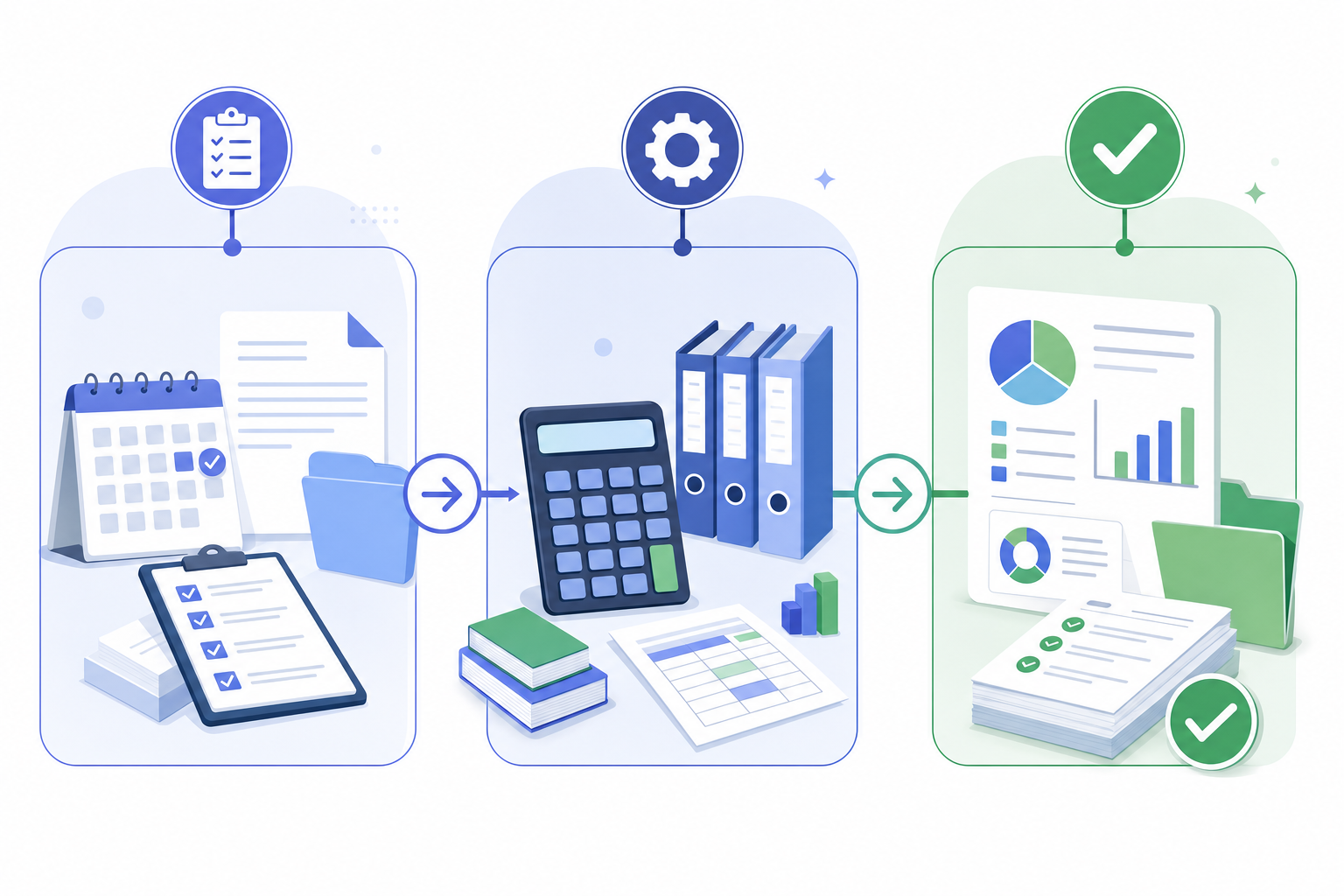
Pre-Close Activities
- Communicate cutoff dates to departments and vendors so everyone knows the deadline for submitting transactions or approvals.
- Confirm all transactions through the period end are captured before the books are touched.
- Chase outstanding invoices, receipts, or approvals that could cause restatements later.
- Verify bank feeds are connected and current going into reconciliation.
Close Execution
- Match all bank and credit card accounts to their statements to catch discrepancies early.
- Post accruals, prepaid amortization, and depreciation entries to reflect the true cost of the period.
- Record payroll and other recurring journal entries that hit on a predictable schedule.
- Review accounts receivable and accounts payable aging schedules for anything overdue or misclassified.
- Update fixed asset records to reflect any new purchases, disposals, or depreciation adjustments.
Post-Close Activities
- Prepare the income statement, balance sheet, and cash flow statement from the finalized data.
- Run variance analysis against the prior period or budget to surface anything worth explaining.
- Attach commentary and footnotes to material line items so readers have context beyond just numbers.
- Distribute reports to stakeholders or publish finalized financials once everything has been reviewed and signed off.
How to Structure Your Month-End Close Workflow
Structure is what separates close cycles that finish on time from those that don't. Distributing tasks across defined phases keeps work visible and accountable before the final days of the month arrive.
What Good Close Workflow Structure Covers
Effective close workflows organize tasks across three phases: pre-close preparation, active close execution, and post-close review. Each task needs a defined owner, a due date tied to the close calendar, a way to track status, and a field for exception notes so nothing falls through silently.
Tools for Running the Close
Purpose-built close management tools offer real-time collaboration, automated reminders, and role-based task assignments. For teams that have outgrown email threads and spreadsheets, these tools bring the structure that makes every close phase trackable without manual coordination overhead.
Common Month-End Close Challenges
Even well-run finance teams hit the same recurring walls every month.
Understanding where the process tends to break down helps you build something more resilient.
Here are the most common obstacles that slow teams down:

- Data collection delays happen when source systems, departments, or vendors are slow to submit information, leaving accountants waiting before they can even begin reconciliations.
- Manual errors compound quickly in spreadsheet-heavy workflows, where a single formula mistake or copy-paste slip can cascade into misstatements across multiple reports.
- Communication gaps between AP, AR, and the general ledger team create duplicate entries or missing accruals that only surface late in the cycle.
- Scope creep occurs when last-minute adjustments, audit requests, or leadership reporting changes get layered onto an already compressed timeline.
- Lack of clear ownership means tasks sit in limbo with no one accountable, which is one of the most avoidable reasons close timelines slip.
The good news is that most of these challenges trace back to process gaps people problems. A well-structured checklist, clear task ownership, and defined cutoff policies resolve the majority of them before they have a chance to grow.
Best Practices to Accelerate Your Month-End Close
Speeding up your close cycle starts with building repeatable habits before the period even ends. Here are the practices that consistently make the biggest difference.
Adopt a Rolling Close Mentality
Instead of treating close as a single hectic sprint at month's end, distribute the work throughout the month. Match high-volume accounts weekly, post accruals on a rolling basis, and review intercompany transactions before the final days arrive. Teams that do this tend to shave days off their close without adding headcount.
Standardize Your Templates and Workflows
Consistent formats for journal entries, reconciliations, and reporting cut down on rework and reviewer questions. When every preparer follows the same format, reviewers spend less time decoding and more time approving.
Set Hard Deadlines by Task Owner
Ambiguous timelines create bottlenecks. Assign each close task a specific owner and a due date tied to your overall close calendar. Escalation paths should be defined in advance so nothing waits silently in someone's inbox.
Automate Where the Volume Is Highest
High-volume close workflows like AP matching, bank reconciliations, and intercompany eliminations are low-judgment tasks that are strong candidates for automation. Shifting those to automated workflows frees your team to focus on estimates, adjustments, and analysis that actually requires human judgment.
Run a Post-Close Retrospective
After each close, spend 30 minutes as a team identifying what slowed you down. Recurring blockers rarely fix themselves, and a short retrospective builds a culture of continuous improvement that compounds over time.
How Long Should Month-End Close Take?
According to APQC's benchmarking survey, the median finance team takes 6.4 days to close its books each month. That number holds across industries, though the range varies considerably based on complexity and team structure.
Company Size (Revenue) | Typical Close Duration |
|---|---|
Under $10M | 5 to 7 business days |
$10M to $50M | 7 to 10 business days |
$50M and above | 5 to 15 business days |
The wide range at the top end reflects system complexity, scale. A $200M company with disciplined cutoffs and well-integrated systems can close faster than a $30M company running everything through spreadsheets and email threads.
Size is a rough predictor at best. Process maturity matters more. Teams that consistently close in five days or fewer have usually solved for ownership and data collection well before the period ends.
The Role of Automation in Month-End Close
Manual close processes slow teams down. Accounting teams that automate reconciliations, journal entries, and variance analysis consistently cut close times compared to those relying on spreadsheets alone.
AI-powered tools can flag anomalies in transaction data before they become audit findings, match invoices to purchase orders without human review, and generate draft journal entries that accountants approve write from scratch. The result is fewer late nights at the end of every month.
At Double, we build AI tools for accounting workflows, helping teams move through the close faster without sacrificing accuracy.
How Double Speeds Up Month-End Close for Accounting Firms and Finance Teams
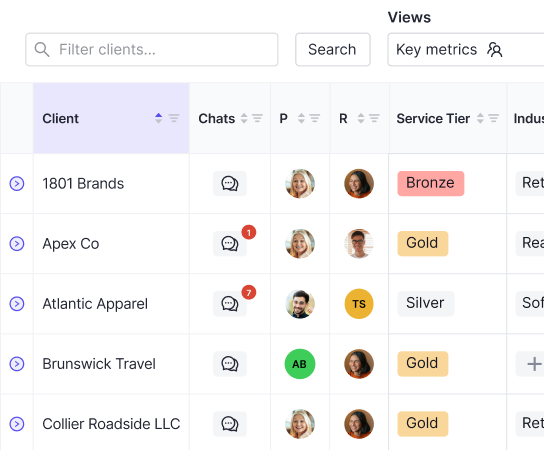
Double brings structure to the month-end close without adding more tools to juggle. Built for accounting firms and finance teams, it acts as an AI-powered executive assistant that handles the coordination work sitting between your closing checklist and your accounting software.
Tasks that typically eat hours, like chasing client documents, sending deadline reminders, and following up on missing reconciliations, get handled automatically. Your team focuses on the review and judgment work that actually requires an accountant.
For accounts payable and accounts receivable close steps especially, Double keeps outstanding items visible and moving. Nothing falls through the cracks at the end of the month because the follow-up happens without anyone having to remember to do it.
Final Thoughts on Refining the Close Workflow
Getting your month end accounting close process down to five days or less is possible without adding staff. The difference is in how you distribute the work across the month and automate the repetitive coordination tasks that slow everyone down. Your team should be reviewing entries, not hunting down missing documents. Book time to see what that looks like in practice.