
Your team earned their wages in the last week of May, but payday isn't until June 5th. Your utility meter ran all month, but the bill won't show up for another ten days. If you wait for the invoice to record these costs, May's expenses look artificially low and June's look inflated. Recording accrued expenses solves this by matching costs to the period they occurred, not when the check cleared. The journal entry itself is simple: debit the expense, credit the liability, and reverse it when the invoice arrives.
TLDR:
- Accrued expenses are costs incurred but not yet paid; you debit the expense and credit accrued liabilities to record them.
- Reverse accrual entries at the start of the next period to prevent double-counting when the invoice arrives.
- Accrued expenses differ from accounts payable because no invoice exists yet; the amount is your estimate, not a vendor's bill.
- Double automates recurring accrual entries, flags missing invoices, and posts reversals automatically to reduce manual work at month-end.
What Are Accrued Expenses
Accrued expenses are costs your business has incurred but hasn't paid for yet. The service happened. The obligation exists. The cash just hasn't moved.
Under accrual accounting, expenses get recorded in the period they occur, not when the check clears. Wages your team earned in March but won't receive until April? Those belong on March's books. Same goes for interest accumulating on a loan or utilities consumed before the invoice arrives.
This matching principle keeps your financial statements accurate and your reporting periods honest. Without it, your income statement would swing based on payment timing instead of actual business activity.
Recording Accrued Expenses Journal Entry
Every accrued expense entry follows the same double-entry pattern: debit the expense account, credit the accrued liabilities account.
That debit increases the expense on your income statement, reducing net income for the period. The credit creates a current liability on your balance sheet. Both sides reflect the same reality: the cost happened, and a payment obligation now exists.
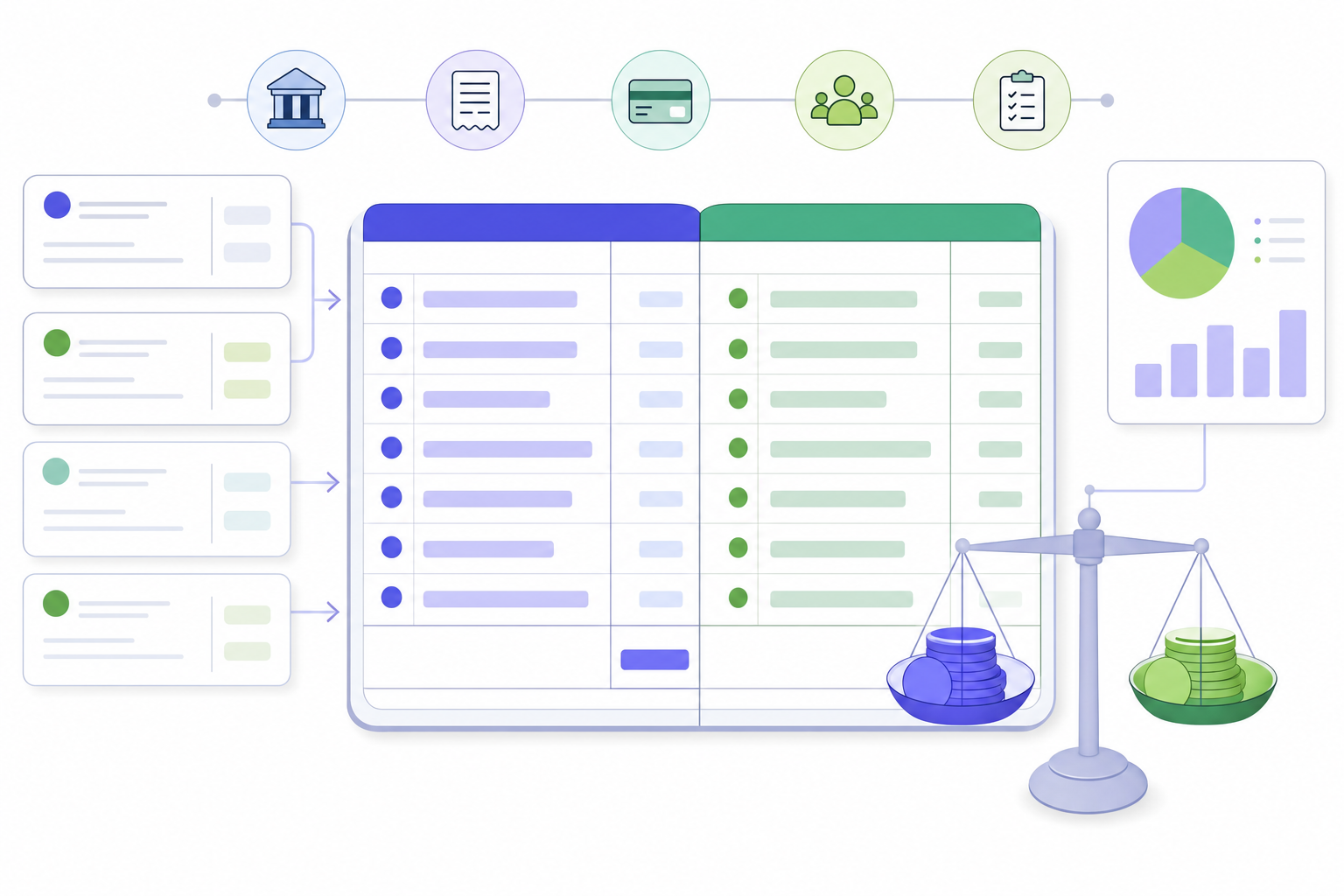
When cash moves, you reverse it: debit accrued liabilities, credit cash. The income statement was already updated in the correct period. The payment just clears the balance sheet obligation.
Worth noting: the accrued liabilities account is a catch-all that lumps together wages payable, interest payable, and other short-term obligations until you break them out by type.
Accrued Expenses Journal Entry Examples
Accrued expenses show up across nearly every business function. Here are the most common scenarios you'll record in practice.
Accrued Salaries
Employees work the last week of May but won't be paid until June. You debit Salaries Expense and credit Salaries Payable for the amount owed.
Accrued Interest
A loan accrues interest daily. At month-end, debit Interest Expense and credit Interest Payable for the portion earned but unpaid.
Accrued Utilities
The electricity bill arrives in June for May usage. Debit Utilities Expense and credit Accrued Liabilities to capture that cost in the right period.
Accrued Expenses Journal Entry Reversal
Reversals exist for one reason: to stop you from counting the same expense twice. When you post an accrual at the end of May, you've already recognized the cost. If the invoice arrives in June and you record it normally, that expense hits your books again. Duplicate expenses inflate costs, understate net income, and create reconciliation headaches that take real time to untangle.
The fix is a reversal entry, posted on the first day of the new period. Debit accrued liabilities and credit the expense account for the same amount. This zeros out the liability and clears the prior expense recognition. When the actual invoice posts in June, it becomes the only time that cost touches your income statement.
When you post an accrual at the end of May, you've already recognized the cost. If the invoice arrives in June and you record it normally, that expense hits your books again. Duplicate expenses inflate costs, understate net income, and create reconciliation headaches that take real time to untangle.
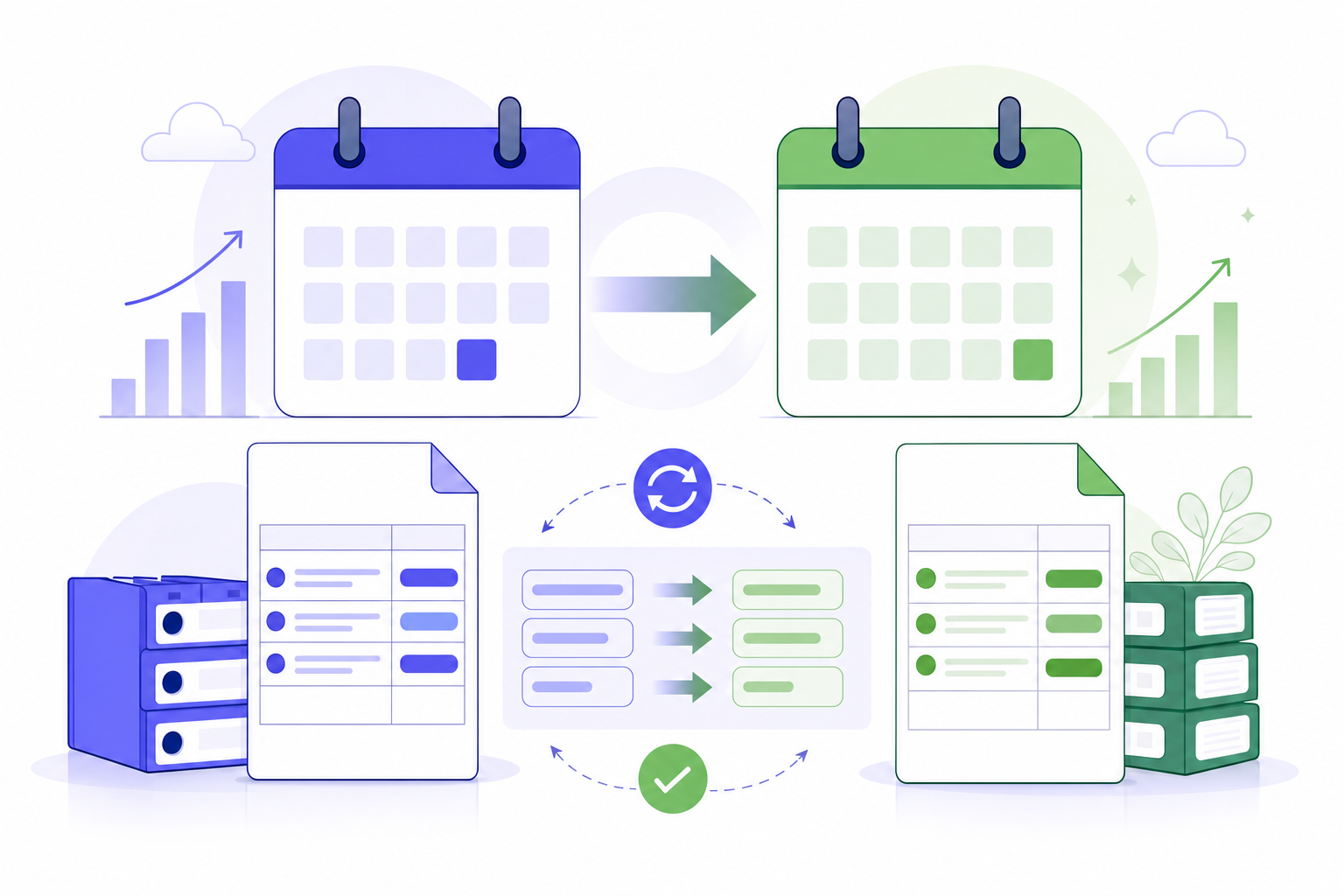
The fix is a reversal entry, posted on the first day of the new period. You debit accrued liabilities and credit the expense account for the same amount. This zeros out the liability and clears the prior expense recognition. When the actual invoice posts in June, it becomes the only time that cost touches your income statement.
The most common mistake is forgetting to reverse. It's easy to post the accrual, close the period, and move on. Then someone records the June invoice without knowing the May accrual is still sitting on the books. Your expense is now overstated by exactly the accrual amount, and you're hunting for the discrepancy weeks later.
Some accounting software lets you schedule reversals automatically at period close. If you're doing it manually, a checklist item at month open is your best safeguard.
Accrued Expenses vs Accounts Payable
Both represent money you owe. The difference is paperwork.
Accounts payable means an invoice exists. A vendor sent a bill with a payment due date attached. Accrued expenses mean the cost occurred but no invoice has arrived yet.
Say a vendor completes a service in May but sends the bill in June. At May 31, that obligation is an accrued expense. Once the invoice lands, it moves to accounts payable.
Accrued Expenses | Accounts Payable | |
|---|---|---|
Invoice received? | No | Yes |
Amount basis | Your estimate | Invoice total |
Balance sheet | Current liability | Current liability |
Both land as current liabilities. The practical difference is who sets the number: your own calculation versus the vendor's stated figure. Getting this classification wrong won't change your total liabilities, but it will create confusion during reconciliation when the invoice eventually arrives.
Prepaid Expenses Journal Entry
Prepaid expenses flip the accrual logic. Pay upfront, allocate over time.
When you write a check for six months of rent in advance, you debit Prepaid Rent (an asset) and credit Cash. Nothing hits the income statement yet because the benefit has not been used.
Each month, you amortize a portion by debiting Rent Expense and crediting Prepaid Rent. The same pattern applies to prepaid insurance, software subscriptions, or any advance payment covering future periods. The asset balance shrinks as the expense grows. By the end of the coverage period, the prepaid is zero and the full cost has moved through your income statement.
Where accrued expenses start as liabilities and convert to cash payments, prepaid expenses start as assets and convert to expenses. Opposite entries, same underlying goal: matching cost recognition to the period it actually belongs in.
Accrued Income Journal Entry
Accrued income is the mirror image of accrued expenses. You've earned the revenue, but the cash hasn't arrived yet.
When you complete a project in May but invoice in June, May's income statement should still reflect that revenue. Debit Accrued Income (an asset) and credit Revenue. When payment arrives in June, debit Cash and credit Accrued Income. The asset clears, and no duplicate entries occur.
The same pattern applies to interest income on a loan you've extended. Each month-end, debit Accrued Interest Receivable and credit Interest Income for what's been earned that period. When the borrower pays, the receivable balance goes to zero.
Accrued Expenses in Balance Sheet
Accrued expenses sit under current liabilities on the balance sheet, grouped alongside accounts payable and other short-term obligations. They're classified as current because the underlying payments are expected within twelve months.
Stakeholders reviewing your balance sheet watch the accrued liabilities line closely. A rising balance without corresponding revenue growth can signal cash flow pressure. A sudden drop might mean accruals weren't recorded properly before the period closed.
Accuracy here matters more than most teams realize. With companies closing books in a median of 6.4 days according to PwC benchmarking data, there's little room for accruals to be estimated loosely or omitted entirely. Understated liabilities overstate equity. Overstated liabilities make the business look weaker than it is. Either way, your financial position tells the wrong story.
Common Accrued Expense Mistakes to Avoid
82% of small businesses, according to SCORE and a U.S. Bank study.
Accruals recorded incorrectly are a quiet contributor, and 94% of spreadsheets contain errors, making manual accrual tracking particularly error-prone as volume grows.
The most common errors:
- Wrong period: Using the invoice date instead of the service date moves the expense to the wrong month, which distorts your financials and can misrepresent profitability.
- Loose estimates: Accruing a round number without documenting how you calculated it invites auditor questions and makes reversals harder to support.
- Missing documentation: Entries without attached source files are difficult to defend when someone asks months later during a review or audit.
- Skipped entries: When invoices run late, teams wait for the bill instead of accruing the cost, leaving expenses unrecorded in the period they belong.
Each has the same fix: a consistent process that ties every entry to a period, a calculation method, and a supporting document.
Automating Accrued Expenses at Month-End Close
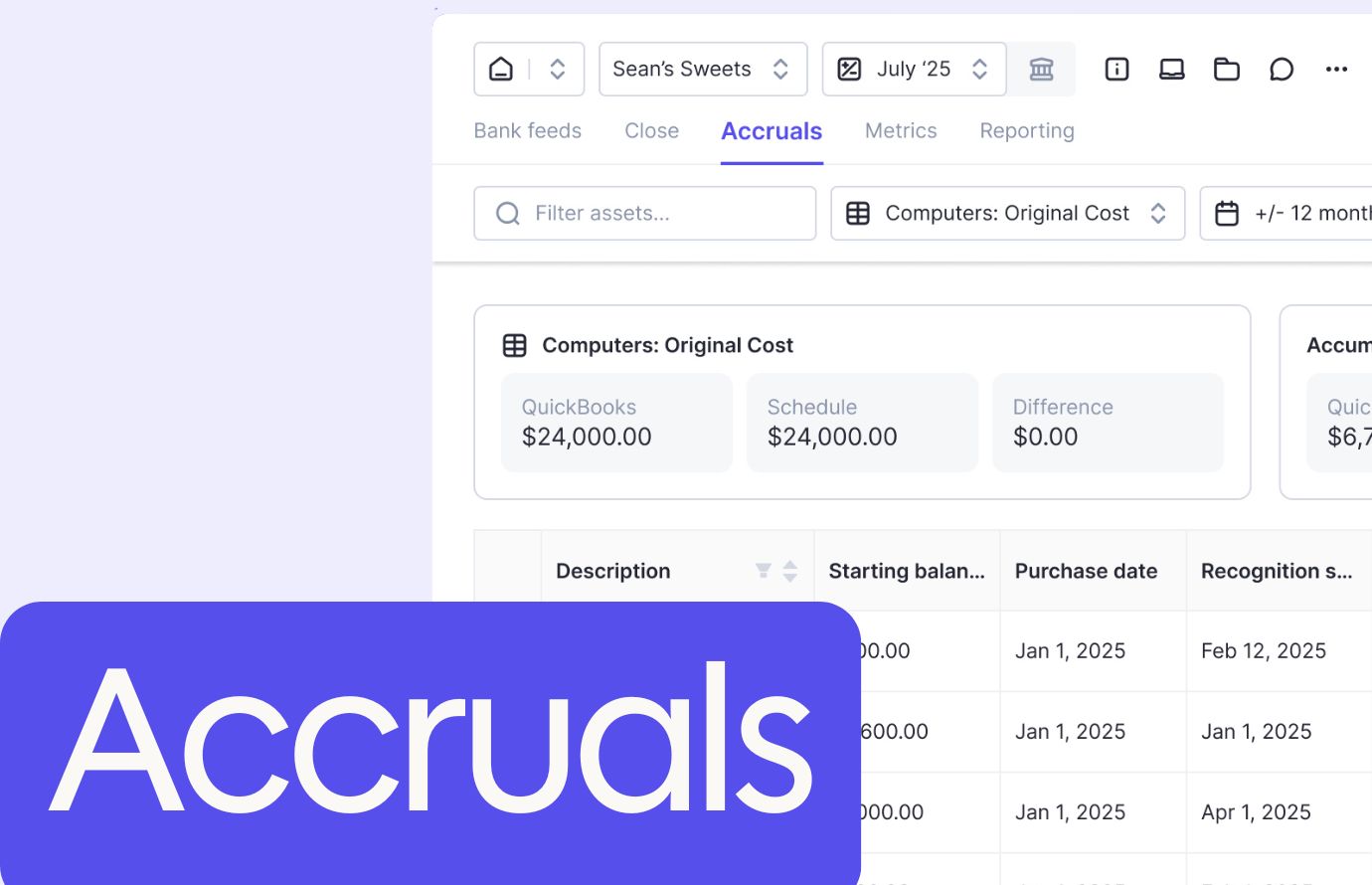
Recording accrued expenses manually each month takes real time. Accountants often spend hours tracking what's been incurred but not yet invoiced, building journal entry templates, and reviewing reversals before close.
Automation tools can handle recurring accrual entries, flag missing invoices, and post reversals automatically in the next period. This reduces the risk of missed entries and keeps your books compliant with accrual accounting standards without the manual lift at every month-end.
Final Thoughts on Accrued Expense Accounting
Recording accrued expenses correctly matters more than most teams realize.
The fix is simple: match every cost to the period it belongs in, document your calculations, and reverse entries on schedule. Your books stay clean, your reports stay accurate, and you avoid reconciliation headaches weeks down the line. If you're ready to automate recurring accruals and reversals, book a demo and see how it works in practice.