
Your customer sends you $6,000 for six months of service upfront. You deposit the check, but your income statement shouldn't reflect that full amount yet. That's deferred revenue: payment collected before the obligation is fulfilled. It lives as a liability until you deliver each month of service, then converts to earned revenue piece by piece. Treat it like income from day one and you'll overstate your performance in ways that throw off planning, lending decisions, and investor expectations.
TLDR:
- Deferred revenue is cash received before service delivery, recorded as a liability until earned.
- ASC 606 requires recognizing revenue only when performance obligations are met, not when paid.
- Subscription businesses must track deferred revenue across billing cycles to stay compliant.
- Manual tracking breaks down at scale; automated accrual schedules prevent recognition errors.
- Double automates deferred revenue entries and posts them directly to your ledger each period.
What Is Deferred Revenue?
Deferred revenue is money you've collected but haven't yet earned. A customer pays upfront, but you haven't delivered the goods or services, so that cash sits on your books as a liability until delivery happens.
It's also called unearned revenue. The payment is real, but the obligation is still open.
For subscription businesses, SaaS companies, and anyone who takes prepayments, this concept comes up constantly. Annual software plans, retainer fees, gift cards, and prepaid services all create deferred revenue. You hold the cash, but you still owe the customer something in return.
Get it wrong and your financials will overstate revenue in ways that mislead investors, auditors, and your own planning.
Why Deferred Revenue Is Classified as a Liability
Receiving cash feels like a win, and it is. But that cash comes attached to a promise. Until you deliver on that promise, the customer technically has a claim on your money. That's why deferred revenue belongs on the liability side of your balance sheet, not in revenue.
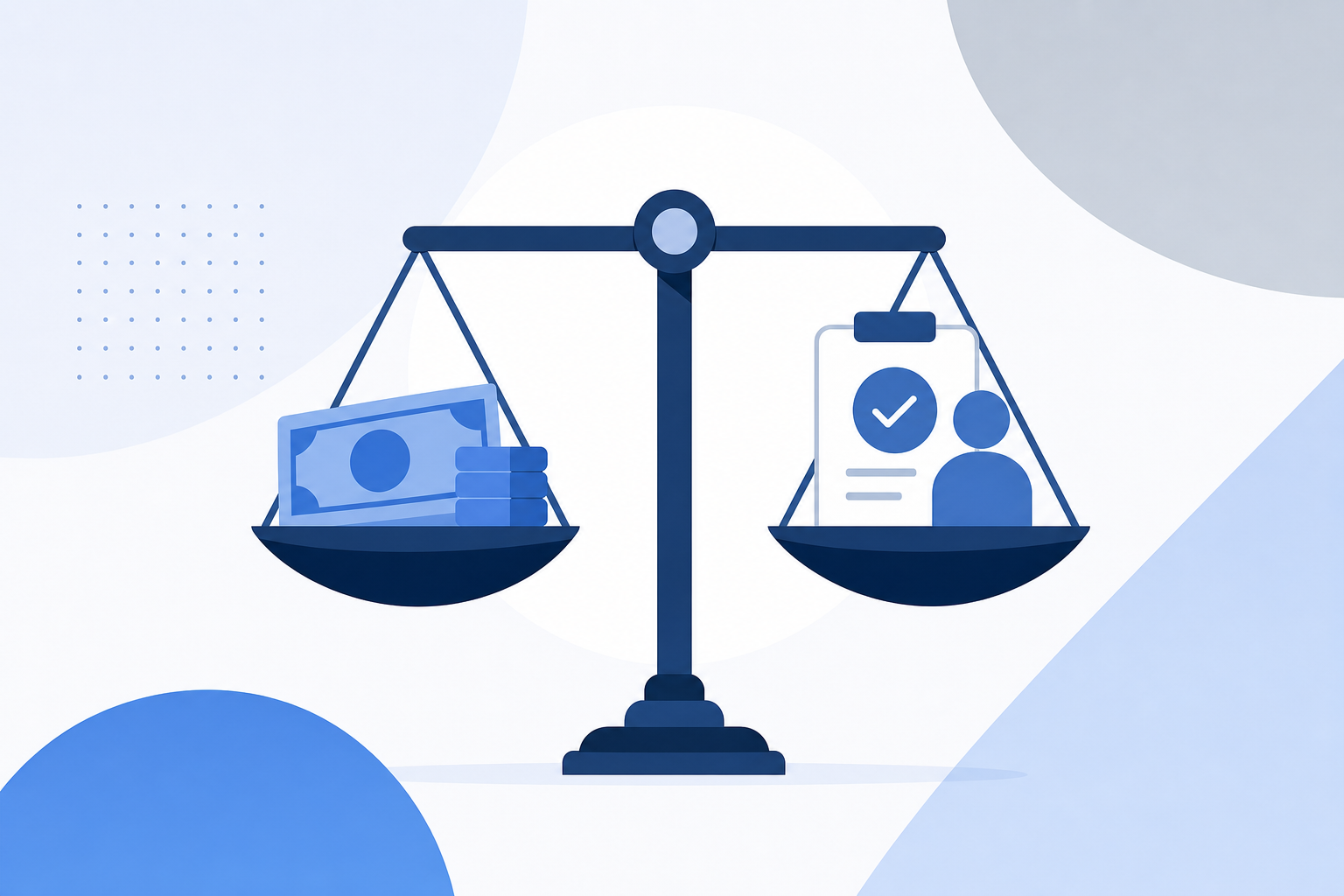
Under accrual accounting, you can only recognize revenue when it's earned. Receipt date and earned date are two different things.
Think of it this way: if you had to refund every customer you hadn't yet served, how much would you owe? That answer is your deferred revenue balance. Classifying it correctly keeps your reported income accurate. Booking payments too early inflates your numbers in ways that mislead lenders, investors, and auditors alike.
Deferred Revenue vs. Accrued Revenue
Deferred revenue and accrued revenue follow the same accrual accounting rules, but flip the timing in opposite directions.
With deferred revenue, cash arrives before service. With accrued revenue, service arrives before cash. One creates a liability; the other creates an asset.
Deferred Revenue | Accrued Revenue | |
|---|---|---|
Timing | Payment before delivery | Delivery before payment |
Balance Sheet Classification | Liability | Asset |
Example | Annual subscription paid upfront | Consulting completed, invoice pending |
If a client prepays you for six months of work, that's deferred revenue. If you've finished the work but haven't invoiced yet, that's accrued revenue. Same framework, opposite positions on your balance sheet.
How Deferred Revenue Appears on Financial Statements
Deferred revenue appears as a current liability on the balance sheet when expected to convert within 12 months. Longer prepayments get split between current and long-term portions. Either way, none of it touches the income statement until you've actually delivered.
The math is straightforward. Take a $1,200 annual subscription paid upfront on January 1. Each month, you recognize $100 as earned revenue. In January, your balance sheet shows $1,100 in deferred revenue while your income statement shows $100 in revenue. By February, that liability drops to $1,000. By June, it's down to $600. By December, the obligation is gone and all $1,200 has moved through the income statement. The balance sheet shrinks in lockstep with revenue growth, keeping both statements in sync across the full year.
Deferred Revenue Journal Entry Examples
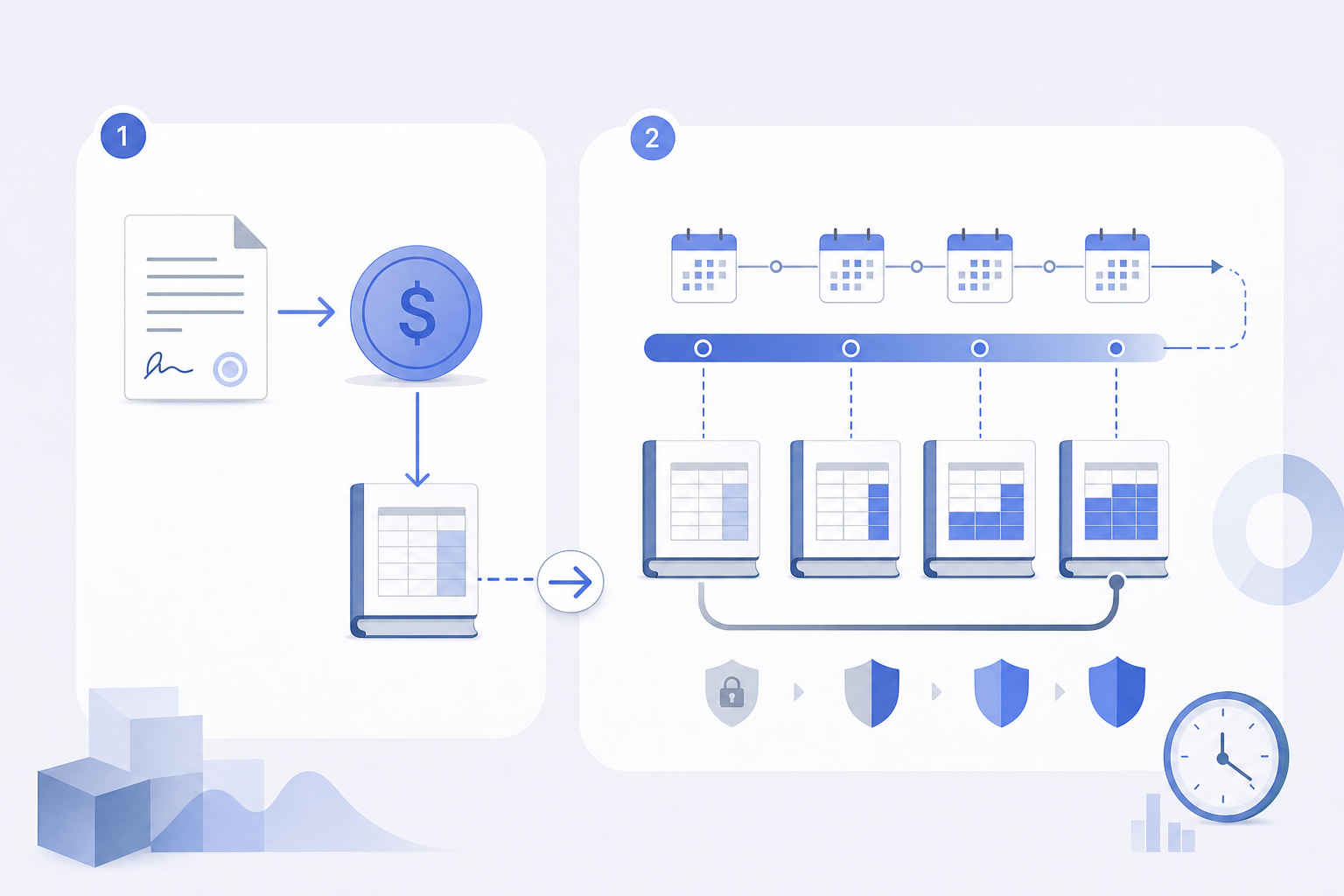
When a customer pays upfront, you record the cash received and a liability. As that obligation gets fulfilled, you recognize the revenue. Here's how that looks in practice.
Subscription Payment Received
A customer pays $1,200 for a one-year software subscription on January 1. Your initial entry debits Cash for $1,200 and credits Deferred Revenue for $1,200.
Each month, you recognize $100 as earned by debiting Deferred Revenue for $100 and crediting Revenue for $100.
Why the Entry Works This Way
Recording the full $1,200 as revenue on day one would overstate income before any service is delivered, creating variances that distort financial analysis. The liability sits on the balance sheet until performance obligations are met, then transfers to the income statement incrementally as each month of service passes.
Common Deferred Revenue Examples Across Industries
Deferred revenue shows up across nearly every industry. The trigger is always the same: cash collected before the work is done.
- SaaS subscriptions: A customer pays $2,400 for an annual software plan on March 1. You recognize $200 per month as each period of service passes.
- Gift cards: A retailer sells $500 in gift cards. That balance stays a liability until customers actually redeem them.
- Advance rent: A commercial tenant prepays six months of rent upfront. The landlord recognizes income period by period, not all at once.
- Retainer fees: A law firm or agency collects a monthly retainer before work begins. Revenue posts as hours are worked and services delivered.
- Annual memberships: A gym charges $720 for a yearly plan in January. Each month, $60 moves from liability to earned income.
The details differ by industry, but the accounting treatment stays consistent. Cash arrives early; recognition follows delivery.
Revenue Recognition Principles and ASC 606 Compliance
Revenue recognition is the accounting principle that determines when and how revenue gets recorded on the income statement. For deferred revenue, you recognize income only after the goods or services have been delivered to the customer.
ASC 606, the revenue recognition standard issued by the Financial Accounting Standards Board (FASB), governs how companies record revenue from customer contracts. It replaced older industry-specific guidance with a single five-step model that applies across sectors.
The five steps are:
- Identify the contract with the customer
- Identify the distinct performance obligations within that contract
- Determine the transaction price
- Allocate the transaction price to each performance obligation
- Recognize revenue when each obligation is satisfied
Deferred revenue stays on the balance sheet as a liability until each performance obligation is met, at which point it moves to the income statement as earned revenue.
Managing Deferred Revenue for Subscription Businesses
Subscription businesses face a unique challenge: revenue comes in upfront, but the obligation to deliver stretches across months or years, requiring close management for finance teams to stay accurate. Every new subscriber adds to your deferred revenue balance, and every renewal resets the clock.
Tracking this manually gets messy fast. A spreadsheet might work for a handful of customers, but as volume scales, you need a system that recognizes revenue automatically each billing period.
The good news is that clean deferred revenue management does more than satisfy your auditors with automated month-end close processes. It gives you an accurate picture of committed future revenue, which is one of the most telling indicators of business health for any subscription company.
How Month-End Close Management Simplifies Deferred Revenue Tracking
Deferred revenue mistakes rarely happen at the point of sale. They surface at month-end, when recognition schedules don't match what's posted, entries get duplicated, or someone's Excel file from three months ago has a broken formula, which is why close management tools exist.
Double's accruals feature handles this automatically. You define the recognition schedule once, and Double calculates the amounts, prepares the entries, and posts them directly to your ledger each period. No manual math, no separate spreadsheet to match against the books.
Because everything lives inside the same close workflow, your deferred revenue balance stays accurate in real time. When the checklist is done, the ledger reflects it.
Final Thoughts on Deferred Revenue in Subscription Businesses
Subscription companies live and die by how well they track deferred revenue. When recognition happens automatically, your books stay accurate and month-end closes faster. If you're still managing this in spreadsheets, schedule a quick demo to see how Double handles it inside your workflow. Getting this right means cleaner financials and fewer headaches when it's time to report.