
You reconcile credit cards every month because you need to know that what your team spent matches what actually posted. Credit card reconciliation catches duplicate charges, coding errors, and the occasional fraudulent transaction before they sit unnoticed for quarters at a time. The process is straightforward: match statement to ledger, investigate anything that doesn't line up, and document the results. Where it breaks down is volume. If you're still using spreadsheets and email threads to chase receipts, this guide walks through the full process and where automation fits in.
TLDR:
- Credit card reconciliation matches your statement against your books to catch fraud, duplicate charges, and coding errors before they compound.
- 62% of finance teams call reconciliation their biggest monthly bottleneck, mostly from missing receipts and manual spreadsheet work.
- Reconcile weekly instead of monthly to trace unusual charges while context is fresh and keep your audit trail clean.
- Automate transaction matching to scale from one card to fifty without adding headcount or manual hours.
- Double connects to your card feeds, flags discrepancies automatically, and lets your team ask follow-up questions inline without switching to email or a separate tool.
What Is Credit Card Reconciliation?
If your books show $4,200 in charges for a given month, the statement should reflect the same amount. Any gap between the two needs an explanation.
Most businesses run this process monthly, though some do it quarterly or at year-end. Monthly is the standard rhythm because it catches errors, duplicate charges, or fraudulent transactions before they pile up.
The mechanics are straightforward: pull the statement, match each line item to what's recorded in your general ledger, and investigate anything that doesn't align. Discrepancies get resolved before the period closes.
Why Credit Card Reconciliation Matters
The stakes extend well beyond bookkeeping hygiene. Unreconciled accounts are where fraud lingers longest. A duplicate vendor charge or an unauthorized personal purchase can sit undetected for months without a systematic review process in place. Business credit card fraud affects the majority of organizations, making regular reconciliation a critical control.
Accurate reconciliation also feeds every downstream report. Month-end financials, tax filings, budget variance analysis: all of these depend on transactions being correctly categorized. One miscoded charge can skew an entire cost center's numbers for the period.
Cash flow visibility matters too. Knowing what's posted versus still pending prevents billing surprises and keeps your expense picture current going into the next period.
Audit readiness rounds it out. Clean, reconciled records with supporting documentation are what external auditors expect. That context makes one figure worth sitting with: 62% of finance teams report that reconciliation is their biggest monthly bottleneck. The process matters precisely because skipping it creates problems that compound fast.
Types of Credit Card Reconciliation
Credit card reconciliation covers two distinct financial flows. Which one applies to you depends on whether your business is spending on cards or collecting card payments from customers.
There are meaningful differences in how each type works in practice.
Expense-Side Reconciliation
This is what most people mean when they say "credit card reconciliation." You're matching corporate card charges against employee expense reports and your general ledger. Every purchase needs a receipt, a category, and a corresponding entry in your books. The goal: confirm that what cardholders spent aligns with what got recorded.
Merchant Services Reconciliation
If your business accepts card payments from customers, this is your version. The flow runs the other direction. You're verifying that incoming payments processed through card networks match the deposits in your bank account, net of processor fees. Any gap between what customers paid and what actually landed in your account needs an explanation.
How to Reconcile Credit Card Transactions: Step-by-Step Process
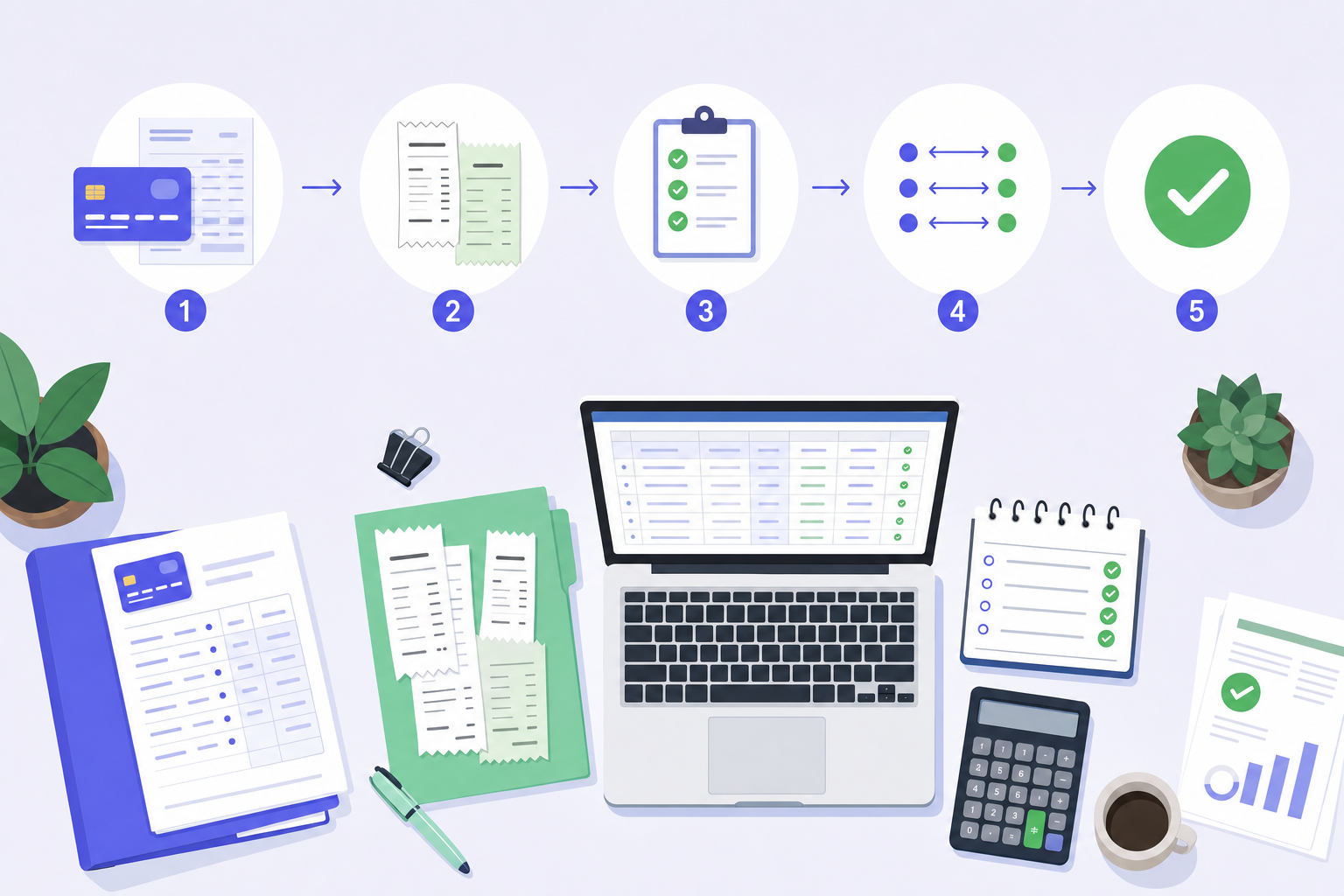
Reconciling credit cards follows a repeatable sequence whether you do it manually or with software. Getting each step right prevents errors from compounding month over month.
Gather Your Documents
Pull your credit card statement and your internal records side by side. You need every transaction from the period: purchases, fees, refunds, and payments.
Match Transactions Line by Line
Compare each statement entry against your records. Flag anything that appears in one source but not the other.
Investigate Discrepancies
Look into every flagged item. A missing transaction might be a timing difference, a duplicate entry, or a fraudulent charge worth disputing.
Record Adjusting Entries
Post any corrections to your general ledger before closing the period.
Sign Off and File
Document who reviewed the reconciliation and when. A clear approval trail supports audits and keeps your team accountable.
Common Credit Card Reconciliation Challenges
Even careful finance teams run into friction with credit card reconciliation. A few challenges come up again and again across companies of every size.

- Missing receipts are the most common headache. Employees lose paper receipts or forget to submit digital ones, leaving transactions with no supporting documentation during the close. A dedicated receipt management system prevents this problem.
- Timing differences create confusion when a charge posts to the bank statement in a different period than it was recorded in the books, requiring careful cutoff analysis.
- Duplicate entries slip through when the same transaction gets entered manually more than once, inflating expenses and throwing off account balances.
- High transaction volume makes month-end reconciliation brutal for teams still working in spreadsheets, especially at companies running dozens of corporate cards simultaneously.
- Coding errors occur when expenses get posted to the wrong GL account, which distorts financial reporting and can cause issues during audits or tax preparation.
Best Practices for Accurate Credit Card Reconciliation
Accuracy starts with habits. The teams that catch discrepancies fastest tend to follow a few consistent practices that prevent errors from compounding over time. Following reconciliation best practices maintains financial clarity and security across your organization.
Reconcile frequently. Monthly is the minimum, but weekly reconciliation makes it far easier to trace unusual charges while the context is still fresh.
Keep receipts organized in real time. Waiting until month-end to collect documentation turns a manageable task into a frustrating hunt.
Here are the core best practices worth building into your process:
- Set a fixed reconciliation schedule and stick to it so nothing falls through the cracks between cycles.
- Match every transaction to a receipt or invoice before closing out the period, not after.
- Flag and investigate unrecognized charges immediately, not waiting to see if they resolve themselves.
- Reconcile to the statement closing date, not the current date, to avoid including pending transactions that distort your totals.
- Keep a running log of any adjustments made during reconciliation so auditors have a clear paper trail.
One often-overlooked practice is separating reconciliation duties from the people who initiate purchases. This internal control reduces the risk of undetected fraud and is a standard expectation during audits. Accounting workflow automation can enforce these separation of duties.
How Automation Simplifies Credit Card Reconciliation
Manual reconciliation takes time, invites errors, and breaks down fast as transaction volume grows. Working smarter in accounting means automating these repetitive tasks. Automated credit card reconciliation solves this by matching transactions against statements without human intervention for every line item.
Tools like Double connect directly to your card feeds and accounting systems, pulling in transactions automatically. Matching rules handle routine entries, while exceptions get flagged for human review, not buried in a spreadsheet.
The result is a process that scales with your business. Whether you're reconciling one card or fifty, the workload stays manageable because the repetitive matching work happens in the background.
Credit Card Reconciliation vs. Bank Reconciliation
Bank reconciliation matches your bank account statement against your general ledger, covering everything flowing through the account: deposits, wire transfers, ACH debits, checks, and the lump-sum payment you make toward your card balance each month. Credit card reconciliation drills into that card balance itself, verifying each individual charge, its category, and whether it belongs there.
Credit Card Reconciliation | Bank Reconciliation | |
|---|---|---|
What it covers | Individual card charges | All bank account activity |
Source documents | Card statement vs. GL | Bank statement vs. GL |
Primary concerns | Categorization, receipts, fraud | Deposits, transfers, outstanding checks |
Scope | Narrow (card activity only) | Broad (entire account) |
Think of them as two different zoom levels on the same financial picture. Bank rec confirms the total; card rec confirms what's inside it. A balanced bank rec doesn't mean your card charges are correctly categorized or free of unauthorized transactions. Both reviews need to happen before a period closes cleanly.
How Double Simplifies Credit Card Reconciliation
Double is built for finance teams that are tired of chasing down receipts, manually matching transactions, and fixing errors that slipped through the cracks.
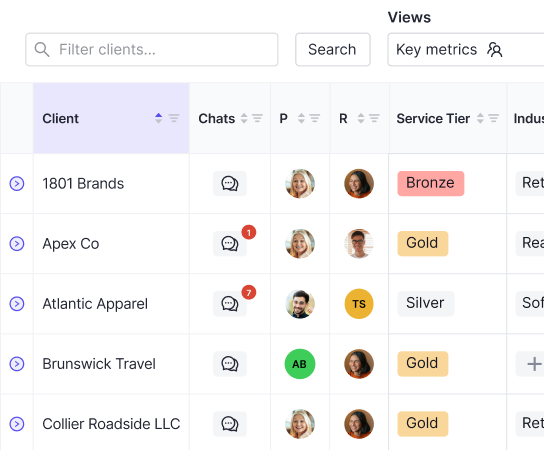
The reconciliation workflow in Double connects directly to your corporate cards, pulls in real-time transaction data, and matches charges against receipts and expense reports automatically. When something looks off, the system flags it for review instead of letting it sit unnoticed until month-end.
A few things that set Double apart:
- AI-powered matching catches discrepancies that manual reviews miss, without requiring your team to comb through hundreds of line items each cycle.
- Inline follow-up lets your team ask questions directly from bank feeds and reconciliations, without switching to email or a separate tool.
- Every reconciled transaction feeds cleanly into your accounting records, keeping your books audit-ready at all times.
Finance teams using Double report spending far less time on reconciliation each month, freeing up bandwidth for higher-value work. If your current process involves spreadsheets, inbox chasing, or end-of-month scrambles, Double is worth a close look.
Final Thoughts on Reconciling Your Corporate Cards
Good reconciliation isn't about perfection on the first pass. It's about catching issues before they snowball into bigger problems at year-end. Automating your credit card reconciliation means fewer missed receipts, faster matching, and a process that scales as your card volume grows. Your finance team gets time back for work that moves the business forward. Curious how it would work for your setup? See it in action.