MONTH-END CLOSE
Integrated Review Tools
Close Page
AI Bank Feeds
Ask Double
1099 Management
Reports
Receipts
Accruals
AI Transactions
CLIENT & PRACTICE MANAGEMENT
Inbox
Client Portal & App
Client Database
Tax
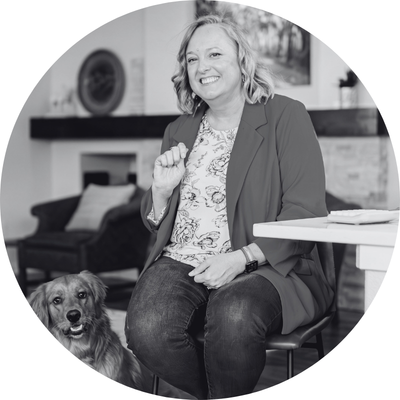
Tiny Paws Bookkeeping does the books for one of the most underserved corners of small business: pet sitters, dog walkers, and the boarding and daycare facilities that cater to thousands of pet parents each year.
Founder Anne-Marie Kaden’s journey into the bookkeeping field wasn’t linear, starting with a degree in animal science, years in equine and small animal vet medicine, and a pet sitting business she built and sold in North Carolina before moving her family to Colorado. She founded Tiny Paws Bookkeeping in September 2022, landed her first three clients within three months, and has grown the client book exponentially every year since. Four years in, the firm serves just over 100 clients across the US with a team of 10. Ask Double, Double's native AI chat agent, is a big part of how a team that size keeps its arms around a client base that large.
The firm adopted Double early, around the time Anne-Marie hired her first part-time employee, and layered Ask Double on top as the AI features started to roll out. The payoff shows up as time reclaimed and headroom to grow. Across the team, Ask Double is shaving off anywhere from 20 to 30 hours a month.
Double also gives us more space and time to build the relationships, which is the most important part of any client engagement that we have.
Growth is a good problem, but it can still be a problem. As Tiny Paws pushed past 80 clients, work started to pile up in certain areas.
Around the time Ask Double launched, Anne-Marie promoted one of her senior bookkeepers into management, and their first assignment was a quarterly audit of every client: looking into whether tasks had been completed, if deadlines were being hit on a routine basis, and if there were any past closes where something quietly went unfinished. With 80 to 100 clients to work through by hand, picking through communication and incomplete tasks one account at a time, the audit ran to easily 30 hours a month.
And the more quality control metrics Tiny Paws’ team wanted to build into it, the more time it took and the more cumbersome it became. "It just became kind of this big, huge, amorphous problem," Anne-Marie said.
Ask Double took that amorphous audit and gave it a shape. Instead of digging through every client page by hand, the manager runs a pre-built skill inside each client. It looks for anything missed: outstanding tasks or errors it can spot inside the QuickBooks file itself. It returns a spreadsheet of what it found, which goes to the senior bookkeepers. Then, Ask Double drops the flagged items straight into tasks for the right person to tackle. Suddenly, that 30-hour review became a button push.
That’s where we found the beauty in Ask Double—it really simplified a lot of processes.
From there, the team went looking for every repetitive task worth automating. Four kinds of work now run through Ask Double on a regular basis:
Client-specific journal entries. The team built skills that post payroll journal entries and turn uploaded client bills into entered bills automatically, so routine data entry stops being a person's job.
Loan and asset schedules. When a client takes on a new loan but didn’t collect the details, or when the CPA timeline for depreciation does not line up, Ask Double builds the amortization and depreciation schedules.
High-volume income splits. One of Tiny Paws’ clients—a boarding and daycare business—runs about $200,000 in revenue a month across thousands of invoices, each of which has to be split into different income categories. Anne-Marie’s team now pulls a report from the client's point of sale system, drops it into Ask Double, and it returns the journal entry against whatever parameters they set. Building the original Excel version and then collating the data each month used to take 3 to 4 hours. It now takes about 3 minutes.
Capacity and time tracking. The newest skill Anne-Marie has built watches where the team spends its hours. Tiny Paws tracks time two ways: Gusto for their own payroll purposes, and Double for how much goes to each client versus admin, staff meetings, and training. Anne-Marie pulls both, plus a budgeted capacity report, drops all three into Ask Double, and it flags discrepancies, time drifting into admin vs. client work, and clients the team is routinely over capacity on.
Double had already become the firm's backbone before any of the AI arrived. Anne-Marie adopted it when she brought on her first part-time hire, looking for a way to move what she knew out of her own head and into one place a new person could work from. Every process, SOP, and workflow lives in Double now, replacing a once-scattered stack: the team used to keep its SOPs and policies in Notion, then moved them to Google Drive, and finally landed everything in Double. Having it in one place cut the firm's time to train and made it far easier to hand a client from one bookkeeper to another.
The direct QuickBooks Online integration is similarly beneficial on the external client side, letting the team show a client exactly what they are seeing in the ledger and send it over as a question. This existing foundation in the platform ensured that when Ask Double showed up, it had a well-organized house to move into.
From a management standpoint, the ability to see firm operations from a bird’s eye view matters increasingly more as Tiny Paws scales. Double is where Anne-Marie keeps track of where everyone is in the monthly workflow and where the time is going so she can make decisions to grow the business.
With 10 people and 100 clients, things can get lost and messy really quick. Double has helped us keep on top of all the things that could be slipping through the cracks, and there’s no dollar value that can be put to explain that impact.
The moment that won Anne-Marie over on Ask Double was when she started quoting out a new client project. She was scoping a sizable cleanup and, using the standard spreadsheet she had leaned on for everything in her business, landed on a price of roughly $7,000. Before sending it, she ran the same job through Ask Double, gave it some parameters, and let it look at what was actually in the client's QuickBooks.
The quote came back substantially higher, because the work was going to be more complicated than the spreadsheet had assumed. She raised the quote to $11,000 and the client's monthly bookkeeping fee by another $250. Fast forward to today, Tiny Paws’ team finished that cleanup, under budget and exactly on the timeline Ask Double had projected (to the hour).
Saved hours are the setup. What Anne-Marie is really investing in by using Double is capacity and attention. Ask Double lets the same people, putting in the same effort, carry more clients, which is what makes a target of 130 monthly clients realistic without burning anyone out. And in a niche like solopreneurs within the pet care industry, the reclaimed time goes straight back into the client relationships.
For a firm weighing Double against other practice management and close tools, Anne-Marie points to the same things that made her own team adopt the tool so widely: everything in one place, tied straight to the ledger, with the AI as what she calls “the icing on the cake.”
Anne-Marie expects the monthly close cycle to shrink by at least a third as AI adoption spreads across all teammates. For a practice that keeps growing, that is the whole point: a way to hold quality steady while the client book keeps climbing.
Ready to give your team room to grow? See what Double and Ask Double can do for your firm.