
Say your team delivers a project in June but doesn't get paid until August. Under cash accounting, June looks slow and August looks great, even though the work happened in June. Accrual accounting records that revenue in June, where it belongs. It's a small shift in timing that makes a big difference in how you read your numbers.
TLDR:
- Accrual accounting records revenue when earned and expenses when incurred, regardless of when cash moves.
- Four accrual types span both sides of the balance sheet: accrued revenue and prepaid expenses are assets; accrued expenses and deferred revenue are liabilities.
- Under IRC Section 448(a), the accrual method is required for most C corporations unless gross receipts average $32 million or less, per IRS guidance, over the prior three years.
- Switching from cash to accrual makes sense when you apply for a loan, bring on investors, or start carrying inventory.
- Double's Accruals module calculates recognition amounts, prepares journal entries, and posts them automatically inside the close workflow, with two-way sync to QuickBooks Online, Xero, Sage Intacct, and NetSuite.
What Is Accrual Accounting
Accrual accounting is a method of recording financial transactions when they happen economically, not when cash lands in or leaves a bank account. Revenue gets recorded when it's earned, and expenses get recorded when they're incurred, regardless of the timing of the actual payment. If a company delivers a service in June but doesn't get paid until August, accrual accounting books that revenue in June.
Pronunciation trips people up more than you'd expect. It's pronounced uh-KROO-ul, with the stress on the second syllable, not "ACK-rual" as some assume.
In simple terms, accrual accounting tries to match income and costs to the period they relate to. That match is the point: financial statements should reflect what a business earned and owed during a given stretch of time, beyond what moved through its checking account. This distinction becomes the foundation for nearly every other concept in accrual accounting, from journal entries to financial reporting accuracy.
The Core Principles Behind Accrual Accounting
The revenue recognition principle says revenue belongs in the period it's earned, not the period it's collected. A consulting firm that finishes a project in March but invoices in April still records that revenue in March.
The matching principle works the other side of the ledger. Expenses get recorded in the same period as the revenue they helped generate, regardless of when cash left the business. A sales commission paid in February for a deal closed in January gets matched back to January.
Together, these principles let a P&L tell an accurate story about a given month or quarter, reflecting work performed instead of the timing of bank transfers.
The Four Types of Accruals
Four categories cover almost everything you'll encounter under accrual accounting, and each one lands on a different side of the balance sheet.
- Accrued revenue is money earned but not yet billed or collected, like a law firm's hours worked in December but invoiced in January. It sits on the balance sheet as an asset, usually under accrued receivables.
- Accrued expenses are costs incurred but not yet paid, such as utilities used in one month and billed the next. These are liabilities, since the business owes that money out.
- Deferred revenue is cash collected before the work is done, like an annual software subscription paid upfront. It is a liability until the service is delivered.
- Prepaid expenses are cash paid before the benefit is received, such as six months of insurance paid at once. These are assets, recognized gradually as the coverage gets used.
Accrual Accounting Journal Entry Examples
Each accrual type turns into a journal entry recorded as a debit and credit pair. Four examples below show which accounts move and why.
- Accrued revenue: A marketing agency finishes a project on March 28 but invoices the client April 5. In March, it debits Accrued Receivables and credits Revenue for $8,000.
- Accrued expense: A company uses $2,400 of electricity in January but gets the bill in February. It debits Utilities Expense and credits Accrued Liabilities for $2,400.
- Deferred revenue: A software company collects $12,000 upfront for a one year subscription. On collection it debits Cash and credits Deferred Revenue for $12,000. Each month it debits Deferred Revenue and credits Revenue for $1,000 as the service is delivered.
- Prepaid expense: A firm pays $6,000 for six months of insurance, then debits Insurance Expense and credits Prepaid Expense for $1,000 monthly.
Scenario | Debit | Credit | Amount |
|---|---|---|---|
Project completed, not yet invoiced | Accrued Receivables | Revenue | $8,000 |
Utilities used, bill not yet received | Utilities Expense | Accrued Liabilities | $2,400 |
Subscription paid upfront, recognized monthly | Deferred Revenue | Revenue | $1,000 |
Insurance paid upfront, expensed monthly | Insurance Expense | Prepaid Expense | $1,000 |
One side of each entry reflects the economic event. The other reflects the timing gap between that event and the cash movement.
Accrual Accounting vs. Cash Accounting
Cash accounting records a transaction the moment money changes hands. No matching, no timing adjustments, just what hit the bank account and when. That single difference explains why the same invoice can land in two different months depending on the method a business uses.
The table below shows how that single timing difference plays out across two months. Under accrual accounting, that $5,000 counts as December revenue. Under cash accounting, nothing gets recorded until the client pays, which might happen in January.
Method | When Revenue Is Recorded | December P&L Shows | January P&L Shows |
|---|---|---|---|
Accrual accounting | When earned (invoice date) | $5,000 revenue | $0 for this job |
Cash accounting | When collected (payment date) | $0 for this job | $5,000 revenue |
Cash accounting still has real strengths. It is simple to maintain, gives an unfiltered view of cash on hand, and often lines up with how small businesses think about tax timing since income isn't taxed until received.
Benefits of Accrual Accounting
Investors, lenders, and auditors trust accrual accounting because it shows obligations and earnings that cash accounting hides until money physically moves. A lender wants to see what a business owes and is owed, going beyond what sat in the account that day.
That same visibility helps with decisions inside the business. Tracking accrued expenses catches spending trends before invoices land all at once, and matching revenue to the period earned shows which months or clients are actually profitable.
- A clearer view of profitability by period, since revenue and its related costs land in the same month
- Better forecasting, since trends in accrued revenue and expenses reveal what's coming before cash confirms it, forming a foundation for flux analysis
- Stronger credibility with lenders and auditors who expect GAAP-consistent statements
- Smoother audits, since the matching principle leaves a documented trail between activity and reporting
Challenges of Accrual Accounting
Accrual accounting demands more upkeep than cash accounting. Every prepaid expense, deferred revenue balance, and accrued liability needs a schedule, and that schedule needs review at period end. A business running accrual accounting without a bookkeeper or accountant on staff will likely need one, since adjusting entries don't post themselves.
The bigger risk is the gap between paper profit and actual cash. A business can show a strong month on its P&L while its bank account sits nearly empty, especially if large invoices remain unpaid. Without a cash flow statement running alongside the P&L, that gap can go unnoticed until a payroll run or vendor payment comes due.
Period-end close also gets heavier. Matching accrued accounts against actual bills and collections takes time, and a missed accrual or an entry booked to the wrong period can throw off an otherwise clean set of financials.
When Accrual Accounting Is Required
Two separate rules trigger accrual accounting: how you report to the outside world, and how you file taxes.
Under U.S. GAAP, accrual accounting is mandatory for any general-purpose financial statement. According to SEC Regulation S-X, public companies filing with the SEC must follow it, so cash-basis numbers rarely reach a 10-K or 10-Q.
Under IRC Section 448(a), C corporations, partnerships with a C corporation partner, and tax shelters generally must use an accrual method. One exception applies: according to IRS guidance, businesses averaging $32 million or less in annual gross receipts over the prior three years, the inflation-adjusted threshold the IRS set for 2026, can qualify as a small business taxpayer and stick with the cash method.
Falling under that threshold does not mean accrual accounting disappears as an option. Lenders reviewing a loan, investors reviewing a cap table, and auditors signing off on statements tend to expect GAAP-compliant, accrual-based numbers regardless of what the tax code allows. A business can be legally exempt from accrual accounting and still find every outside party asking for it anyway.
Should Your Business Use Cash or Accrual Accounting?
Cash accounting fits a very small business with simple operations: a solo consultant invoicing a handful of clients, or a shop where sales and expenses hit the bank the same week they happen. Once revenue grows, transactions multiply, or outside money enters the picture, accrual accounting becomes the more useful method.
A few triggers tend to force the switch:
- Crossing the IRS gross receipts threshold, which moves accrual from optional to required for many corporations and partnerships with a C corporation partner
- Applying for a bank loan, since lenders expect financials that show obligations and earnings, well beyond cash on hand
- Bringing on investors, who want statements that reflect what the business earned in a period
- Carrying inventory, which accrual accounting handles more accurately by matching the cost of goods sold to the revenue they generated
If any of these apply, accrual accounting is worth adopting even before it becomes mandatory.
How Double Handles Accruals Inside the Close Workflow
Managing accruals in a spreadsheet works until a formula breaks or a schedule goes untouched for a quarter, turning reconciliation into a hunt through source documents. Standalone accrual tools sit apart from the general ledger, forcing a manual match of the schedule against the books every close. Double's accruals module runs directly inside the close workflow.
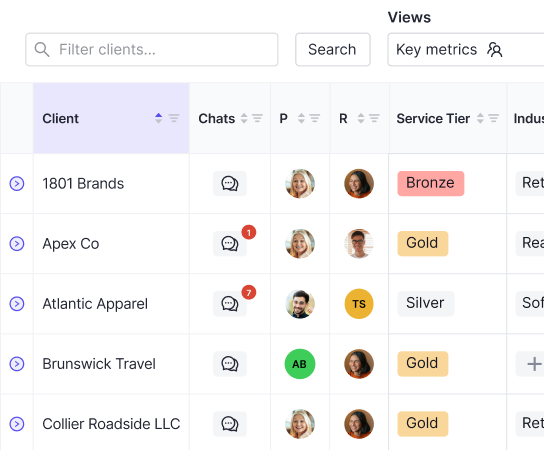
Double's Accruals module handles prepaid expense amortization, fixed asset depreciation, deferred revenue, and loan amortization schedules directly inside the close workflow. Double calculates recognition amounts, prepares the journal entries, and posts them automatically. Two way sync runs across QuickBooks Online and Xero for accounting firms, and Sage Intacct and NetSuite for corporate finance teams.
Every accrual action logs in the Activity Log, creating an audit trail for external auditors and internal compliance review, part of a broader shift toward integrated close management.
On the Scale tier, AI Flux Analysis drafts variance explanations at the vendor and transaction level, so preparers review a draft instead of rebuilding the story each period.
For questions that go beyond a single period's variance, such as identifying which clients have recurring accrual patterns or querying a specific account balance on demand, Ask Double serves as a practice-wide AI assistant grounded in live ledger data. It answers cross-client questions, creates and assigns follow-up tasks directly from the conversation, and retrieves notes and activity logs across the book of business. Available on Core, Plus, and Scale plans, it turns the context already inside the close workflow into an interactive layer that eliminates the manual data work without removing the accountant's oversight and judgment.
Final Thoughts on Accrual Accounting
Accrual accounting builds a more accurate picture of your business, even when the cash in your bank account tells a different story. The tradeoff is more upkeep at period end, but that upkeep pays off the moment a lender or investor asks to see your books. Book a demo with Double to see how accrual entries and amortization schedules can post automatically as part of your close.