

When your close runs long, it's usually not a people problem. It's a handoff problem. Someone finishes a reconciliation in your ERP, exports it to a spreadsheet, emails it for review, waits for approval, then updates a tracker somewhere else. Every step in that chain is a place where work stops moving. The best month-end close management tools for corporate finance teams collapse those handoffs by keeping the work, the data, and the approvals in one connected system so your team spends less time coordinating and more time actually closing.
TLDR:
- Mid-market finance teams spend 5-10 business days on monthly close due to manual handoffs.
- Close management tools automate reconciliations and sync with ERPs like NetSuite and Intacct.
- FloQast offers strong reconciliation matching but uses user-based pricing with multi-year terms.
- Double executes close tasks with AI, handling reconciliations and journal entries automatically.
- Flat annual pricing avoids per-user fees that scale unpredictably as finance teams grow.
What Are Month-End Close Management Tools for Corporate Finance Teams
Month-end close management tools are specialized software built to replace the fragmented, manual workflows that most corporate finance teams inherit. Spreadsheets and shared drives can hold a close together for a while, but they offer no audit trail, and status updates live inside someone's inbox instead of a shared source of truth.
These tools bring structure to the close by centralizing task ownership, deadlines, and approvals in one place. The better ones go further, automating reconciliations, flagging anomalies, and syncing directly with your ERP so finance teams spend less time chasing data and more time reviewing it.
Here's what separates a genuine close management tool from a generic project tracker:

- Task and checklist management scoped to accounting workflows, with role-based assignments and period-over-period templates that carry forward each month.
- ERP and GL integration that pulls trial balance data directly, so reconciliations reflect live figures instead of manually exported files.
- Audit-ready documentation that captures preparer and reviewer sign-offs, timestamps, and supporting attachments at the task level.
- Visibility for controllers and CFOs into close progress in real time, without needing to send a Slack message asking where things stand.
Industry estimates suggest finance teams at mid-market companies can spend anywhere from five to ten business days completing a monthly close. The right tool compresses that window by removing the handoff gaps where work stalls.
How We Ranked Month-End Close Management Tools for Corporate Finance Teams
Ranking these close management systems required looking past marketing copy and into how each one actually performs under the pressure of a real close cycle. The criteria below reflect what corporate finance teams consistently report as their biggest pain points.

- Automation depth: whether the tool executes reconciliations, journal entries, and flux analysis automatically, or simply tracks who is supposed to do them manually.
- ERP and data source connectivity: real two-way sync with systems like NetSuite and Sage Intacct, instead of read-only imports that go stale the moment a transaction posts.
- Audit trail and controls: granular, timestamped records that satisfy internal audit and external reviewers without requiring a separate documentation effort.
- Collaboration and visibility: whether managers can see bottleneck tasks in real time, not after someone sends a status email at 11 PM.
- Scalability and total cost: pricing structures that stay predictable as entity count and transaction volume grow, with no surprise per-user fees buried in the contract.
Each tool was assessed against these criteria based on publicly available product documentation, user reviews, and reported outcomes from corporate finance teams.
Best Overall Month-End Close Management Tool for Corporate Finance Teams: Double
Double is built for corporate finance teams running month-end close, and it goes well beyond task tracking. The tool executes the close itself, handling reconciliations, journal entries, and variance analysis with AI doing the repetitive data work so your team focuses on review and judgment calls.
What Sets Double Apart
Where most tools give you a checklist and a dashboard, Double connects directly to your ERP and does the actual work inside it. Reconciliations get matched, entries get prepared, and exceptions get flagged automatically.
- AI handles the mechanical parts of each close task, like matching transactions and drafting journal entries, so preparers spend time on what actually requires their expertise.
- AI Flux Analysis automatically drafts variance explanations at the vendor and transaction level for your P&L and Balance Sheet, with configurable materiality thresholds and depth settings. Controllers stop rebuilding the variance story in Excel after every close and start reviewing conclusions instead.
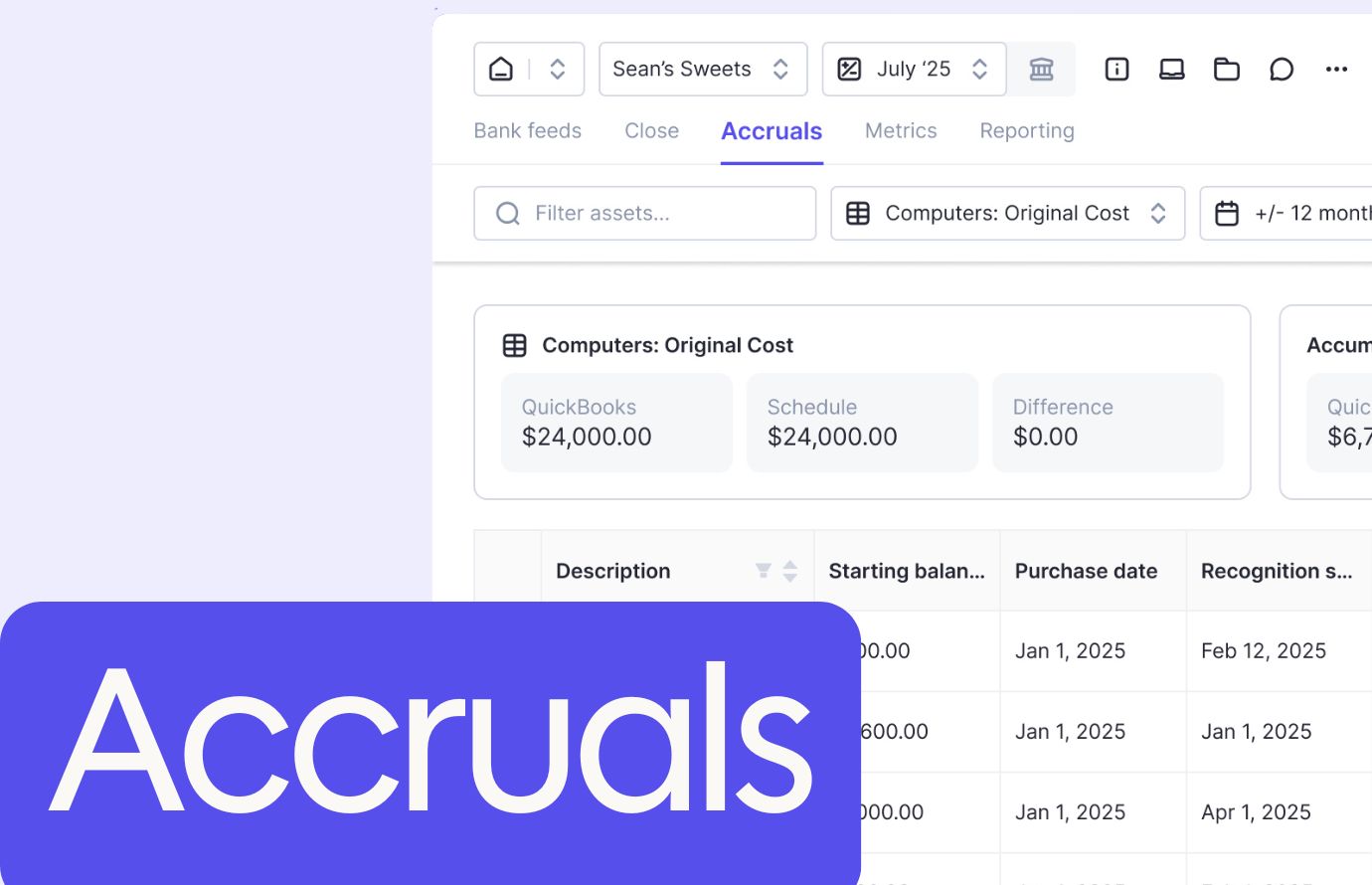
- Accruals and Prepaids Management handles prepaid expense amortization, fixed asset depreciation, deferred revenue, and loan amortization schedules directly inside the close workflow. Double calculates recognition amounts, prepares the journal entries, and posts them automatically, so your team is not manually maintaining spreadsheet schedules or cross-referencing GL balances at period end.
- Every action is logged with a full audit trail, so reviewers and auditors always have clear visibility into what happened and why.
- Flat annual pricing means finance teams get predictable costs without paying per user or per seat as the team grows.
Who It's Built For
Double fits mid-market and enterprise finance teams that want fewer manual handoffs and faster close cycles. If your team is managing close in spreadsheets or patching together a project management tool with your ERP, Double is worth a close look.
FloQast
FloQast is a mature close management tool built for corporate finance and accounting teams. It sits between your ERP and your spreadsheets, giving teams a structured place to assign tasks, track reconciliations, and manage sign-offs across the close cycle.
What FloQast Does Well
Finance teams at mid-market and enterprise companies tend to appreciate FloQast for a few concrete reasons:
- The reconciliation matching engine ties directly to ERP data, so accountants spend less time hunting for variances and more time resolving them.
- Workflow visibility is strong: controllers can see task status across the entire team in real time, which reduces the "where are we?" check-ins that slow closes down.
- The audit trail is clean and audit-ready, which matters when external auditors or internal compliance teams come knocking.
Where FloQast Has Limitations
The limitation worth noting is cost and commitment. FloQast pricing is user-based, and multi-year commitments are standard, which can make it a substantial line item for lean finance teams. For smaller corporate teams that want close management without an enterprise procurement process, that structure creates friction before the tool even goes live.
Factor | FloQast |
|---|---|
Best for | Mid-market to enterprise finance teams |
Pricing model | User-based, multi-year commitment |
ERP connectivity | Strong (NetSuite, Sage Intacct, others) |
AI capabilities | Workflow automation, reconciliation matching |
Setup complexity | Moderate to high |
FloQast is a credible choice for organizations that have the budget and IT support to deploy it properly. Teams that want faster time-to-value or more flexible terms may find the onboarding investment steep relative to the close problems they need to solve.
Numeric
Numeric is a month-end close tool built for in-house finance teams that want cleaner workflows and better visibility into close progress. It sits between a lightweight checklist app and a full close management suite, which makes it a reasonable fit for mid-market companies that have outgrown spreadsheets but aren't ready for an enterprise rollout.
What Numeric Does Well
Numeric organizes close tasks by owner and status, giving controllers a real-time view of where things stand. Teams can attach supporting documentation directly to tasks, leave comments, and flag blockers without jumping between tools. The reconciliation tracking is particularly clean, with status indicators that make it easy to spot what's open at a glance.
Where Numeric Falls Short
The limitation worth noting is that Numeric functions more as a close tracker than a close executor. Finance teams still need to do the underlying work in their ERP or spreadsheet and then report progress back into Numeric. For teams looking to reduce manual data entry and repetitive reconciliation work, that handoff gap is where time gets lost.
Numeric also lacks the AI-driven automation that newer tools in this category have started to offer, which means more manual updates to keep task statuses current.
Pricing
Numeric uses a tiered pricing model, though specific figures aren't published openly. Teams typically need to request a demo to get a quote, which can slow down the evaluation process for smaller finance teams working on tighter timelines.
Ramp Stack
Note: Ramp is built primarily for accounting firms and expense-focused workflows, not for corporate finance close management. It is included here for teams already using Ramp who want to understand where it falls short as a dedicated close tool.
Ramp has built a reputation as an expense management and corporate card product, but its stack now includes bill pay, vendor management, and basic accounting workflows. For finance teams already living in Ramp for spend control, the appeal of keeping close-adjacent tasks in one place is real.
That said, Ramp's month-end close features are secondary to its core spend product. Teams get transaction categorization, receipt matching, and some automated accrual suggestions, but the purpose-built close orchestration you get from dedicated tools is largely absent. There is no structured task management, no preparer/reviewer workflow, and no audit trail built around the close cycle itself.
Ramp works best as a component in a broader close stack, not as the anchor.
Dext
Dext is a document capture and data extraction tool built around receipt and invoice processing. It's widely used by accounting firms that need to automate the intake of client financial documents, pulling data from photos, PDFs, and email attachments with reasonable accuracy.
For month-end close work, Dext handles a narrow but real slice of the process: getting source documents into your accounting system. It connects with QuickBooks Online and Xero, pushing extracted line items through so teams spend less time on manual data entry.
The limitation worth noting is scope. Dext stops at ingestion. Once documents are captured, the close workflow itself, reconciliations, task assignments, review cycles, and sign-offs, still lives elsewhere.
Feature Comparison Table of Month-End Close Management Tools for Corporate Finance Teams
Here is a comparison table covering the five tools across the dimensions corporate finance teams care about most.
Feature | Double | FloQast | Numeric | Blackline | Workiva |
|---|---|---|---|---|---|
AI-assisted close execution | Yes | Partial | Yes | Partial | No |
ERP integrations (NetSuite, Intacct) | Yes | Yes | Yes | Yes | Yes |
Flat annual pricing | Yes | No | No | No | No |
Real-time close status visibility | Yes | Yes | Yes | Yes | Yes |
Automated reconciliations | Yes | Yes | Yes | Yes | Yes |
Built for corporate finance teams | Yes | Yes | Yes | Yes | Yes |
No per-user fees | Yes | No | No | No | No |
Flux analysis automation | Yes | No | Yes | No | No |
A few things worth noting as you read across this table.
- Pricing structure matters more than it looks on paper. Per-user models from FloQast and others can scale cost unpredictably as headcount grows, while a flat annual rate keeps budget forecasting clean.
- AI-assisted execution is different from AI-assisted flagging. Some tools surface anomalies for humans to act on; Double acts on the work itself, reducing how much manual intervention the close requires.
- ERP connectivity is table stakes at this level, but the quality of that sync, how frequently it updates and whether it writes back, varies considerably between tools.
Why Double Is the Best Month-End Close Management Tool for Corporate Finance Teams
Double was built for the month-end close, and that focus shows in how it actually works.
Most close management tools give finance teams a place to track tasks. Double goes further by executing the work itself. It connects directly to your ERP, pulls in trial balance data, runs flux analysis, and flags anomalies before your team even opens a spreadsheet. The close gets done faster because fewer manual steps are left to the accountant.
What Sets Double Apart
For corporate finance teams running on NetSuite or Sage Intacct, Double offers two-way sync that keeps records current without manual exports or re-keying. When a balance changes in your ERP, Double sees it. That tight integration removes the gap where errors typically hide.
The AI layer handles the repetitive analytical work: variance explanations, account commentary, and period-over-period comparisons. Your team reviews conclusions instead of building them from scratch, which compresses review cycles without sacrificing accuracy.
- The close checklist adapts based on what the data shows, so high-risk accounts get more attention and clean accounts move through faster.
- Preparer and reviewer workflows are built in, with clear audit trails that satisfy both internal controls and external auditors.
- Pricing for corporate finance teams runs on a flat annual rate, so there are no per-user fees stacking up as your team grows.
Double is priced for teams that want serious close infrastructure without the multi-year enterprise contracts that competitors like FloQast typically require.
Final Thoughts on Corporate Finance Close Tools
The tools that save real time don't just organize the close, they do the work inside it. Task trackers give you better status updates but leave your team executing reconciliations and journal entries the same way they always have. Double connects to your ERP and handles those tasks automatically so preparers spend their time on what actually requires expertise. Your close gets faster because fewer manual steps stand between period end and sign-off. Book a demo to see it run in your environment.