
Your QuickBooks tab handles the close, your practice management tool tracks the close, and you're the one stuck matching what both systems think is true. Choosing between tax practice management tools comes down to whether you need workflow tracking or workflow execution. If your firm bills for month-end close, the tool that does the work instead of logging it reclaims hours you didn't know you were losing.
TLDR:
- TaxDome tracks tax workflows and client relationships; Double executes month-end close work in the system with two-way QuickBooks/Xero sync
- Double helps firms save 30-50% of close time through AI bank feeds, automated accruals, and reconciliation analysis built into the workflow
- TaxDome charges per user ($800-$1,200 annually); Double charges per client ($10-$50 monthly) with no seat fees
- Double delivers interactive P&Ls with variance analysis attached, replacing static PDFs and monthly Excel rebuilds
- Double is month-end close management software for bookkeeping and CAS teams that integrates with QuickBooks, Xero, and ERPs like NetSuite and Sage Intacct
What is TaxDome?
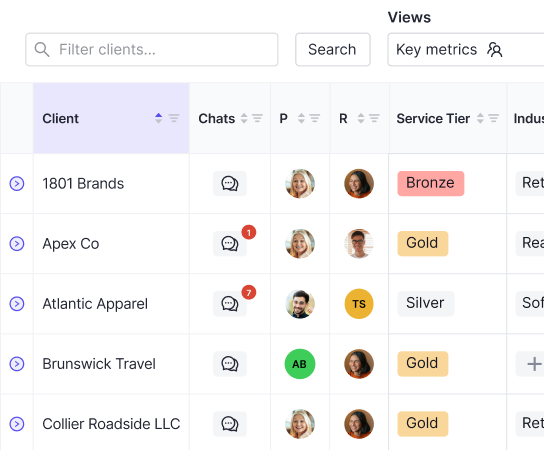
TaxDome is a practice management system built for tax and accounting professionals. It covers CRM, workflow automation, document management, and a client portal under one roof, making it a popular choice for firms that want to manage their entire client relationship, from intake to filing, in a single tool.
On the workflow side, TaxDome lets firms build pipelines that move client engagements through defined stages, with automated reminders triggering at each step. Document collection, e-signatures, and secure messaging all live inside the platform, so client communication stays organized without relying on email threads. The client portal is branded to the firm and handles document exchange during tax season, onboarding, and ongoing requests.
The software starts at $800 per seat per year on the Essentials plan. That per-seat structure reflects its core design: TaxDome organizes work around your team members and client relationships, with billing tied to headcount instead of the clients you serve. For a five-person firm, that translates to at least $4,000 annually before considering higher tiers.
On the integration side, TaxDome connects with QuickBooks Online to sync invoices and payments, which helps firms track what clients owe and keep financial records consistent. The integration is one-directional for billing purposes: invoices flow from TaxDome to QuickBooks, and payment status follows. It doesn't touch reconciliations, bank categorization, or journal entries. Firms that rely on TaxDome for workflow tracking still log into QuickBooks separately to complete the actual close work.
TaxDome fits tax-heavy practices where client intake, document collection, and filing management are the daily priority. The limitation worth noting for bookkeeping and CAS teams is that the close process itself sits entirely outside the platform.
What is Double?
Where TaxDome manages the relationship around accounting work, Double is built to do the accounting work itself. It's a month-end close management system designed for bookkeeping practices and CAS teams that need more than a task list: they need a place where the close actually happens.
Double connects directly to QuickBooks Online, Xero, Sage Intacct, and NetSuite with two-way sync, so every action taken inside Double updates the ledger in real time. Bank feed categorization, journal entries, accruals, reconciliations, client communication: all of it lives in one workflow instead of scattered across five tabs.
Pricing is structured around clients, not headcount. Plans run from $10 to $50 per connected client monthly depending on close complexity, with no user fees. A firm managing 80 straightforward cash-basis clients pays very differently than one handling 30 complex accrual clients, and the tiers reflect that. It's a model that aligns with how accounting firms bill their own clients, so growth doesn't carry a penalty.
QuickBooks and Xero Integration
TaxDome's QuickBooks Online connection handles billing: invoices created in TaxDome sync over, and payments follow. That's useful for tracking what clients owe, but it stops there. Reconciliations, journal entries, transaction categorization? None of that happens inside TaxDome. To complete close tasks, your team still logs into QuickBooks separately, which means the place you track work and the place you do it are never the same window.
Double works differently. The sync with QuickBooks Online and Xero runs both directions in real time. Bank feeds, journal entries, accruals, reconciliations: all executed inside Double, all pushing back to the ledger automatically.
QuickBooks stays the source of truth; Double is where you act on it. When your task list is done, the close is done.
For firms where month-end close is the core service, that gap between TaxDome and Double matters every single month.
Month-End Close Management
TaxDome handles workflows well. Pipelines, automated reminders, project tracking: it's solid infrastructure for managing where things stand. But "where things stand" and "getting things done" are different problems. TaxDome doesn't include AI bank categorization, reconciliation analysis, or accrual scheduling. The actual close work still happens in QuickBooks or Xero, with TaxDome tracking completion on the side.
Double skips the status layer and goes straight to execution: AI bank categorization, journal entries, accruals, and reconciliation analysis all run inside the same workflow.

- AI bank feeds sort transactions into confidence-based stages: potential matches, rules-based categorization, auto-classifications, and items flagged for review. Composable rules let multiple conditions apply to the same transaction, something QuickBooks itself can't do.
- Reconciliation tools analyze discrepancies to identify timing issues, duplicates, or missing transactions before they become problems.
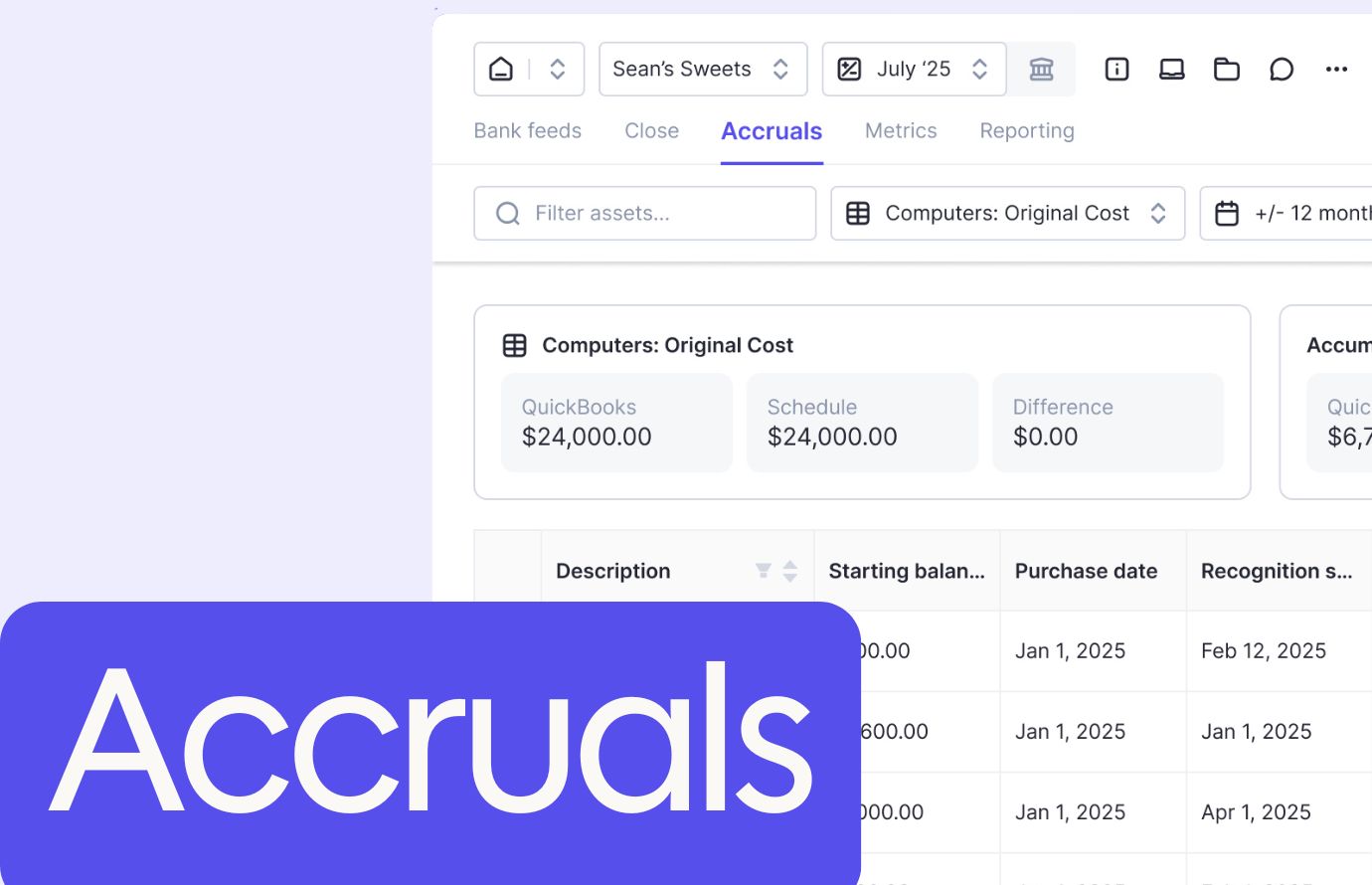
- The accruals module automates recognition schedules with source-linked documentation and a full audit trail.
- Review tools flag inconsistent categorizations and missing payees so teams can catch errors before the close goes out.
The result is exception-based review: staff handle the edge cases, and the routine work runs automatically. According to the 2025 Intuit QuickBooks Accountant Technology Survey, 64% of accounting firms planned to invest in AI, with 45% focused on automation. AI adoption is reshaping accounting firm budgets, with technology spending outpacing traditional headcount investments. That momentum points toward tools that do the work instead of only logging it. For firms where month-end close is the product, that distinction is worth 30-50% of close time every month.
Reporting and Variance Analysis
TaxDome surfaces practice-level analytics covering pipelines, project status, and day-to-day performance. What it doesn't touch is the financial statements themselves. For bookkeeping and CAS firms, that means client-facing reports still come from QuickBooks or Xero native exports, typically cleaned up in Excel before delivery. The narrative explaining why revenue dipped or expenses spiked gets rebuilt from scratch every month.
Double handles the full reporting side of the close. The interactive P&L lets clients drill into vendor and customer details directly from any line item, so a question about a spike in software expenses doesn't require a separate follow-up. AI-assisted variance explanations flag material changes period-over-period and attach context directly to the financials, so the story travels with the numbers.
For CAS teams, this gap is meaningful. Double's deliverables include:
- Customizable KPI dashboards for gross margin, burn rate, revenue per employee, and other client-specific metrics, without rebuilding them each month
- Executive summaries with commentary and footnotes attached directly to the financials, so context travels with the numbers instead of living in a separate email
- Client portal delivery without requiring exports or email attachments
- Drill-down from summary to transaction level within a single interface: click a line item on the P&L and see every underlying transaction that built it
When management asks why payroll jumped 12% in March, the answer is already documented. Accountants stop rebuilding analysis from memory and start delivering it on day one. Static PDFs are table stakes. Interactive reports that answer follow-up questions before they're asked represent a different level of service.
Pricing and Value
TaxDome charges per seat: $800, $1,000, or $1,200 per user annually depending on tier. Every hire adds to the bill, regardless of how many clients that person serves.
Double charges per client at $10, $25, or $50 monthly based on engagement complexity. No user fees, no seat caps. A ten-person team costs the same as a two-person team serving the same clients.
For a firm managing 100 clients at the $25 tier, that's $30,000 annually, fixed regardless of headcount growth. Industry benchmarks show how fast firms close directly impacts firm profitability and capacity to scale.
TaxDome | Double | |
|---|---|---|
Pricing model | Per user, per year | Per client, per month |
Starting price | $800/user/year | $10/client/month |
User fees | Yes | No |
Additional seat costs | Yes | No |
The structural difference matters at scale. Bringing on a bookkeeper to handle volume does not increase your Double bill. With TaxDome, every new hire does.
Why Double is the Better Choice
TaxDome is a capable tool for firms where CRM and tax workflow are the priority. If client intake, document collection, and filing management are your daily operations, it covers that ground well.

For firms where month-end close is the core service, Double delivers clear advantages. It integrates directly with QuickBooks Online and Xero at the execution level, going well beyond invoicing. It reclaims 30 to 50% of close time through AI bank feeds and automated workflow tools that catch errors before they compound. Client-based pricing means your software costs stay predictable as your team grows.
If your firm is hitting capacity walls, juggling too many disconnected tools, or still delivering reports built in Excel every month, that is the gap Double was built to close.
Final Thoughts on TaxDome vs Double
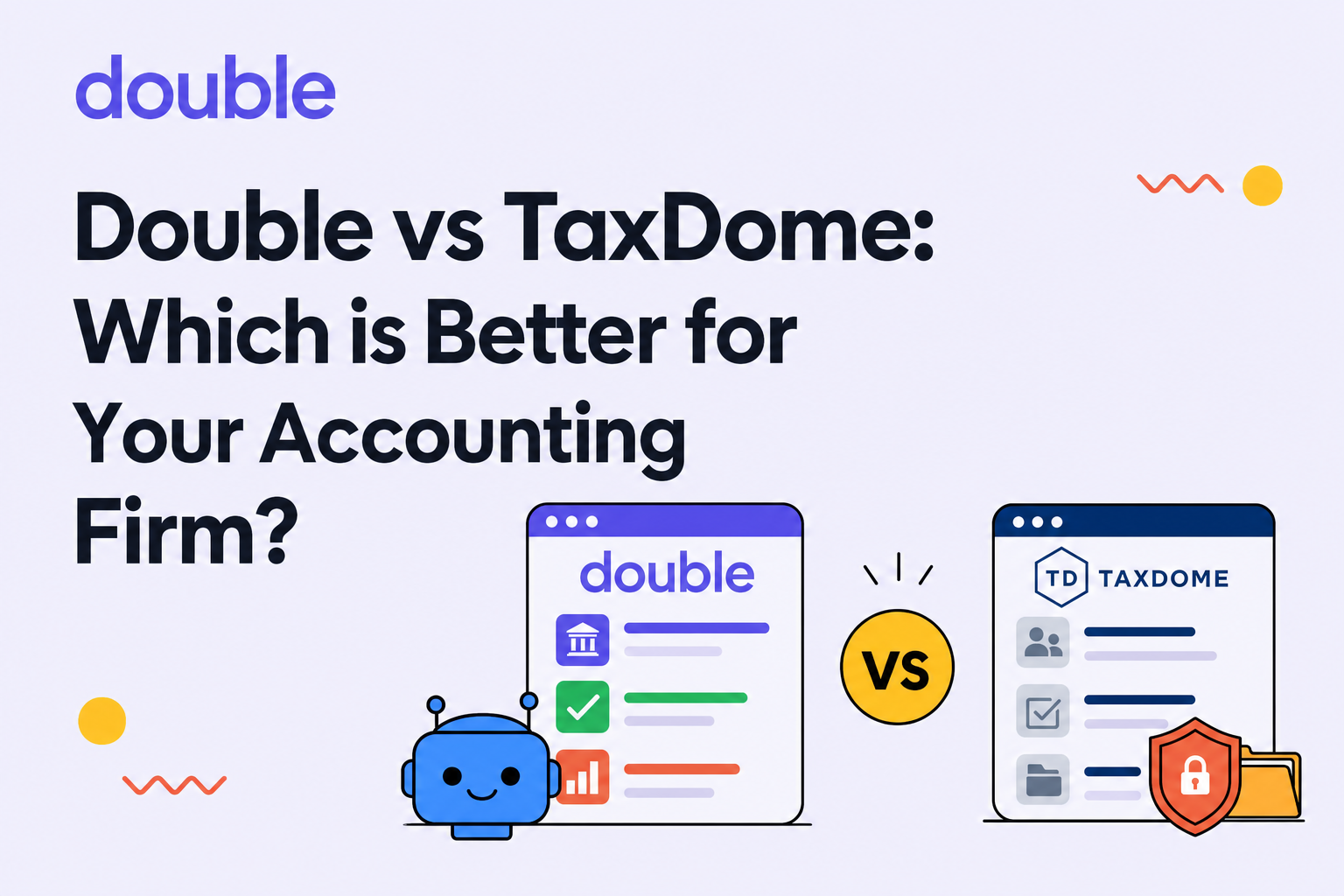
TaxDome vs Double comes down to whether you need a system that tracks the close or one that actually does it. TaxDome manages the practice side well if tax workflow is your focus, but it doesn't touch the work inside QuickBooks. Double connects directly to your ledger, automates bank categorization and reconciliation, and delivers interactive reports without the Excel cleanup. If your firm sells month-end close and you're looking for a way to reclaim 30-50% of that time every month, book a demo to see exactly how it works.