
Depreciation schedules, capitalization thresholds, net book value... fixed asset accounting has a lot of moving parts for something that's supposed to stay put. If you're trying to get a clear picture of what belongs on your fixed assets list and why it matters for your balance sheet, this covers exactly that.
TLDR:
- Fixed assets are long-term resources held for use in operations, kept on the books for more than a year.
- Net fixed assets = gross fixed assets minus accumulated depreciation; a $50,000 van with $20,000 depreciated shows $30,000 on your balance sheet.
- Four GAAP depreciation methods apply to fixed assets: straight-line, declining balance, sum-of-years-digits, and units of production.
- Most companies set a capitalization threshold around $2,500, covering total acquisition cost including freight and installation.
- Double handles fixed asset depreciation inside the close workflow, calculating recognition amounts and preparing journal entries automatically.
What Are Fixed Assets
Fixed assets, also called property, plant, and equipment (PP&E), are long-term physical resources a business owns and uses to run operations, not sell for profit.
The word "fixed" refers to intent, not immobility. A delivery truck still counts as a fixed asset despite moving all day, because the company holds it for more than a year to generate revenue, not to resell it.
Under US GAAP, fixed assets fall under ASC 360 accounting guidance, governing how companies recognize, depreciate, and retire property and equipment on the books. For a deeper look at the standard itself, ASC 360 PP&E capitalization rules covers capitalizable costs, depreciation methods, and impairment testing under the standard.
Fixed Assets Examples
A fixed asset can take many forms, but most fall into a handful of recognizable categories.
- Land: the ground under a company's warehouse, which never depreciates.
- Buildings: an office headquarters or retail storefront.
- Machinery and equipment: a manufacturing press on a factory floor.
- Vehicles: a fleet of delivery vans or a company truck.
- Computers and office equipment: laptops, servers, and printers issued to staff.
- Furniture and fixtures: desks, conference tables, and built-in shelving.
- Leasehold improvements: custom lighting or walls added to a rented space.
- Tools: heavy-duty equipment used on job sites for years at a time.
Ten examples in one glance: land, office buildings, factory equipment, delivery vehicles, laptops, printers, desks, shelving, leasehold improvements, and job-site tools. If an item sits on the books for more than a year and keeps the business running without being resold, it belongs on this list.
Physical vs. Non-Physical Fixed Assets
Physical fixed assets have a concrete form: land, buildings, machinery. Non-physical fixed assets have no material presence but still deliver value over multiple years, with examples including patents, trademarks, copyrights, and licenses. ASC 360 covers property, plant, and equipment, while ASC 350 governs non-physical assets, with amortization and impairment testing replacing depreciation.
Goodwill is not a fixed asset. It's an intangible asset booked when a company pays more than the fair value of net assets acquired, and it gets tested annually for impairment instead of being amortized on a schedule.
Fixed Assets vs. Current Assets
The line between fixed assets and current assets comes down to timing. Current assets convert to cash within a year, think inventory sold to customers or accounts receivable collected from them. Fixed assets stick around longer, generating value through use, not through a sale.
Cash sitting in a checking account is a current asset, one that feeds directly into bank reconciliation each period. A warehouse that houses the inventory is a fixed asset. One funds next month's payroll while the other supports operations for a decade or more.
Current Assets | Fixed Assets |
|---|---|
Cash and cash equivalents | Land |
Accounts receivable | Buildings |
Inventory | Machinery and equipment |
Prepaid expenses | Vehicles |
Short-term investments | Furniture and fixtures |
A quick way to sort any asset: ask whether the business expects to sell or consume it within twelve months, or keep using it well past that mark.
Fixed Assets on the Balance Sheet
Fixed assets appear in the non-current assets section of the balance sheet, positioned below current assets since they take longer than a year to convert to cash.
Most balance sheets list three lines: gross fixed assets (original cost), accumulated depreciation (a negative offset), and net fixed assets, the remainder after subtracting one from the other. Net fixed assets in the balance sheet is what rolls into the non-current assets total, while capital expenditures show up separately under investing activities on the cash flow statement, both of which factor into the month-end close process.
How to Calculate Fixed Assets: Key Formulas
Three formulas answer most of what shows up in a fixed asset calculation: gross fixed assets, net fixed assets, and the accumulated depreciation that connects them.
Gross Fixed Assets = Total original acquisition cost of all fixed assets, before any depreciation is subtracted.
Net Fixed Assets = Gross Fixed Assets minus Accumulated Depreciation.
Accumulated Depreciation = The running total of depreciation expense recorded against an asset since the day it was purchased.
Here's a worked example. A company buys a delivery van for $50,000. After three years of use, it has recorded $20,000 in accumulated depreciation on that van.
Line Item | Amount |
|---|---|
Gross Fixed Assets | $50,000 |
Accumulated Depreciation | $20,000 |
Net Fixed Assets | $30,000 |
The $30,000 net figure is what shows up on the balance sheet today, while the $50,000 gross figure stays fixed on the books as the original cost, changing only if the company buys more assets or sells this one off.
How Fixed Assets Are Depreciated
Depreciation spreads a fixed asset's cost across its useful life instead of expensing it all at once, matching the expense to the revenue the asset helps generate over the years it stays in service. Buying a fixed asset upfront and expensing it entirely would distort a single period's profit and misstate every period after it, much like failing to record an accrued expenses journal entry at period-end.
Four methods cover most depreciation under GAAP.
- Straight-line: expenses an equal amount each year, fitting assets like office furniture that lose value at a steady pace.
- Declining balance: front-loads depreciation into early years, suited to vehicles or tech that lose most value fast.
- Sum-of-years-digits: an accelerated method weighting early years heaviest, used for assets that wear out quickly.
- Units of production: ties depreciation to actual output, common for manufacturing machinery billed by usage.
Land is the exception. It never depreciates, since it doesn't wear out or lose usefulness over time.
Capitalization Rules and Thresholds
A capitalization policy sets the rule for when a purchase becomes a fixed asset and not an immediate expense, since without one, every stapler and extension cord could technically qualify as PP&E. Most companies use a dollar threshold, commonly $2,500 for small and mid-sized businesses, matching the IRS de minimis safe harbor limit for taxpayers without an applicable financial statement, though the exact figure varies by industry.
The threshold covers total cost to prepare an asset for use, including freight, installation labor, and site prep, beyond the invoice price alone. A common $2,500 threshold (per IRS de minimis safe harbor guidance) means a $2,000 machine with $800 in installation costs crosses the threshold once combined. This follows the matching principle: a fixed asset generates revenue over several years, so its cost should hit the income statement across those same years.
The Fixed Asset Lifecycle
Every fixed asset moves through four stages, and the accounting treatment changes at each one.
- Acquisition: the asset is recorded at total cost to acquire and prepare it for use, including freight and installation, setting the gross fixed asset figure that stays on the books until disposal.
- Active use: depreciation runs period after period, reducing the asset's book value while it generates revenue.
- Impairment review: if a machine breaks down early or a building's market value drops below its carrying amount, the asset gets tested for impairment and written down to reflect the loss.
- Disposal or retirement: when the asset is sold, scrapped, or traded in, the company removes both the original cost and accumulated depreciation from the books and records a gain or loss based on what it received compared to the remaining book value, a movement captured in a rollforward in accounting.
A van sold for $35,000 with a $30,000 net book value produces a $5,000 gain. Sold for $25,000 instead, it produces a $5,000 loss.
The Fixed Asset Turnover Ratio
The fixed asset turnover ratio measures how much revenue a company generates for every dollar tied up in fixed assets, showing whether those assets are pulling their weight.
Fixed Asset Turnover Ratio = Net Sales / Average Net Fixed Assets
Average Net Fixed Assets = (Beginning Net Fixed Assets + Ending Net Fixed Assets) / 2
With $2,000,000 in net sales and average net fixed assets of $500,000 ($400,000 beginning, $600,000 ending), the ratio comes to 4.0, or $4 in sales per $1 in net fixed assets.
A higher ratio signals stronger revenue from equipment and buildings. A lower ratio can point to underused assets or recent capital spending that hasn't paid off yet, both scenarios worth investigating through variance accounting analysis. Good benchmarks vary by industry, so compare against sector peers instead of a fixed number.
Fixed Asset Accounting Records and Registers
A fixed asset register is the detailed ledger behind every number on the balance sheet, and keeping it current and accurate ties directly into general ledger reconciliation. Each row tracks one asset including description, acquisition date, cost, useful life, depreciation method, accumulated depreciation, and net book value.
A fixed asset schedule is narrower. It lays out the period-by-period depreciation table for an asset or class until the item is fully depreciated or disposed of, a task well suited to accounting automation.
Auditors trace totals back to the register to confirm existence and value. Missing registers are a common audit finding, and rebuilding one after the fact costs far more than keeping it current. Verifying fixed asset records is a standard item on a month-end close checklist.
How Double Handles Fixed Asset Depreciation Inside the Close
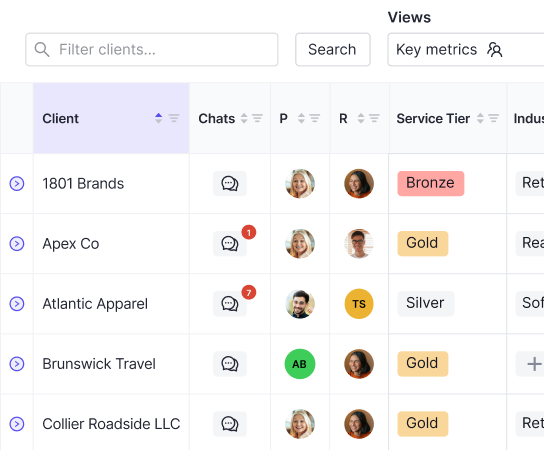
Double manages fixed asset depreciation directly inside the close workflow through its Accruals module, so recognition amounts are calculated and journal entries are prepared automatically, with no separate spreadsheet schedule required. Set up a fixed asset once by entering the acquisition cost, useful life, and depreciation method, and Double generates the full amortization table, calculates each period's recognition amount, and queues the corresponding journal entry for review on the Close page. Non-depreciating assets like land are supported as well, so the entire PP&E register can live in one place without workarounds. When an asset is sold, scrapped, or written down, Double's disposition and impairment tools let you record the event and automatically generate the journal entries that remove the original cost and accumulated depreciation from the books while recognizing any gain or loss. Practice-level presets let you define depreciation rules once, covering computers over 60 months and furniture over 84, and apply them across every client or entity going forward. Every action taken on a schedule, from creation through disposal, is logged in the Activity Log with a timestamp and user record, giving auditors a complete, tamper-evident trail without any additional documentation effort.
Ask Double, the platform's practice-wide AI assistant, extends that automation layer into on-demand analysis: ask it to surface P&L and Balance Sheet diagnostics, flag negative account balances, or pull a summary of recent activity across any entity, and it executes the action directly, with full audit logging, instead of pointing you elsewhere to find the answer. That means a question like "Do any fixed asset accounts show an unexpected balance this period?" goes from a manual ledger search to an instant, context-grounded response without leaving the close workflow.
Final Thoughts on Fixed Asset Accounting and Depreciation
Whether you are sorting a purchase into PP&E or calculating net fixed assets for the balance sheet, the mechanics here are straightforward once the rules click. The harder part is keeping the register accurate and the depreciation running correctly through every close cycle. Book a demo with Double to see how that work gets automated without pulling it out of your existing workflow.