
If your team is spending time on the close but not saving time on it, the tool you're using might be tracking work without doing it. Basis and Double both show up in searches for accounting firm close software, but they take fundamentally different approaches. Here's where they split.
TLDR:
- Basis handles task coordination and client communication, but reconciliations, journal entries, and variance analysis still happen outside the tool.
- The core architectural difference: Basis informs the workflow with AI suggestions; Double's AI posts results directly to the ledger.
- Double's per-client pricing starts at $10 monthly with no user fees, scaling in proportion to revenue as your firm grows.
- Firms using Double report saving 30 to 50 percent of close time per engagement by automating data prep, not by cutting corners on the work.
- Double executes close work across reconciliations, flux analysis, accruals, and client communication in one system, starting at $10 per client monthly.
What Is Basis?
Basis is a close management software for accounting firms built for accounting firms. It sits in the same general category as Double, targeting firms that run recurring month-end close work across multiple clients.
The product is built around task management and workflow coordination. Firms use it to assign close steps to team members, track progress across client engagements, and keep recurring checklists organized. The interface is built around a list-based view of tasks, with statuses that move from open to in-progress to complete as work gets done.
Basis also includes a client-facing portal where firms can request documents, share deliverables, and communicate with clients without bouncing between email threads. That portal sits alongside the task management layer, separate from the close workflow itself.
Where Basis Focuses
The design philosophy behind Basis leans toward coordination and visibility. It gives firm owners a cleaner view of where each client engagement stands, which is a real improvement over spreadsheet-based tracking or generic project tools.
- The task and month-end close checklist system lets firms build recurring close templates that auto-populate each month, reducing the setup time for repeat engagements.
- Client communication lives inside the tool, so document requests and approvals have a paper trail separate from email.
- Progress tracking gives managers a high-level view of which clients are on schedule and which are falling behind.
Basis runs AI agents that execute accounting workflows and deliver finished output for review. The distinction worth understanding is where that output lands: Basis surfaces completed work into a review queue for an accountant to approve, so the results sit above the ledger until someone acts on them. Double posts results directly to the ledger through two-way sync, so reconciliations, journal entries, and variance explanations flow into the books without a separate approval-and-export step.
What Is Double?
Double is close management software built for accounting firms running multi-client workflows. Where most close tools were designed for a single internal finance team, Double was built from the ground up to handle the parallel complexity of managing multiple client closes simultaneously, each with its own ledger, checklist, and deadline.
The core idea is execution over tracking. Double connects directly to QuickBooks Online and Xero via two-way sync, so changes flow in both directions without manual exports or copy-paste handoffs. From there, AI handles the repetitive data work: matching transactions, drafting variance explanations, flagging anomalies, and preparing journal entries for review.
What Double Actually Does
Firms using Double report saving 30 to 50 percent of close time per engagement, in an industry where industry estimates suggest automation can reduce close time by 25 to 40 percent or more. The product covers:
- AI-powered transaction matching that categorizes and matches transactions against the live ledger, so accountants review decisions instead of making them from scratch.
- Flux analysis that automatically drafts variance explanations at the vendor and transaction level across the P&L and Balance Sheet, with configurable materiality thresholds.
- Accruals and prepaids management that handles prepaid expense amortization, fixed asset depreciation, deferred revenue, and loan amortization schedules directly inside the close workflow.
- A client-facing portal for document requests, approvals, and communication, keeping everything tied to the close instead of scattered across email threads.
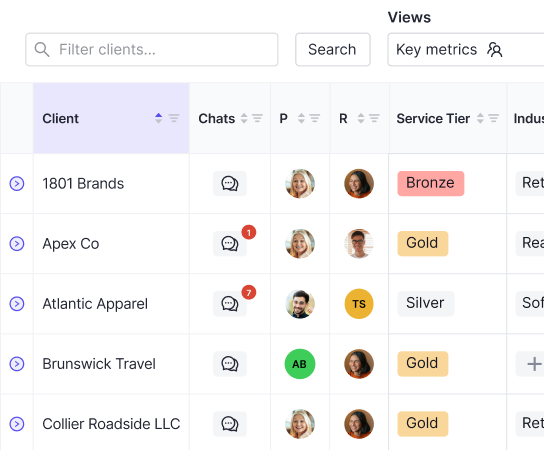
- Multi-client portfolio views so firm staff can see close status, bottlenecks, and outstanding items across every active engagement in one place.
Pricing follows a per-client model with no user fees or software charges, which keeps costs tied to the work being done, not headcount.
AI Execution: Where Output Actually Lands
AI tools are only as useful as the work they actually complete. The distinction worth understanding here is where each tool's output lands after the AI runs.
Basis Close's AI surfaces suggestions, drafts explanations, and flags anomalies. The output typically lands in a review queue where an accountant then decides what to do next. That review step is often appropriate, but it means the AI is informing the workflow without executing inside it.
Double's AI posts directly to the ledger. When the flux analysis runs, it drafts variance explanations at the vendor and transaction level across the P&L and Balance Sheet, with configurable materiality thresholds so teams can control depth and scope. When accruals run, Double calculates recognition amounts, prepares journal entries, and posts them automatically. The accountant starts from conclusions, not raw inputs.
There are three specific output behaviors that separate the two approaches:
- Flux analysis in Double auto-drafts variance explanations with configurable materiality thresholds, so controllers review finished narratives instead of rebuilding variance stories from scratch.
- Accrual and prepaid management handles prepaid expense amortization, fixed asset depreciation, deferred revenue, and loan amortization schedules inside the close workflow, not in a separate spreadsheet handed off after the fact.
- Journal entries post directly through two-way sync with QuickBooks Online and Xero for accounting firms, and Sage Intacct and NetSuite for corporate finance teams, so the ledger reflects close work in real time.
The structural difference is that Double's AI is wired into the execution layer. Basis Close treats AI as a decision-support layer sitting above the workflow. For teams where the bottleneck is review volume, that distinction changes how much close time actually comes back.
Dimension | Double | Basis |
|---|---|---|
Where AI output lands | Posts directly to the ledger through two-way sync | Surfaces into a review queue for accountant approval |
Close execution | Reconciliations, flux analysis, accruals, and journal entries run inside the workflow | Agents execute work and deliver finished output for review |
Ledger integration | Two-way sync with QuickBooks Online and Xero for firms; Sage Intacct and NetSuite for corporate finance | Task and workflow coordination sits above the ledger |
Client communication | Client portal built into the close workflow, tied to the tasks it unblocks | Client portal alongside the task management layer |
Pricing model | Per connected client at $10, $25, or $50 monthly, no user fees | Per-user model with annual commitments |
Time to value | Live within days; hands-on three-month implementation included for contracts over ten clients | Broader workflow scope tends to extend onboarding timelines |
Close Management and Practice-Wide Workflow
Basis positions itself as a close management tool built for corporate accounting teams. The workflow is organized around task assignment, preparer/reviewer sign-offs, and status tracking across a structured checklist. Teams can attach workpapers, leave comments, and move items through approval stages without leaving the tool.
For a single-entity internal finance team running a predictable close cadence, that architecture holds up reasonably well. The friction appears when the close requires more than coordination.
Where Basis Stops Short
Basis runs AI agents that execute accounting workflows and deliver finished output for review. What it does not do is post that output directly to the ledger. Reconciliations, flux analysis, accruals, and journal entries surface into a review queue, where an accountant approves the work before it lands in the books.
That distinction matters because in most month-end close processes, the volume of review-and-approve steps is where time piles up. Every result that lands in a queue for sign-off before it reaches the books adds a handoff.
Double takes a different approach. Instead of sitting on top of the close as a coordination layer, Double runs the work directly inside the workflow:
- Reconciliations auto-populate from two-way sync with QuickBooks Online, Xero, Sage Intacct, or NetSuite, so preparers match transactions against live ledger data without toggling between systems.
- AI flux analysis drafts variance explanations at the vendor and transaction level across the P&L and Balance Sheet, with configurable materiality thresholds. Reviewers start from conclusions, not raw inputs to reconstruct.
- Month-end close automation handles accruals, prepaids, depreciation schedules, and deferred revenue entries calculated and posted automatically inside the close workflow.
- Journal entries are prepared and submitted directly to the GL through the same two-way sync, with no export step.
The structural difference is where the output lands. Basis surfaces finished work into a review queue that sits above the ledger until someone approves it. Double posts results straight to the ledger through two-way sync, so the books reflect the close as the work completes.
Client Communication and the Document Collection Layer
Both tools handle client communication, but they take structurally different approaches to how document collection fits into the close workflow. Firms comparing financial close management software will find these distinctions matter at scale.
Basis treats client communication as a core product feature. Its client portal lets firms send document requests, collect responses, and track outstanding items in one place. Clients receive a branded experience without needing to log into the accounting software itself. For firms where the bottleneck is chasing clients for bank statements, receipts, and supporting schedules, this is a real workflow advantage.
Double's client portal covers the same territory. Firms can send document requests directly from inside the close workflow, and clients respond through a clean, purpose-built interface. The key structural difference is that in Double, document collection and close execution sit in the same system. When a client uploads a bank statement, the reconciliation it feeds is right there. There is no handoff between a communication layer and a close layer, because they are the same layer.
Why the Separation Matters
When document collection lives in a separate tool from the actual close work, gaps open in the seams. A request gets marked complete in one system while the underlying task in the close checklist stays open. Someone has to manually bridge that gap.
Double removes that bridging step by connecting client responses directly to the close tasks they unblock, which matters most when teams want to automate the financial close end to end.
Pricing and Time-to-Value
Pricing structures reveal a lot about how a software company thinks about its customers. With Double and Basis, the gap is structural, not merely numerical.
Double charges per connected client, starting at $10 per client monthly, with no user fees and no software charges layered on top. Accounting firms pay for the clients they actively manage, which means the cost scales in direct proportion to revenue. There are no seat licenses to negotiate and no surprise charges as the team grows.
Basis pricing is less transparent. Published information points to a per-user pricing model with annual commitments, which creates a different kind of cost math and a structural disadvantage compared to purpose-built bookkeeping practice management software that aligns cost with client volume. As firms add staff or bring on new clients, the seat count climbs independently of revenue, and the annual lock-in reduces flexibility during periods of growth or contraction.
Time-to-value follows a similar pattern. Double connects to QuickBooks Online and Xero through two-way sync, and firms report being live within days, not weeks. For contracts over ten clients, hands-on three-month implementation is included in the price.
Basis targets a broader workflow scope, which tends to extend onboarding timelines. The more a tool tries to do, the longer it takes before it feels settled.
Basis Close is a capable tool for accounting firms that want structured close workflows with built-in client communication. If your firm runs light client volumes, values a clean interface, and needs a straightforward checklist experience, Basis fills that role reasonably well, though firms comparing similar tools may also find the Double vs Karbon comparison useful for assessing practice management fit.
The fit breaks down when close complexity scales. Basis handles task coordination and client requests, but the actual accounting work (variance analysis, accrual entries, prepaid amortization, transaction matching) still lives outside the tool. Your team finishes tasks in Basis and does the analysis elsewhere, which means the close is tracked but never fully executed in one place.
Double is built for firms where that gap creates real friction.
Who Gets the Most From Double
Three firm profiles tend to see the strongest results:
- Firms running five or more concurrent client closes, where toggling between a task tracker and a spreadsheet creates compounding delays across the portfolio, not a single isolated slowdown.
- Firms where controllers and senior staff spend meaningful time on manual data work like pulling trial balance exports, rebuilding variance narratives, and formatting workpapers, which AI can take off their plate so they focus on review and judgment.
- Firms where client communication, task ownership, and accounting execution all need to live in one audit trail, not spread across three separate tools.
Firms using Double report saving 30 to 50 percent of close time per engagement. That figure comes from automating the data prep that precedes real accounting work, not from cutting corners on the work itself.
If your firm is at that inflection point where growth is straining your current close process, the architecture difference between the two tools matters more than any individual feature comparison.
Final Thoughts on Double vs Basis for Close Management
Basis and Double are not competing for the same use case. Double runs the close end to end; Basis coordinates the workflow around it. For firms where the real cost is in manual data work and toggling between systems, the architecture difference between the two tools changes what your team gets back every month. See how Double works in practice before your next close cycle.